 ACCENTEpoxy Floors
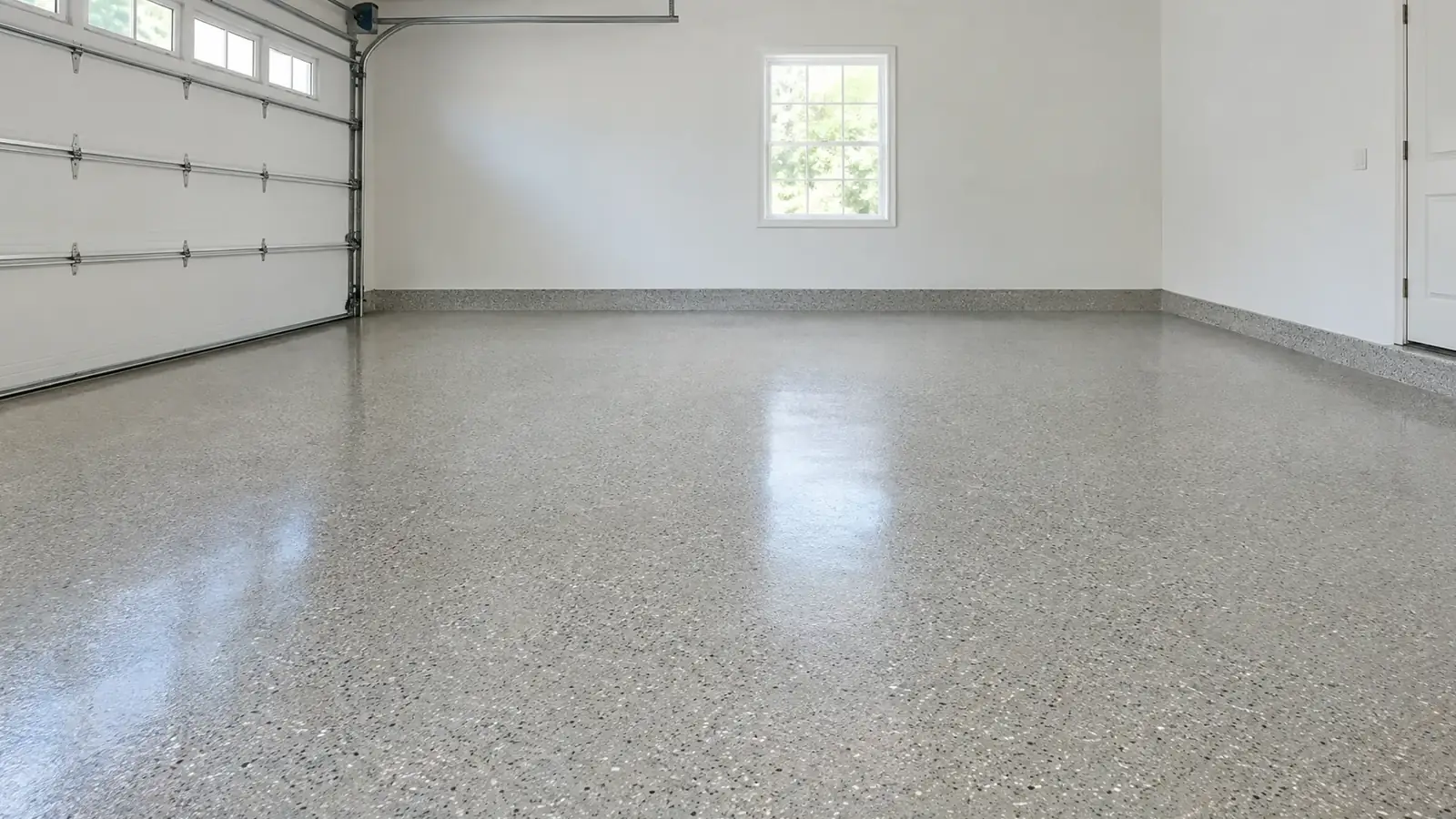
Double broadcast quartz and sand finish floors give patios, pool decks, stairs and garages a tough, textured, slip-resistant surface, finished with a UV-stable topcoat made for high desert sun.
A quartz or sand finish floor is a textured epoxy system made by broadcasting colored quartz or sand into the coating twice, then sealing it with a UV-stable topcoat. It gives strong slip resistance for patios, pool decks, stairs and garages. In Lancaster it costs $9 to $16.50 per square foot and takes two to three days.
Smooth floors look great until they get wet. Walk onto a pool deck with bare feet, down a set of exterior stairs after the sprinklers run, or into a garage with a damp tire track, and traction becomes the most important feature a floor can have. That is the job of a quartz or sand finish system. Instead of a smooth film, the surface is built up from hard, gritty grains locked into epoxy, so shoes and bare feet find something to hold onto.
The system comes in two looks. A quartz finish uses colored quartz grains that show through a clear topcoat, producing a rich, speckled stone appearance. A sand finish uses a graded sand that is sealed under pigmented topcoats, so the color comes from the topcoat and the surface reads as a uniform, gently textured tone. Both are built by a double broadcast: grains are thrown into wet epoxy until the surface will take no more, then the process is repeated for thickness and coverage. That layered build is what gives the floor its toughness, and it is why this is one of our best systems for areas that see weather, water and wear.
Accent Epoxy Floors is based in Lancaster and installs quartz and sand finish floors across the Antelope Valley, from Palmdale and Quartz Hill to Rosamond and Acton. This page covers how the double broadcast works, how much grip you really get, which spaces suit it, how it handles high desert sun and what it costs. If you are choosing between this and a smoother option, we will tell you where each one belongs.
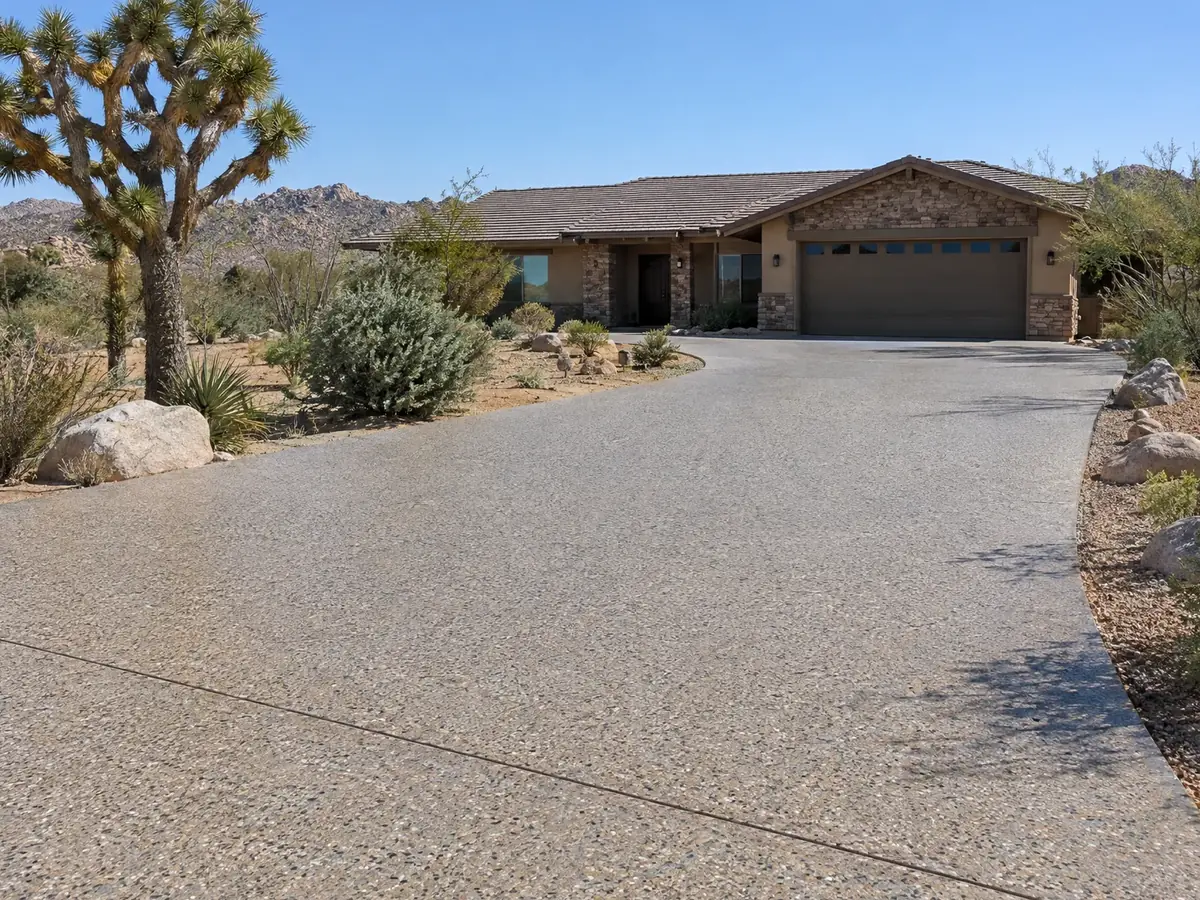
Broadcast means scattering. After grinding the slab, repairing cracks and priming, we roll a layer of epoxy and throw quartz or sand into it by hand until the surface is fully covered. This is called broadcasting to rejection, because the wet epoxy cannot absorb any more grains. Once that layer cures, we sweep and vacuum off the loose material and repeat the steps for a second broadcast, which builds thickness, fills gaps and gives the floor its depth. A final coat or two locks everything down. With a quartz finish, the top coats are clear, so you see the colored grains themselves, which look like fine gravel or granite in the shade you pick. With a sand finish, the grains are a neutral sand, and the color comes from pigmented topcoats rolled over it, so the floor reads as a solid shade with a soft texture. Because the system uses mineral grains rather than loose chips, it is dense, hard and well suited to areas where a smooth coating would be a slip risk or would show every scuff.
Yes, and this is the main reason people choose it. The grains stand up from the surface like very fine gravel, which breaks the film of water that makes a smooth floor slick. How much grip you get depends on grain size and how many topcoats are rolled over them: a finer grade feels smooth enough for bare feet, while a coarser grade feels like medium sandpaper and gives maximum traction on ramps and exterior stairs. There is a tradeoff. More grip means more texture, and texture holds dust. A quartz floor takes a stiff broom or a deck brush rather than a dust mop, and it needs a wash now and then to clear fine silt out of the valleys between grains. It will also wear a mop faster. If grip is the priority, that is a fair price to pay, and it is far more comfortable and safer than a bare smooth coating. If you want an easy-clean surface for a showroom or office, a solid color epoxy floor is the better choice. Tell us where water collects, and we will choose a grain size to match.
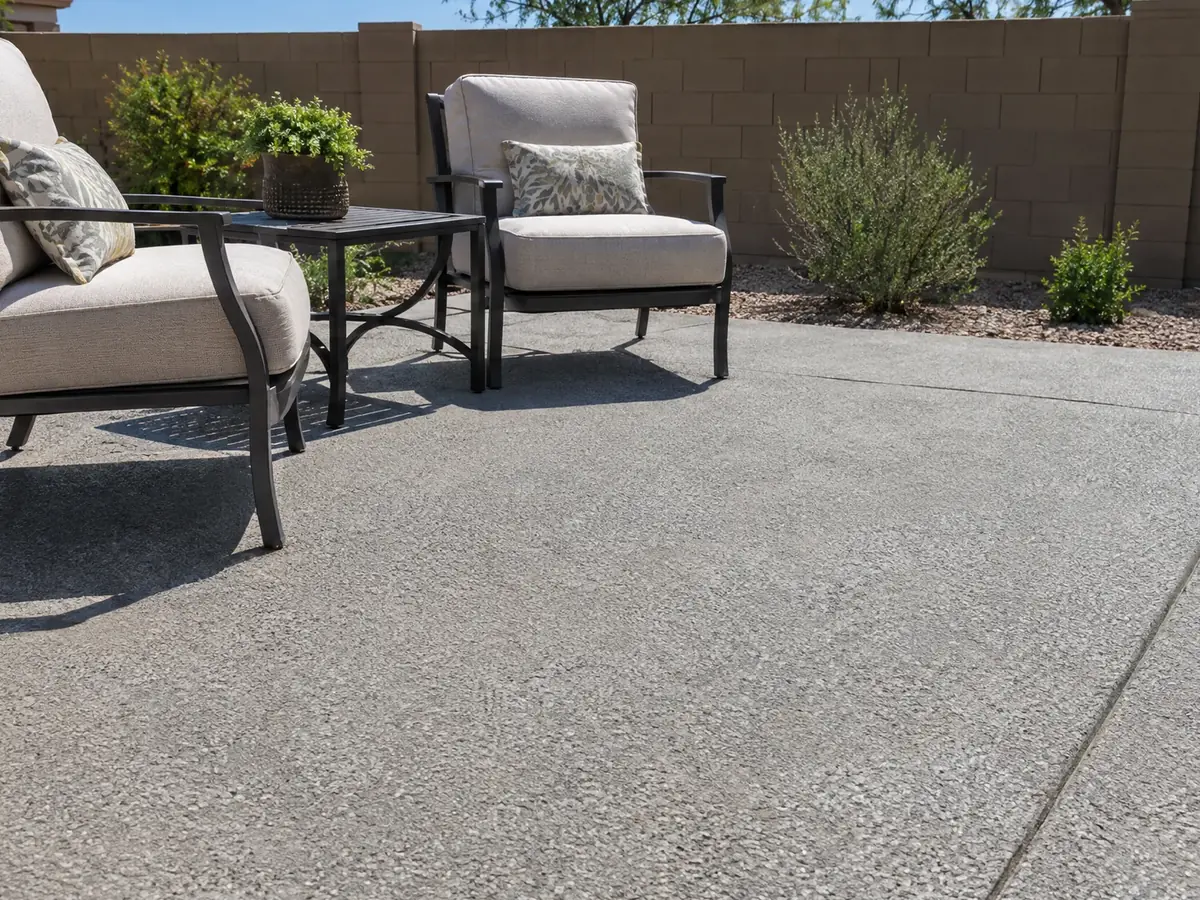
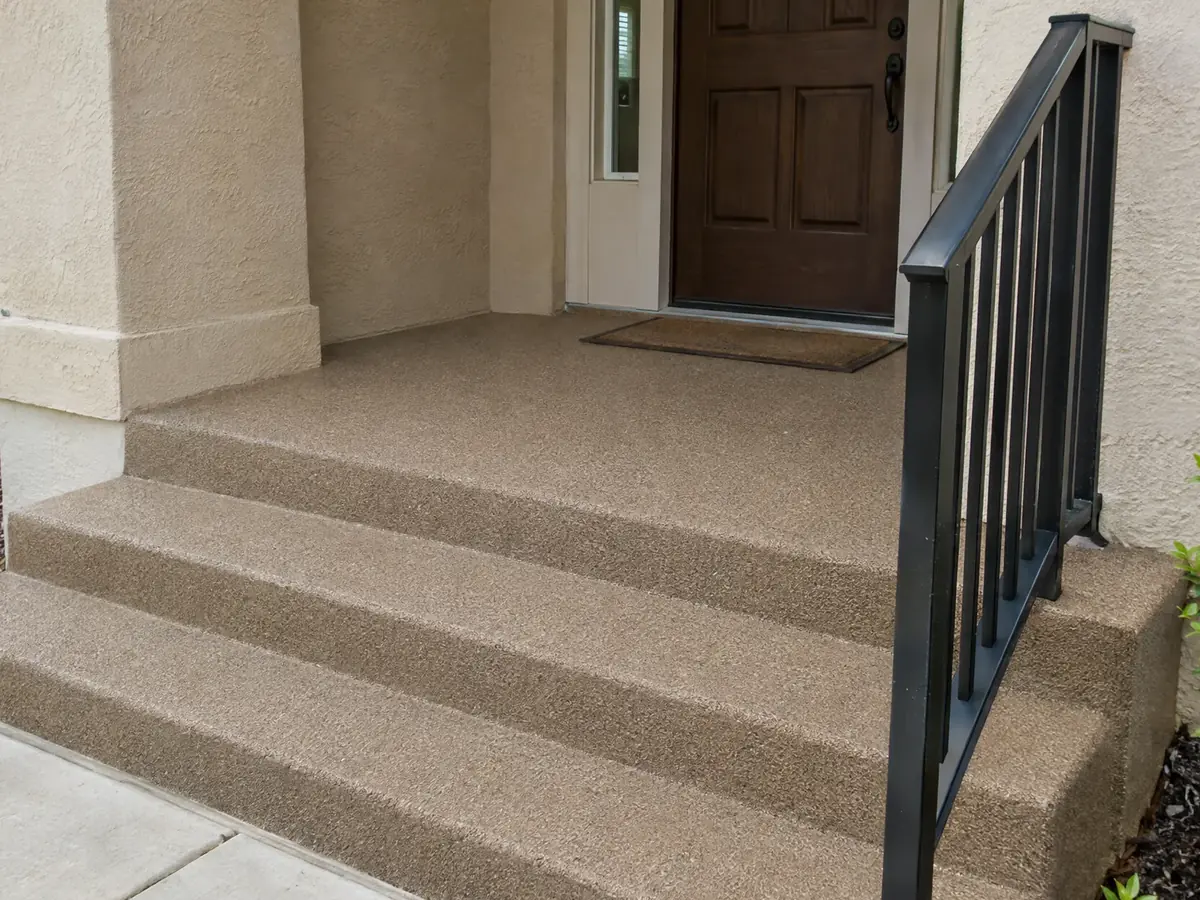
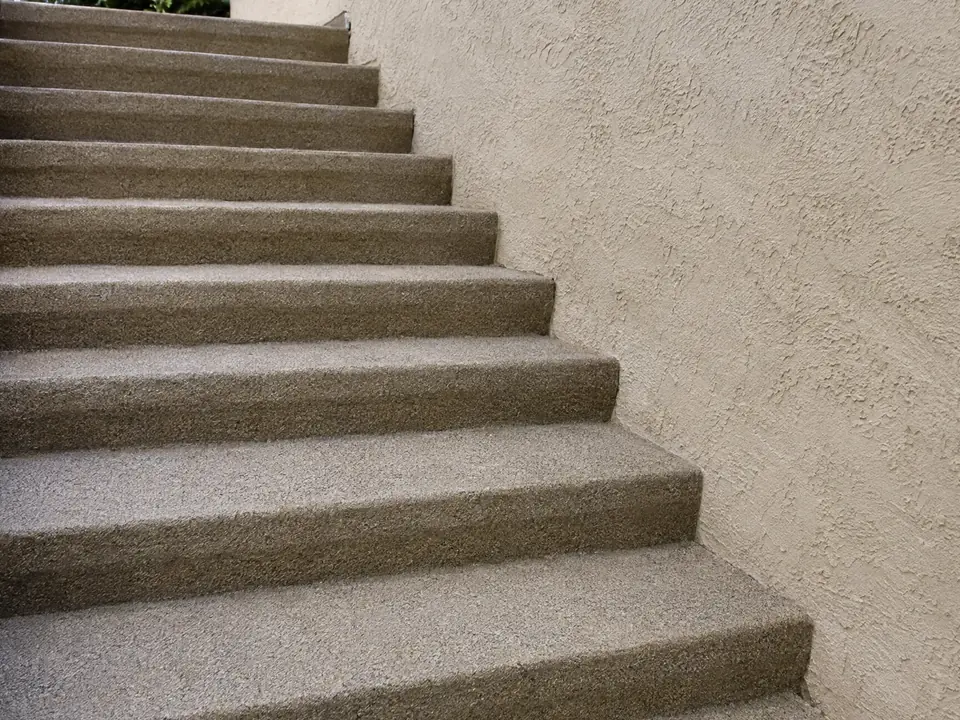
Those are the four places we use it most. On a patio, it covers cracked, stained or sun-bleached concrete and gives the space a uniform look that outlasts paint. Around a pool, a deck coated in quartz is comfortable for bare feet and gives wet-footed traction. A lighter shade stays cooler than a dark one in the sun, though any exposed surface in the high desert gets warm in July, so choose a lighter tone near the water. On stairs, a quartz finish gives each tread a gripping surface and can be carried up the risers for a clean, finished look. In a garage, it suits owners who want a tougher, grippier alternative to a smooth coating, especially near an entry door where wet shoes and dog paws track in water. It is also a good base for a driveway apron or a shop floor that sees rolling equipment. On very heavy use areas, a flake epoxy floor is the better system, and for a decorative interior look, a metallic epoxy floor is smoother and more polished. Ask us about expansion joints, drainage slope and where a coating should stop, since outdoor slabs have a few extra details.
The topcoat does the heavy lifting. Strong UV, wide daily temperature swings and dry, windy days are all hard on coatings, so we finish exterior and sun-exposed quartz floors with a UV-stable polyaspartic topcoat that resists yellowing and chalking. Lancaster sees July highs in the high 90s and winter lows in the 30s, and a daily swing of about 30 degrees is normal in summer. Concrete expands and contracts through those cycles, so we address cracks and joints in the prep, rather than coating over them. Blowing dust and gusts of 45 to 60 miles per hour show up in valley weather advisories, and the grains in a quartz floor are tough enough to take wind-driven grit without scuffing the way a smooth film can. The same grit that adds traction also hides small scratches and scuffs. Plan to rinse the floor or sweep it after a dust event, and keep an eye on outdoor edges and joints for movement. Installing in the cooler part of the day, and avoiding pouring onto a hot sun-baked slab, is part of how we protect the bond and the finish.
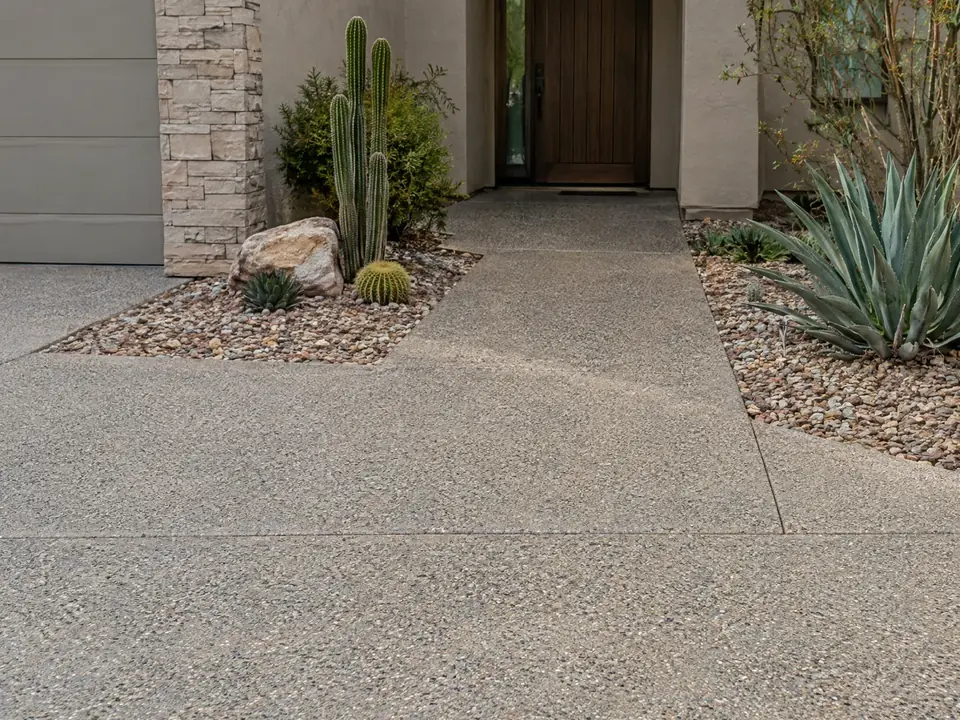
Hard mineral grains lock into the coating and give wet shoes and bare feet real traction on pool decks, steps and garage entries.
Two layers of grain add thickness, fill gaps and make a dense, hard surface for areas that see weather and wear.
Show colored quartz under a clear topcoat, or hide sand under a pigmented coat for a uniform textured color.
A textured, speckled surface camouflages small scuffs and spills far better than a smooth coating does.
A UV-stable polyaspartic topcoat resists yellowing and chalking in the strong high desert sun.
Cracked, stained or faded patios and driveways get a clean, uniform surface after proper grinding and repair.
A quartz or sand finish floor takes two to three days. The first day is grinding, crack repair and the first epoxy layer with its broadcast. The next day brings the sweep, the second layer and broadcast, and the first topcoat, and a third day may be needed for the final topcoat, depending on the finish and the weather. Your written quote lists the schedule for your slab. Light foot traffic is usually fine after the topcoat sets, and vehicles wait until your installer confirms the floor has hardened. In summer we pour early, before the slab heats, because heat shortens working time and a warming slab can trap air in the coating.
Choose a quartz or sand finish when traction and toughness matter more than a smooth, easy-wipe surface. Pick a solid color epoxy floor for a sleek, even look indoors. Pick a flake epoxy floor if you want a one day garage system that hides dirt and wear. Pick a metallic epoxy floor for a decorative showpiece, and choose grind and seal for a low-cost, natural concrete look. For pool decks, patios, outdoor stairs and wet entries, quartz is usually the right answer.
Typical ranges for Lancaster and the Antelope Valley. Minimum project $2,600. Commercial and industrial work is quoted after a site visit.
| System | Price per sq ft | Typical project |
|---|---|---|
| Flake system (garage, up to 400 sq ft) | $6.50 – $10 per sq ft | $2,600 – $4,000 |
| Solid color system | $9.50 – $11.50 per sq ft | $3,800 – $4,600 |
| Metallic epoxy system | $12.50 – $18.50 per sq ft | $5,000 – $7,400 |
| Quartz & sand finish system | $9 – $16.50 per sq ft | $3,600 – $6,600 |
| Grind & seal (clear sealer) | $6.50 – $9 per sq ft | $2,600 – $3,600 |
| Patio, driveway & pool deck | $8 – $12 per sq ft | $3,200 – $4,800 |
| Commercial & industrial | Quoted after a site visit | Quoted per project |
Prices and details reviewed November 2026. Project examples assume a two-car garage up to 400 sq ft. Free on-site measurement and written estimate. See the color chart to pick your color.
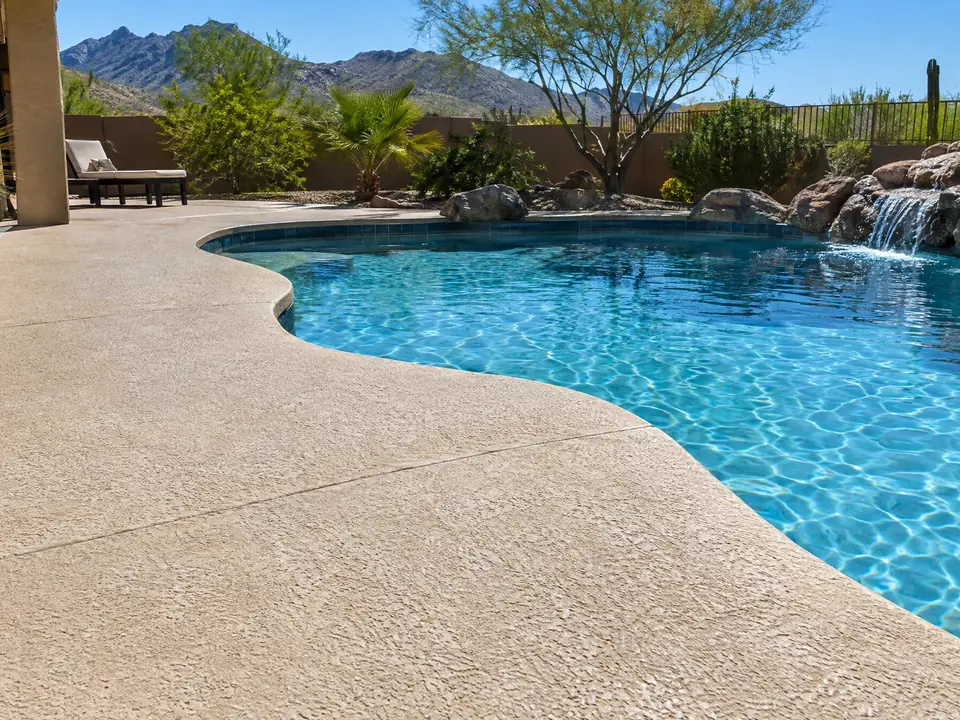
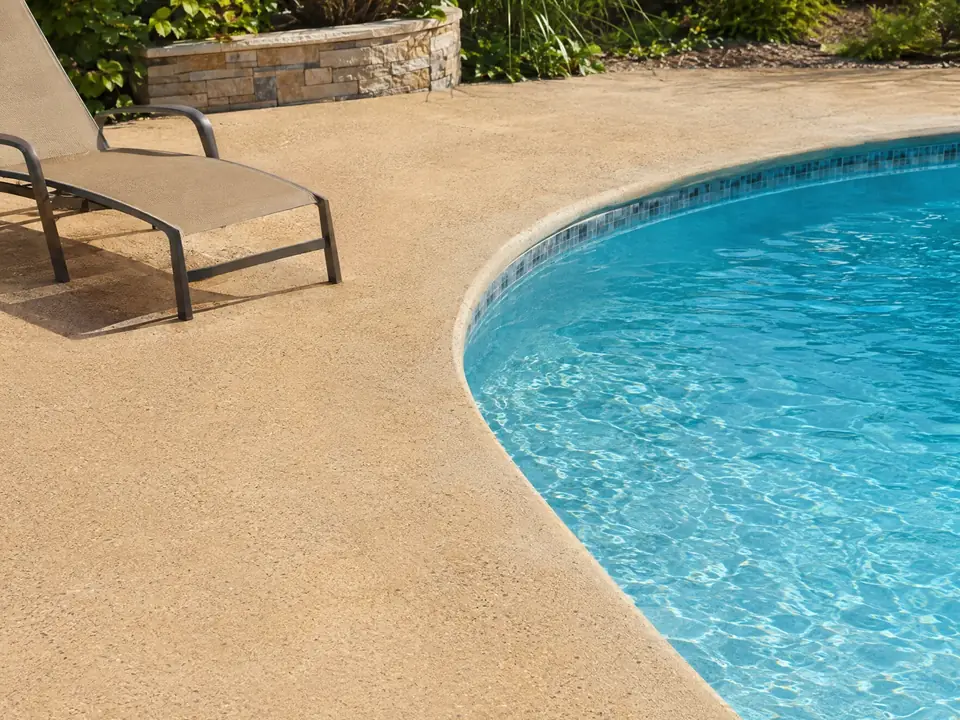
A coated pool deck is not slippery or too hot when it is built for the job. Slip resistance comes from texture added to the topcoat, and surface temperature depends mostly on color and sun. Lighter colors run cooler. Accent Epoxy Floors coats pool decks with a UV-stable topcoat and a grip finish.
Read the answer →Epoxy turns yellow because ultraviolet light and heat slowly break down the resin, a change called ambering. It shows first where sun hits the floor, usually near the garage door. A UV-stable polyaspartic topcoat, a color that hides slight change and less direct sun on the slab are what prevent it.
Read the answer →To prepare a garage for epoxy, empty it completely, move vehicles out, clear the walls, unplug appliances and make sure the crew has access to power and the space around the floor. The crew handles grinding, crack repair and cleaning, so do not etch, paint or seal the floor yourself.
Read the answer →It is a textured epoxy system made by broadcasting colored quartz or sand into wet epoxy, repeating the process, and sealing it with a topcoat. Quartz grains show through a clear coat, while sand sits under pigmented topcoats. The result is a hard, gritty, slip-resistant surface suited to patios, pool decks, stairs and garages.
Quartz and sand finish systems cost $9 to $16.50 per square foot, and typical projects range from $3,600 to $6,600. The spread comes from the quartz color blend, the grain size, the area and the extra details such as stairs. We provide a fixed written quote after a free on-site estimate.
Yes, quartz is one of the best choices for slip resistance because the grains stand up from the surface and break the film of water. A finer grade is comfortable for bare feet, and a coarser grade gives maximum grip. The tradeoff is that texture holds dust, so it needs a stiff broom and an occasional wash.
Double broadcast means grains are scattered into wet epoxy twice. The first layer is broadcast to rejection, cured and swept clean, then a second layer of epoxy and grains is added for thickness and full coverage. A topcoat then locks the grains down. The extra layer makes the floor denser, harder and more consistent.
Yes, a quartz or sand finish suits pool decks and patios because it grips wet feet and covers old, stained concrete. We prep by diamond grinding and repair cracks first, then finish with a UV-stable topcoat. A lighter shade stays cooler in the sun, though exposed surfaces still warm up in a desert summer.
Any exposed surface can get hot in the Antelope Valley summer, but a lighter quartz shade stays noticeably cooler than a dark one. Mid and light tones are the best choice near a pool. Shade, time of day and the color you choose all affect how it feels, so ask to see a sample in direct sun.
A quartz floor finished with a UV-stable polyaspartic topcoat resists yellowing, even in strong desert sunlight. Plain epoxy topcoats can yellow outdoors, which is why we do not use them on exposed surfaces. The grains themselves are mineral and do not fade, so the color stays true.
Sweep with a stiff broom, then scrub with a deck brush, warm water and a neutral cleaner, and rinse. A string mop can snag on the texture, so a brush works better. After a windy spell, rinse the floor to clear fine silt from between the grains. Avoid harsh acids and strong solvents on the topcoat.
Quartz uses hard mineral grains and a thicker, textured build, while flake uses soft colored chips and a smoother finish. Quartz gives more traction and suits wet or outdoor areas. Flake is easier to clean, installs in one day and is a better value for most indoor garage floors.
Quartz and sand finish floors take two to three days. Two broadcast layers and the topcoats each need time to cure, and weather affects the schedule. Light foot traffic is usually fine after the topcoat sets, while vehicles wait until your installer confirms the floor has hardened.
UV-stable, slip-resistant coatings for patios, walkways, driveways and pool decks that stay cooler underfoot.
Learn more →Full-rejection flake over a moisture-barrier epoxy basecoat, sealed with a UV-stable polyaspartic topcoat. Installed in one day.
Learn more →Durable, easy-to-clean garage floors that resist hot-tire pickup, oil and salt. Most two-car garages are done in one day.
Learn more →Call (661) 545-6676 or send the form at the top of the page. We reply the same day with a time to measure.