 ACCENTEpoxy Floors
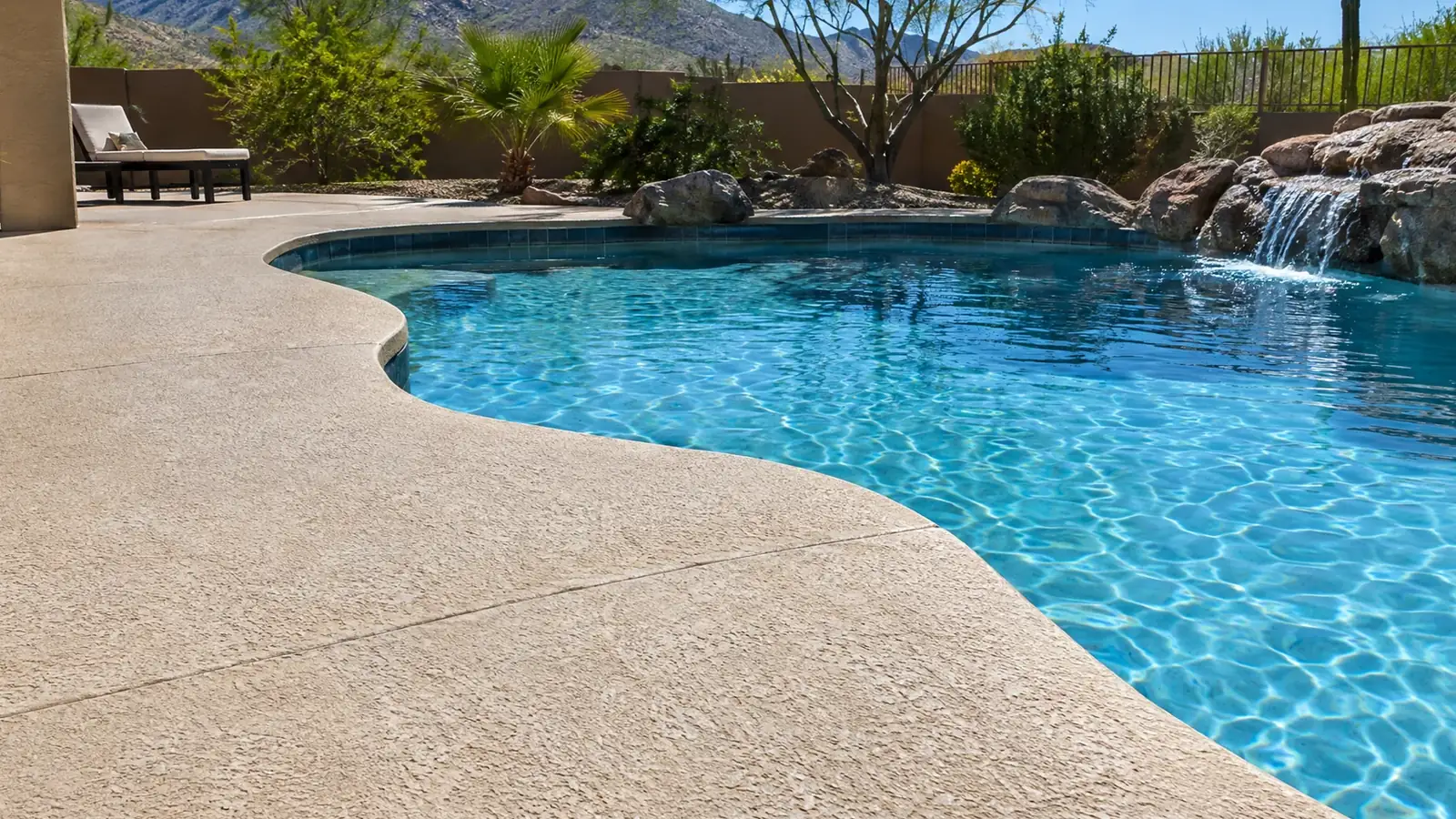
A coated pool deck is not slippery or too hot when it is built for the job. Slip resistance comes from texture added to the topcoat, and surface temperature depends mostly on color and sun. Lighter colors run cooler. Accent Epoxy Floors coats pool decks with a UV-stable topcoat and a grip finish.
A coated pool deck is not slippery or too hot when it is built for the job. Slip resistance comes from texture added to the topcoat, and surface temperature depends mostly on color and sun. Lighter colors run cooler. Accent Epoxy Floors coats pool decks with a UV-stable topcoat and a grip finish.
A pool deck in the Antelope Valley has a tough life. It bakes in summer sun, gets splashed daily, collects blowing dust and goes through cold winter nights. Bare concrete decks stain, crack and roughen. A coating can make the deck look new again, but only if it is built for wet feet and hot sun. Two questions come up almost every time: will it be slippery, and will it burn bare feet? Both have honest answers, and neither is solved by picking a pretty color alone. This guide explains how grip is built into a coating, what actually changes how hot a deck feels, and what else decides whether a coated pool deck lasts. We do not quote exact surface temperatures, because they change with color, sun angle and time of day, and nobody should promise you a number.
It does not have to be, but a smooth glossy coating certainly can be. Slip resistance on a pool deck comes from texture, not from the base coating. The usual approach is to broadcast a fine aggregate into the wet coat or mix an anti-slip additive into the topcoat, so that the finished surface has a light grit under the foot. The texture level is a balance. Too fine and a wet deck feels slick, too coarse and it is rough on bare feet and harder to clean. Pool decks are used barefoot by children and adults, so we choose a grip that is comfortable to walk on and still gives traction when wet. We also show a sample before the job starts, and we suggest you test it with a wet foot. The color chart and the sample board help you judge both how it looks and how it feels. Texture can also be increased around steps, ladders and the edge of the pool where footing matters most.
Any outdoor surface in full sun can get hot, and a coated deck is no exception. What changes the temperature is mostly color, texture and exposure. Dark colors absorb more sun and feel hotter, while lighter tones reflect more and tend to stay more comfortable. Bare concrete is not cool either, and it is often a middle tone, so a light coating can match or beat it. Shade from a patio cover, a tree or the house helps more than any coating. In the Antelope Valley the July average high is around 97 or 98 degrees Fahrenheit, and the surface in direct sun will be hotter than the air. We do not give a surface temperature number, because it depends on the day. If bare-foot comfort is a priority, pick one of the lighter options from our color chart, ask for a sample and put it in the sun for an afternoon. The test is simple, and it beats any claim a contractor can make.
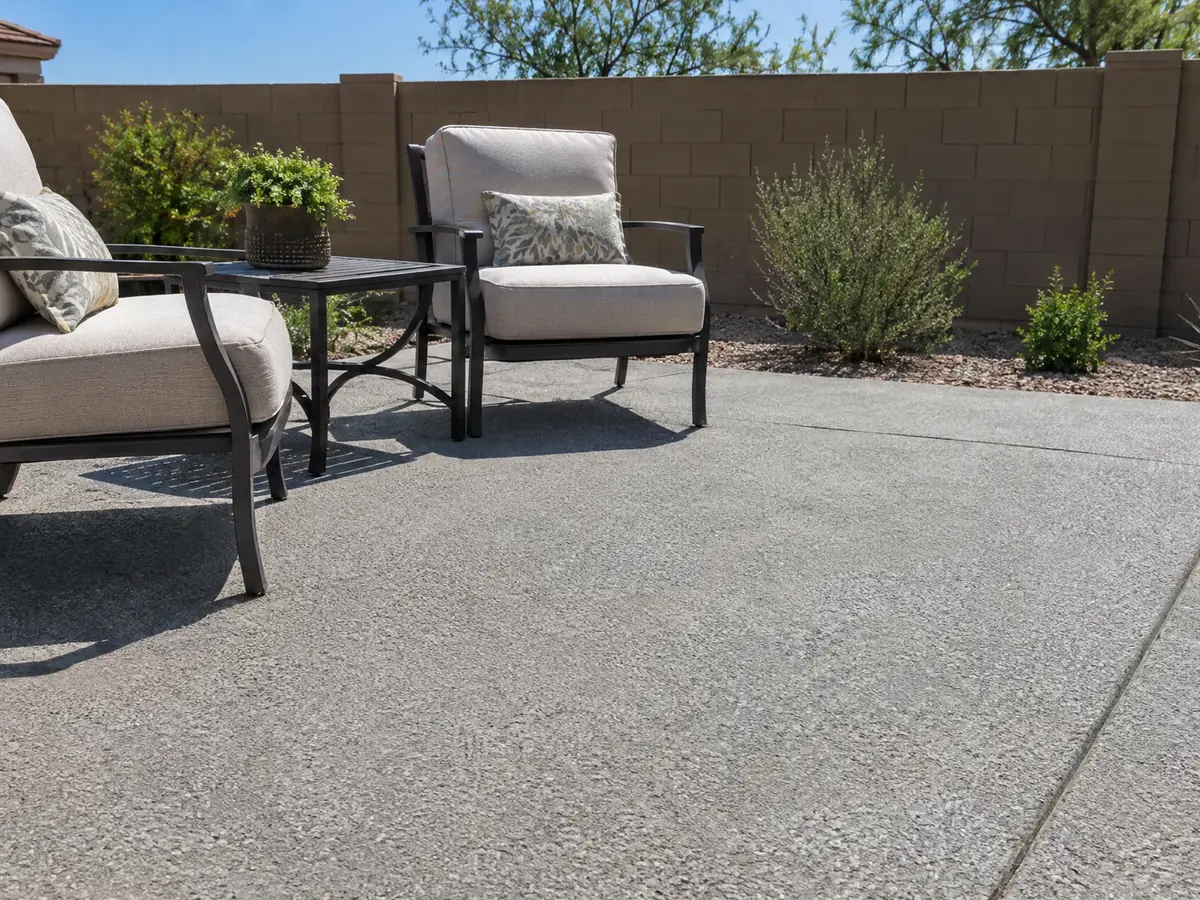
For sun, the key feature is a UV-stable topcoat. Standard epoxy can yellow or chalk when it sits in strong sunlight for long, which is why exterior and sun-exposed surfaces are usually finished with a UV-stable polyaspartic topcoat over a bonded base. High-desert UV is strong, and a pool deck gets sun all day with no roof. The base layers matter as well. A coating is only as good as its grip on the concrete, so diamond grinding to open the surface is part of every outdoor job. Then comes a primer or a pigmented base, any decorative layer such as flake or quartz, and the clear or tinted UV-stable finish with its texture. Some owners choose a flake or quartz finish because it gives a pattern and a natural grip together. Others prefer a solid color. We recommend based on your deck, the amount of sun it gets and how the pool is used, and we explain the tradeoffs before you commit.
Often yes, provided the concrete underneath is sound. Hairline cracks and surface wear can be repaired and coated. Cracks that move, slabs that have settled or tilted, and deck sections that have lifted are a different story, because a coating will not hold them still. Part of every estimate is a walk around the deck to see which category the cracks fall into. Control joints and the joint between the deck and the pool coping need special attention, since they are meant to move, and coatings and sealants have to allow for that. We fill and repair what can be repaired, tell you plainly what cannot, and show you the areas we would leave alone. Replacing a failing deck can cost far more than resurfacing a sound one, but coating a failing slab only hides the problem for a short while. If we think replacement is the better answer, we will say so during the free estimate.
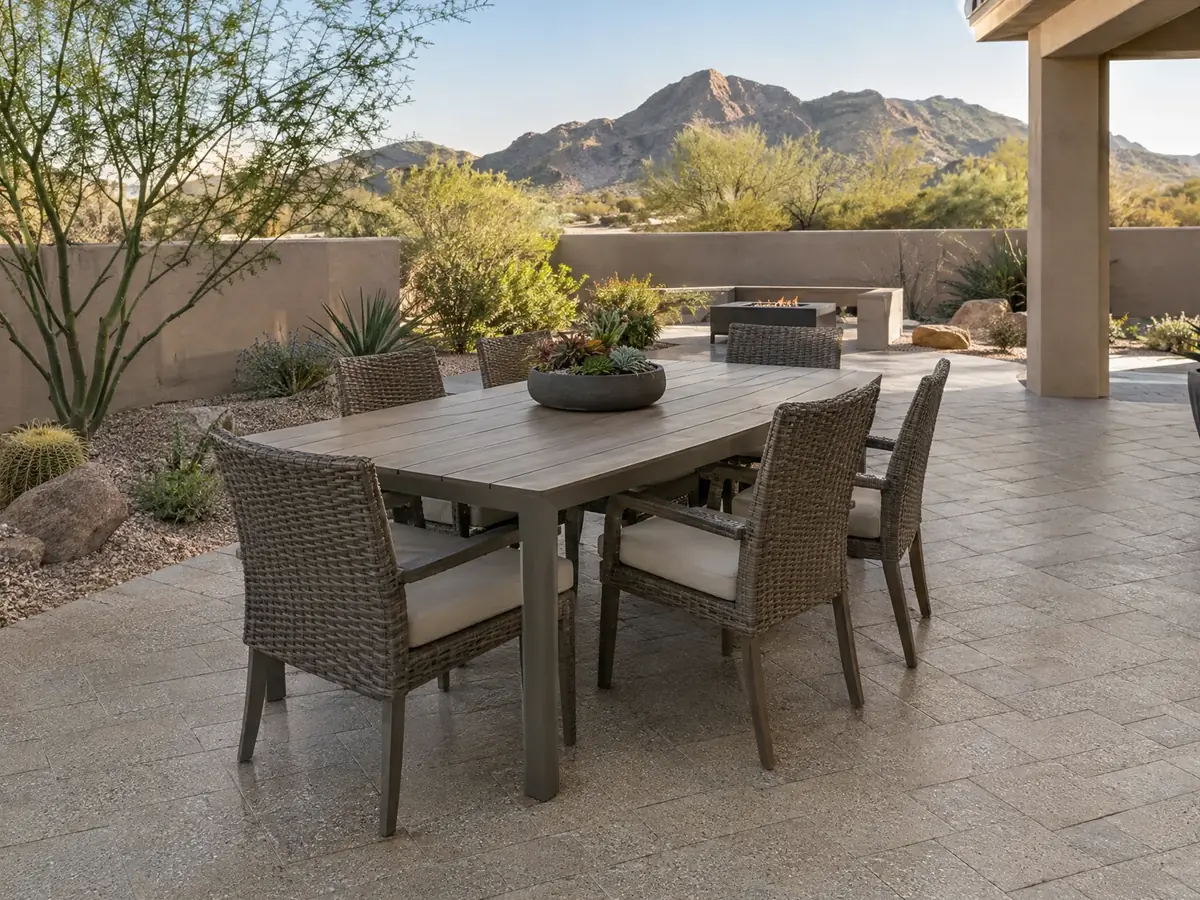
A properly cured coating is built to handle splashes, wet feet and routine pool chemicals, but long contact with strong chemicals is another matter. Spills of concentrated chlorine, acid used to adjust pH, and some cleaners can dull or mark a surface if they sit. Rinse spills with clean water, keep chemical containers off the deck, and do not leave wet towels or pool toys sitting on the coating for days. Standing water in low spots can leave stains or mineral rings, and hard water from sprinklers can leave a white film. The deck should be pitched away from the pool and the house, and we check the drainage during the estimate. If water sits on the slab after rain or washdown, that has to be dealt with, because trapped water works against any coating. Ask about care and cleaning at the end of the project, and we will give you simple do and don't instructions.
Patio, driveway and pool deck coatings run $8 to $12 per square foot, which works out to about $3,200 to $4,800 for typical projects. The final figure depends on the deck size, the condition of the concrete, the repairs needed, the finish and the amount of texture. There is a free on-site estimate, the quote is fixed and written, and the minimum project is $2,600. Timing depends on the system and the weather. Outdoor work in the high desert is planned around heat, wind and dust, with early starts so the coating is placed while the slab is cooler and then left to cure without interference. Wind-blown dust can land in a wet coating, so we watch the forecast. We will give you a schedule and tell you when the deck can go back into use, since you do not want a wet toe printed into a fresh finish.
A coated pool deck can be grippy and comfortable underfoot when it is built with a UV-stable topcoat, texture and a color chosen for the sun. Test a sample before you commit. Call Accent Epoxy Floors at (661) 545-6676 for a free estimate. Call (661) 545-6676 for a free estimate.
Yes, a coating can be used on a pool deck when it is built for outdoor use. That means diamond grinding, a good bond, a UV-stable topcoat and a grip texture. A smooth indoor-style finish is not suitable around water, so we specify the texture for wet, bare-foot use.
Not if it is textured correctly. Slip resistance comes from fine aggregate or an anti-slip additive in the topcoat. We choose a grip that is comfortable underfoot and still gives traction when wet, and we show a sample so you can test it before the job.
Any surface in full sun can get hot, and color is the biggest factor. Lighter colors reflect more sun and stay more comfortable than dark ones. We do not promise a temperature, so test a sample in the afternoon sun before you choose.
A UV-stable topcoat with a textured finish is the usual answer. The grip is added with aggregate or an additive, and the base is bonded to ground concrete. Flake and quartz finishes also give a natural grip. We recommend one based on your deck and sun exposure.
Patio, driveway and pool deck coatings run $8 to $12 per square foot, about $3,200 to $4,800 for typical projects. The exact price depends on size, repairs and finish. We give a free on-site estimate and a fixed written quote, and the minimum project is $2,600.
Often yes, if the concrete is stable. Hairline cracks and surface wear can be repaired and coated, but moving cracks and settled slabs cannot be held still by a coating. We check the deck at the free estimate and tell you honestly whether coating or replacement makes more sense.
UV-stable, slip-resistant coatings for patios, walkways, driveways and pool decks that stay cooler underfoot.
Learn more →Full-rejection flake over a moisture-barrier epoxy basecoat, sealed with a UV-stable polyaspartic topcoat. Installed in one day.
Learn more →Double-broadcast colored quartz or a sand finish for extra grip and durability on stairs, patios, mudrooms and commercial floors.
Learn more →For a car collector or show garage, a metallic epoxy floor gives the most dramatic showroom look, while a flake floor is the easier one to live with. Metallic shows dust, scratches and tire marks more and costs more. Flake hides wear, installs in one day and costs less.
Read the answer →Epoxy or polyaspartic is a good base for a garage gym, but it is not a replacement for mats. The coating handles racks, benches and foot traffic well. It does not cushion impact, so dropped weights can chip it. Use mats or platforms where you lift heavy and drop plates.
Read the answer →Yes, a fully cured epoxy or polyaspartic floor is a safe, easy-to-clean surface for dogs, kennels and grooming rooms. The sealed surface does not soak up urine or fur. The real tradeoffs are paw traction when wet, which cleaners you use, and keeping animals off the floor until it has cured.
Read the answer →Call (661) 545-6676 or send the form at the top of the page. We reply the same day.