 ACCENTEpoxy Floors
Epoxy turns yellow because ultraviolet light and heat slowly break down the resin, a change called ambering. It shows first where sun hits the floor, usually near the garage door. A UV-stable polyaspartic topcoat, a color that hides slight change and less direct sun on the slab are what prevent it.
Epoxy turns yellow because ultraviolet light and heat slowly break down the resin, a change called ambering. It shows first where sun hits the floor, usually near the garage door. A UV-stable polyaspartic topcoat, a color that hides slight change and less direct sun on the slab are what prevent it.
You pour the money into a bright, clean floor, and a year or two later the area near the garage door has a warm, honey-colored cast that was not there before. That is yellowing, and it is one of the most common complaints about epoxy in sunny places. The Antelope Valley sits at about 2,350 feet, the July average high in Lancaster is near 98F, and the sun comes through open garage doors for hours. This guide explains why epoxy yellows, why it starts where it does, what a better topcoat changes, and what your options are if it has already happened.
Epoxy is a two-part resin, and the chemistry that makes it hard and glossy also makes it sensitive to ultraviolet light. Over time, UV rays and heat change the molecules near the surface, and the clear resin picks up an amber tint. This is called ambering or yellowing. It is not dirt, and it is not a sign that the floor was installed badly. It is what standard epoxy does when sunlight reaches it, the way a white plastic chair left on a patio turns cream. The change is usually slow and cosmetic. The coating can still be firmly bonded, hard and protective while looking warmer than it did on day one. How fast it happens depends on how much sun the floor gets, how strong that sun is, and what the topcoat is made from. In high desert sun, an unprotected epoxy surface is being tested every day.
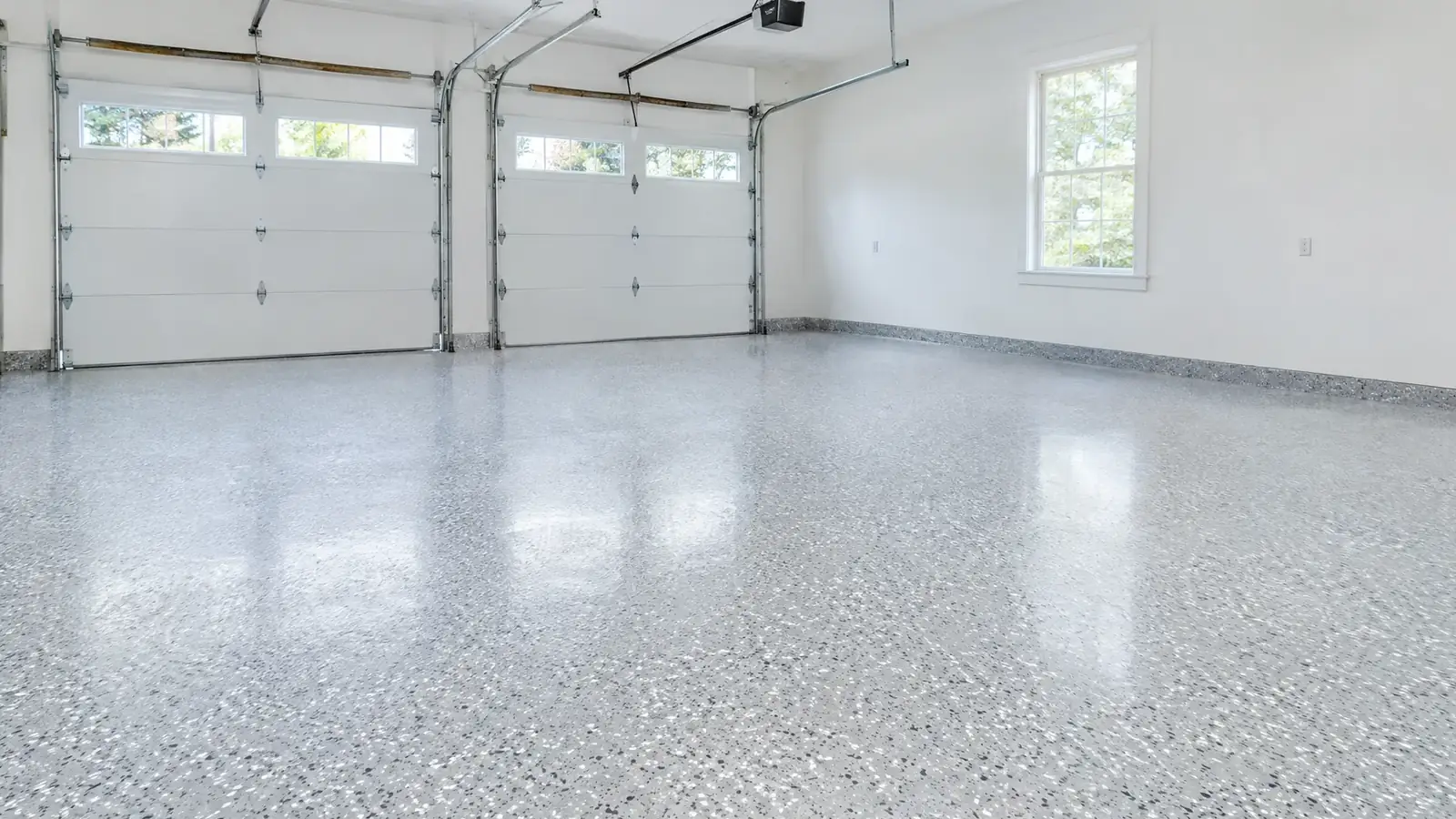
Because that is where the sun actually lands. Most garage floors are in shade for most of the day, and the only direct light is the beam that comes in when the door is open or through windows in the door itself. The apron and the first few feet inside take the most hours of direct sun, so they change first and fastest, while the back wall stays like new. That creates an uneven look. A floor with a clean line across it, light at the back and amber at the front, is the classic pattern, and it often shows after one hot summer. A south or west facing garage gets more of it. So does a garage where the door stays open for hours on weekends. The same pattern appears beside side windows and glass entry doors. If you can see where sunlight falls on your floor at 3 PM, you can predict where yellowing would start.
A UV-stable polyaspartic topcoat is made to resist it. Polyaspartic is an aliphatic coating, and that chemistry holds its color and clarity in sunlight far better than standard epoxy. That is why we put a UV-stable polyaspartic topcoat over our garage systems, and why it is the first thing we specify for patios, driveways and any floor that sees the sun. The honest part: stable does not mean immortal. No coating stays untouched forever in direct desert sun, and a cheap or thin product labeled polyaspartic can still change. The layers underneath matter as well. A well-built floor starts with diamond grinding, a solid base and a full-thickness topcoat, not a quick spray. The sealant we use is VOC-free, which also keeps odor down in an attached garage. Ask any installer which topcoat goes on top, and ask for the product name.
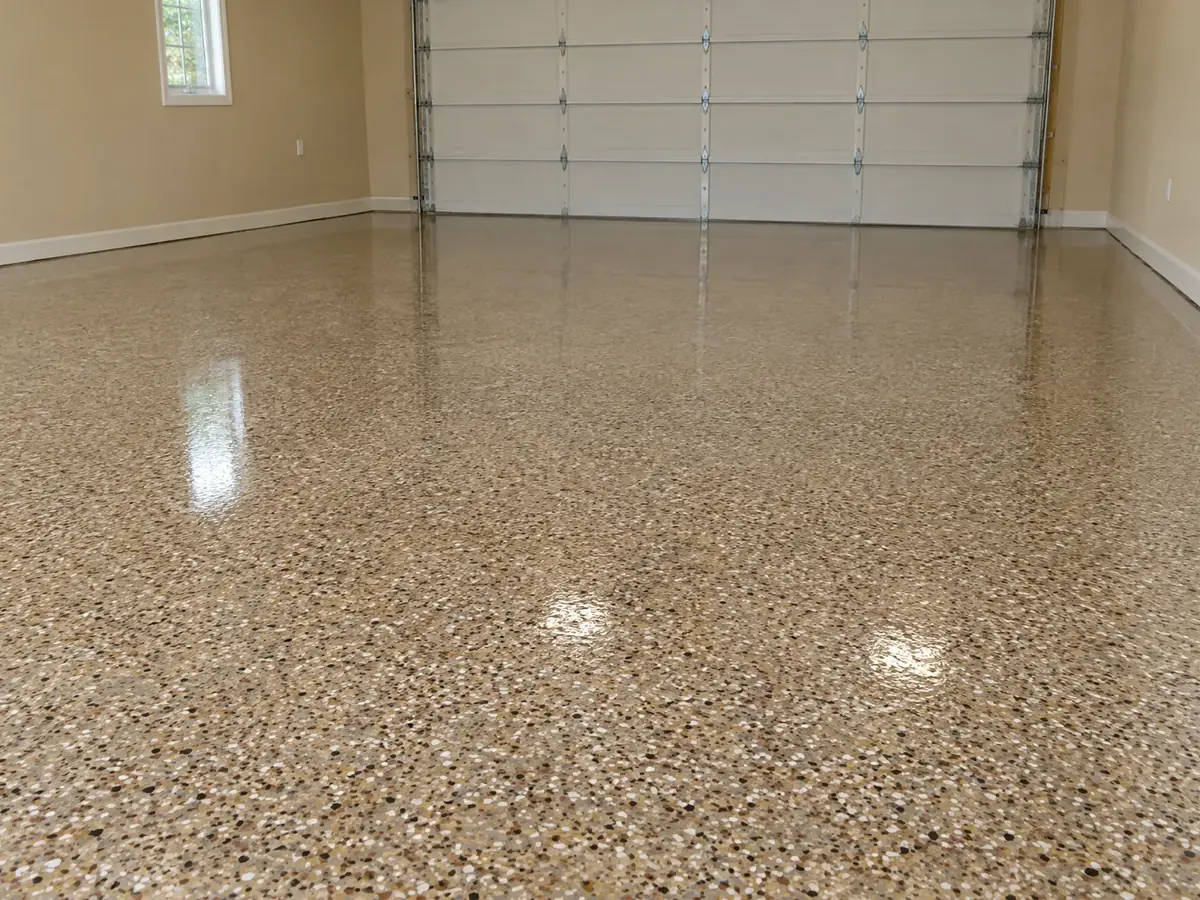
Color choice changes how much you notice. Clear coats, white and very light gray show an amber shift the most, because there is nothing for the eye to compare it against. Mid tones, tans and gray-and-black blends hide small changes well. A flake epoxy floor is the most forgiving choice. The mix of colors breaks up the surface, so a slight warm cast in the clear topcoat is hard to see, and it also hides dust and tire marks. A solid color epoxy floor in a medium gray will look more uniform than a pure white one, and a metallic epoxy floor depends on the color family. If you love a very light or white floor, choose it knowing that a UV-stable topcoat is essential and that you should limit direct sun. You can browse the color chart to compare tones before you decide.
Cleaning will not remove the yellow. The tint is inside the topcoat, not sitting on it, so degreasers and scrubbing only make the surface cleaner, not clearer. The practical fix is to recoat. If the floor is still well bonded, the surface is scuffed or lightly sanded and a new clear UV-stable topcoat is applied. That restores a clean look and gives you the protection you may have been missing the first time. The existing color is rarely a perfect match underneath, so the improvement is judged on how the whole floor looks afterwards. If the floor is peeling, chalking or lifting, recoating will not hold and the system needs to be ground and rebuilt. We can check the condition at a free estimate, and we will tell you if a recoat is enough. We do not guess a price from a photo.
Start at install by choosing the UV-stable topcoat. After that, simple habits help. Close the garage door during the sunniest hours when you are not working in there. Add window film or a shade to side windows and glass door panels. Park a vehicle or lay a rug in the strongest beam, since anything blocking the sun protects the floor underneath. Clean with a neutral cleaner, not harsh chemicals that can dull the topcoat. If you are building a new garage, face the door away from the afternoon sun when you can. And if the floor is already installed with a standard epoxy topcoat, an early recoat with a UV-stable topcoat is better than waiting for the color to shift. None of these steps is dramatic. Together they let a floor look good for years in a place where the sun is strong most of the year.
Yellowing is a UV and heat effect, and it is preventable. A UV-stable polyaspartic topcoat, a color that hides slight change and a little control over direct sun keep a floor looking right in Antelope Valley sun. If your floor is already amber, or you want one built to stay clear, call Accent Epoxy Floors at (661) 545-6676 for a free estimate. Call (661) 545-6676 for a free estimate.
Epoxy turns yellow because ultraviolet light and heat change the resin at the surface, giving it an amber tint. It is called ambering. It is usually cosmetic and slow, and it shows first where the sun hits the floor. A UV-stable polyaspartic topcoat resists it far better.
Standard epoxy can yellow and dull in direct sun over time, especially in light colors. A UV-stable polyaspartic topcoat holds color better. Fading is most obvious on the apron and near the garage door, where the sun reaches the floor for hours in the high desert.
A good UV-stable polyaspartic resists yellowing much better than epoxy, but nothing lasts forever in direct desert sun. A thin or low-quality product can still change. Ask which topcoat is used, and expect better results from a full-thickness, well-applied coat.
That area gets the most direct sun when the door is open, so the topcoat is exposed to more UV and heat than the shaded back of the garage. A clear line between light and amber is the classic sign. South and west facing doors show it sooner.
Usually yes, if the floor is still well bonded. Cleaning will not remove the tint, but scuffing the surface and applying a UV-stable topcoat restores a clean look. A peeling or chalking floor needs to be ground and rebuilt. A free estimate shows which one you have.
A UV-stable polyaspartic topcoat over a diamond-ground slab and a solid base is the best choice for sun exposure. Flake blends and mid-tone colors also hide slight change. For the full system, see our garage floor options and ask about the written warranty.
Durable, easy-to-clean garage floors that resist hot-tire pickup, oil and salt. Most two-car garages are done in one day.
Learn more →Full-rejection flake over a moisture-barrier epoxy basecoat, sealed with a UV-stable polyaspartic topcoat. Installed in one day.
Learn more →A clean, seamless pigmented floor in gloss, satin or matte for garages, workshops, interiors and commercial spaces.
Learn more →A sealed epoxy or polyaspartic floor stops bare concrete from shedding powder, but it cannot keep wind-blown desert dust out of the garage. What it does is make that dust easy to see and easy to remove. Seal the slab, seal the door edges, and dust mop before you wet mop.
Read the answer →The best way to clean an epoxy garage floor is to dust mop or blow off the grit, then mop with warm water and a mild pH-neutral cleaner using a soft mop or microfiber pad. Rinse, then dry. Skip acids, harsh solvents, wax and abrasive pads that can dull the finish.
Read the answer →Yes, a garage slab should be checked for moisture before it is coated, even in a dry desert climate. Concrete can hold and pass water vapor, and that vapor can push a coating off the slab. Calcium chloride and in-slab relative humidity tests measure it, and a moisture-barrier basecoat protects against it.
Read the answer →Call (661) 545-6676 or send the form at the top of the page. We reply the same day.