 ACCENTEpoxy Floors
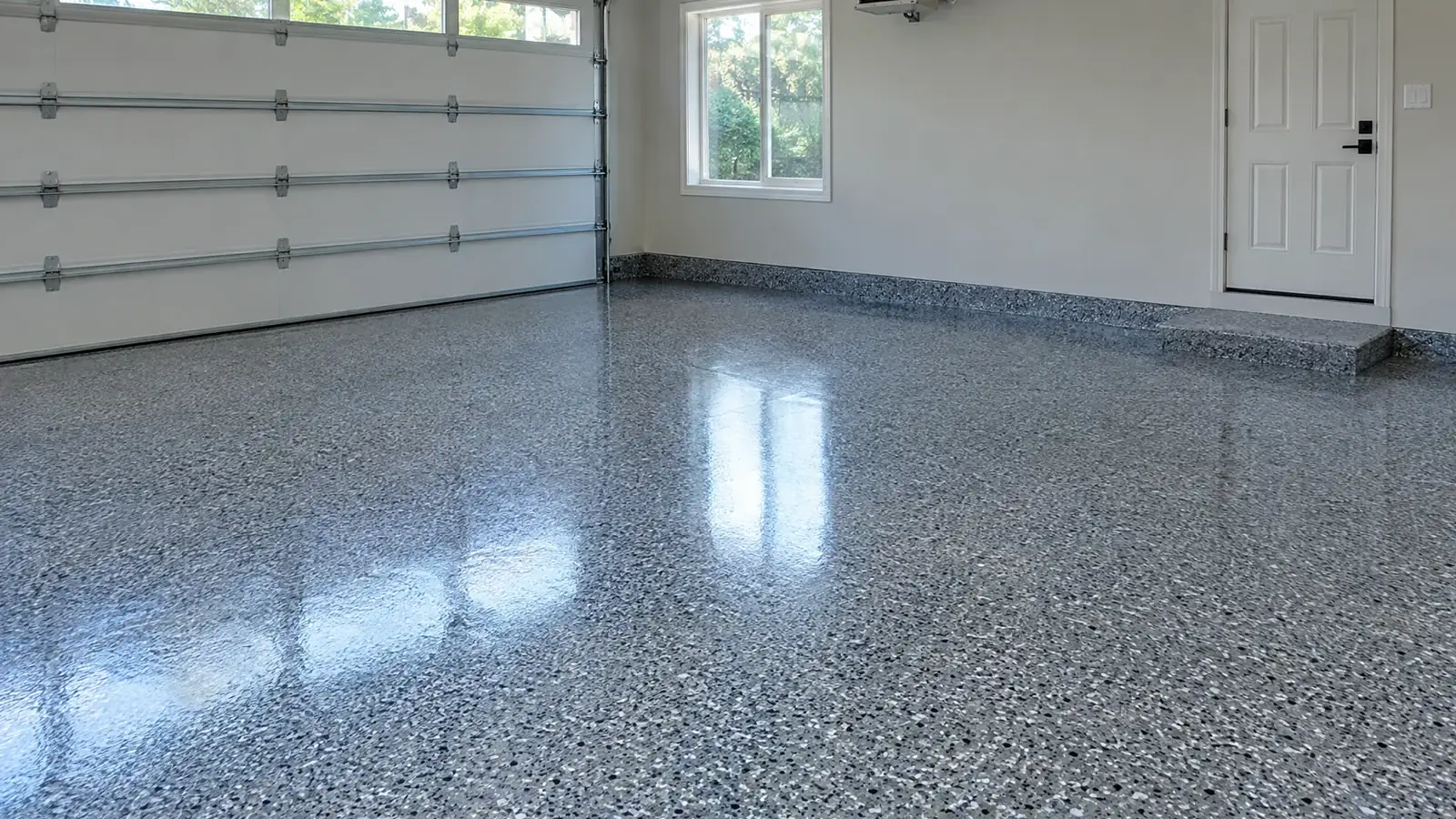
Three-car bays, shop-style garages and hot summer driveways need a tougher floor than a kit from the hardware store. We grind, repair, prime and coat your slab so it stands up to heat, dust and tires.
Epoxy is a good garage floor in Lancaster when it goes over a diamond-ground slab and is finished with a UV-stable polyaspartic topcoat, which handles heat, dust and hot tires. A standard two-car flake garage floor costs $2,600 to $4,000 and is finished in one day.
A garage in the Antelope Valley works harder than most. The door stays open for hours, the wind pushes fine dust across the slab, July afternoons run in the high 90s, and the car you park came in off a hot freeway. Plenty of garages here are also bigger than average: three and four bays, side-by-side workshop space, or a long shop building behind the house. A bare concrete floor in that setting stains, sheds powder and cracks, and a cheap coating peels in a season or two.
Accent Epoxy Floors is based in Lancaster and builds garage floors for Lancaster, Palmdale, Quartz Hill, Rosamond and the rest of the valley. We diamond grind every slab, repair every crack, and choose the system for your garage: an epoxy or moisture-barrier base, a flake or solid color body, and a UV-stable polyaspartic topcoat. We install epoxy, polyaspartic and polyurea garage floors and we resurface tired coatings too.
This page covers how heat, dust and wind change the way a garage floor should be built, the real differences between epoxy, polyaspartic and polyurea, how an install day runs, what resurfacing involves and what the floor costs. We would rather explain the tradeoffs and let you decide than sell you a system that does not fit your slab.
Start with the weather. Lancaster and Palmdale average a July high in the high 90s, and Palmdale sees about 35 afternoons a year at 100F or hotter. A slab with sun on the driveway apron can run well above the air temperature. Then night falls and the valley cools by roughly 30 degrees, and in winter Lancaster averages about 68 mornings a year at or below freezing. Concrete and coatings expand and shrink through that cycle every day, and a thin or poorly bonded film is the first thing to give. Next comes the wind. National Weather Service advisories for the valley cite gusts to 50 mph and blowing dust that cuts visibility below a mile. Fine silt blows under the door and onto the floor, where it works like sandpaper under shoes and tires. A sealed floor sweeps and mops clean, and a blended flake hides the film of dust that a bare or dark solid floor shows by the next afternoon. Tires are the third problem. A car that comes in after a long run in 100F heat carries hot rubber, and a weak coating can soften and lift where the tire sits. We call that hot-tire pickup, and the cure is thorough grinding, a strong bond and a topcoat built for it. Sun is the fourth. Light through the door falls across the same strip of floor every afternoon, and plain epoxy left in that light can amber over time. Finally, size. A four-car or shop-style garage has long runs of floor, several control joints and often old cracks. A big floor hides more surprises than a small one, so we inspect the whole slab before we mix anything.
These three get lumped together, so here is what each one really does. Epoxy is a two-part resin that bonds hard to concrete and builds thickness. It makes an excellent basecoat, and a moisture-barrier version, MVB, shields the coating from vapor rising through the slab. Its weakness is the sun. Left as the top layer in a bright garage, epoxy can amber or chalk. It also has a limited working time in heat, so the crew has to place it deliberately. Polyaspartic is an aliphatic polyurea. It resists UV and stays clear, cures fast, and works across a wider range of temperatures, which suits the desert's swings. It also kicks off quickly in the bucket, so it needs a practiced crew that mixes in small batches. It usually costs more than epoxy per gallon, which is why it is most often used as a topcoat rather than for the whole build. Polyurea is the broader family. A pure polyurea is very fast-setting and flexible, and it is sometimes used as a base or a full system. Fast cure is a real advantage on a tight schedule, but the same speed leaves little room for error on a large, hot slab. In practice, we build most garage floors the same way: an epoxy or MVB base for bond and moisture control, a flake or solid color body, and a UV-stable polyaspartic topcoat for color retention and tire resistance. That hybrid gives you epoxy's grip on the concrete and polyaspartic's resistance to sun. For a small project, or when you want a single-material floor, we can also install a polyaspartic or polyurea system. Tell us how the garage is used and how much sun reaches the floor, and we will recommend the combination that fits.
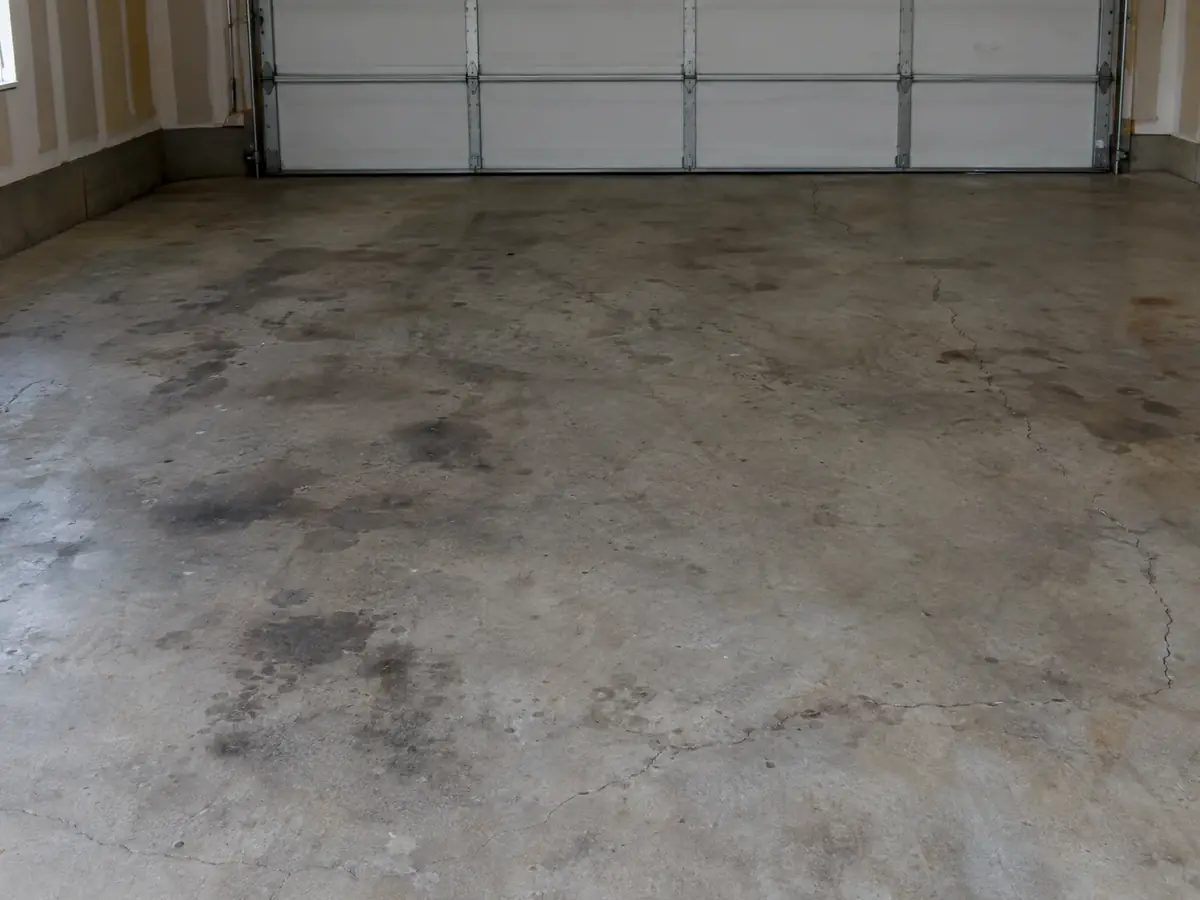
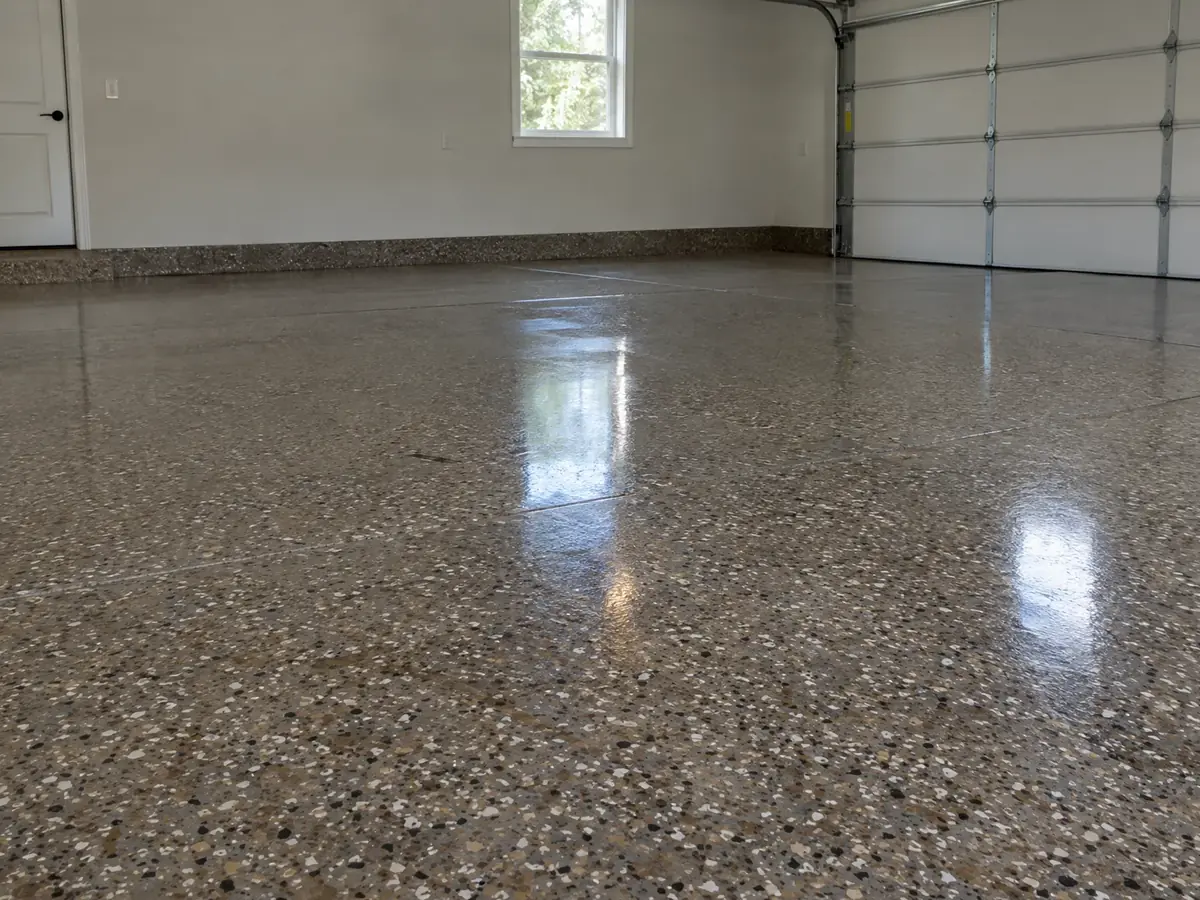
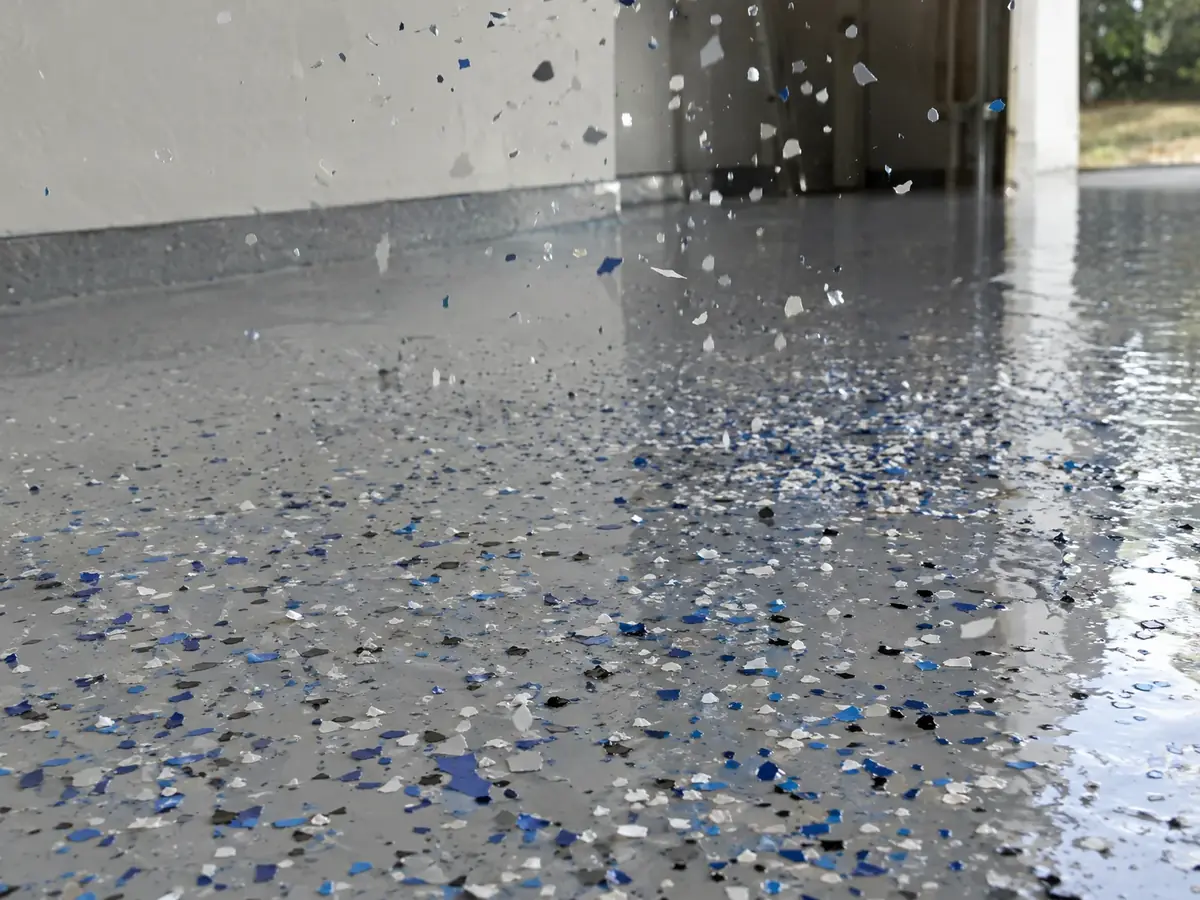
The visit starts with the slab. We walk the floor, tap for hollow spots, look for cracks, old coatings and oil, and check for moisture. Then the diamond grinder comes in. Grinding removes old paint and sealer, cuts a bonding profile into the concrete and opens its pores so the new coating can lock in. A dust shroud and vacuum keep the garage and the neighbors' air clean. Cracks and joints are cleaned, filled with a repair material and ground flush, and any spalled edges are patched. We vacuum the slab again, then apply a moisture-resistant primer or a moisture-barrier epoxy basecoat. A pigmented basecoat follows, and for a flake floor the colored chips are broadcast by hand into the wet coat until the surface is fully covered. Once it firms, we scrape the surface to knock down high flakes, vacuum the excess and seal the floor under a UV-stable polyaspartic topcoat. In a standard two-car garage the whole sequence is done in one day. Heat shapes how we schedule it. A warming slab can outgas, pushing air through a fresh coat and leaving pinholes, and heat shortens the time the resin stays workable. So in summer we start early, work in the cooler morning hours and keep material out of the sun. In winter we start later so the slab warms to a safe temperature. Three- and four-car garages and shop buildings take longer than a standard two-car floor, and your written quote lists the schedule. Before we leave, we walk the finished floor with you and tell you when you can walk on it and when the car can return.
Yes, and many of our garage jobs are resurfacing jobs. Garage floor resurfacing means repairing and recoating a slab that already has a coating, or has failed paint, a peeling kit or a worn epoxy. The deciding factor is how well the old coating is bonded. We test adhesion in several spots. A sound, well-bonded epoxy can sometimes be prepared and coated over, and polyaspartic is often placed over a cleaned and profiled epoxy as a fresh topcoat. A coating that lifts, bubbles or flakes off in sheets has to come off, and diamond grinding removes it down to clean concrete. Retail kits and thin paints are the most common reason we grind, because they sit on top of the slab rather than bonding into it. Once the old layer is gone, the slab is treated like a new one: repair, primer or MVB, body coat and topcoat. A quick word on tradeoffs. Epoxy is hard but not scratch-proof, and dragging a steel toolbox or a jack stand across any coating can leave marks. A glossy floor is slick when wet unless we add texture, and a darker color shows dust more than a blend. Concrete with a moisture problem needs the right primer or barrier, or the coating can blister. Care is easy: sweep, mop with a neutral cleaner and warm water, wipe up spills and skip harsh acids. Used this way, a properly built floor serves a home garage for many years. Ask us about the written warranty at your free estimate.
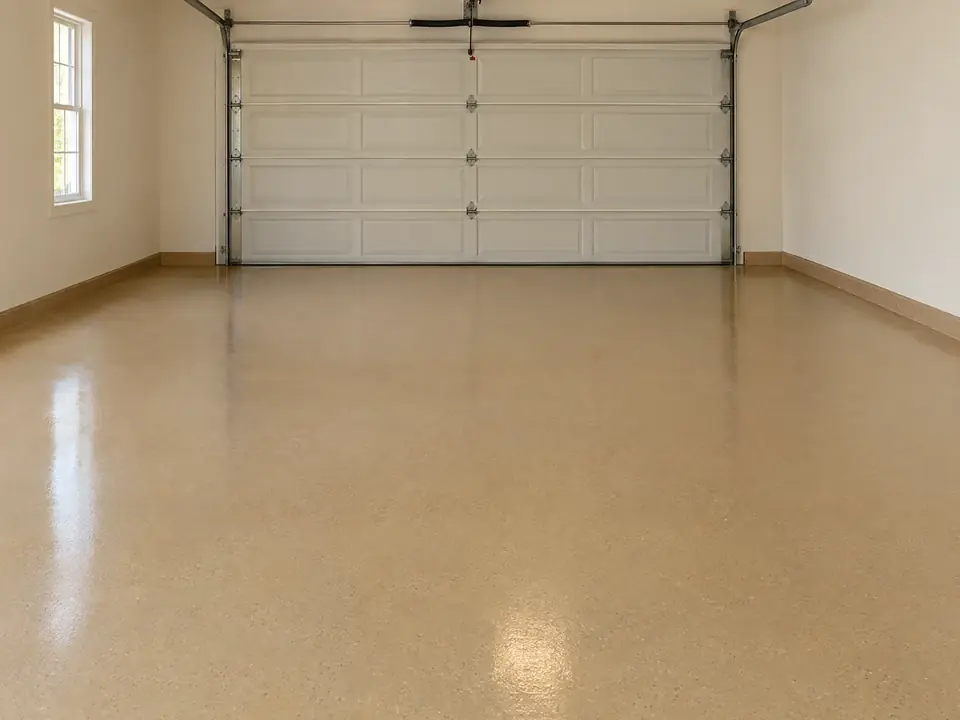
Diamond grinding cuts a bonding profile into the concrete so the coating grips the slab. Acid etching and rinsing cannot match that grip, and weak prep is why most garage floors peel.
A strong bond and a cured polyaspartic topcoat stand up to rubber that comes in hot after a long summer drive, so tires do not lift the coating where they park.
The UV-stable topcoat resists the amber shift that plain epoxy can show when sun falls on the floor every afternoon, so the color you choose stays the color you see.
A sealed floor wipes clean, so the fine desert silt that blows under the door lifts off with a broom or a damp mop instead of grinding into bare concrete.
We plan joints, cracks and schedules for three- and four-car garages and shop buildings, so a big floor gets the same care as a small one.
After we measure and inspect the slab, you get a written quote with the system, the schedule and one fixed price, so there are no surprises on the last day.
A standard two-car flake garage floor takes one day from the first pass of the grinder to the final topcoat. Solid color takes about 3 days, metallic takes 3 to 4 days, and quartz and sand finishes take 2 to 3 days. Larger garages and heavy crack repair can add time. In the summer we start early, because a rising slab temperature and a short working time are the biggest risks to a fresh coat. In winter we begin later in the morning so the slab is warm enough to cure properly. We tell you the exact time you can walk on the floor and the car can return at the final walkthrough, so nobody parks on it too early.
Choose a flake epoxy floor for the best mix of price, traction and dust hiding, and for a one-day install. Choose a solid color epoxy floor for a clean, bright, even look. Choose a metallic epoxy floor when you want a showpiece garage. Choose a quartz finish when grip matters most. Choose grind and seal if you want the natural concrete look at a lower cost. If you are unsure, bring your garage, your budget and your parking habits to the free estimate and we will point you to the right system. Our minimum project is $2,600, a two-car flake floor runs $2,600 to $4,000, and solid color starts at $3,800.
Typical ranges for Lancaster and the Antelope Valley. Minimum project $2,600. Commercial and industrial work is quoted after a site visit.
| System | Price per sq ft | Typical project |
|---|---|---|
| Flake system (garage, up to 400 sq ft) | $6.50 – $10 per sq ft | $2,600 – $4,000 |
| Solid color system | $9.50 – $11.50 per sq ft | $3,800 – $4,600 |
| Metallic epoxy system | $12.50 – $18.50 per sq ft | $5,000 – $7,400 |
| Quartz & sand finish system | $9 – $16.50 per sq ft | $3,600 – $6,600 |
| Grind & seal (clear sealer) | $6.50 – $9 per sq ft | $2,600 – $3,600 |
| Patio, driveway & pool deck | $8 – $12 per sq ft | $3,200 – $4,800 |
| Commercial & industrial | Quoted after a site visit | Quoted per project |
Prices and details reviewed November 2026. Project examples assume a two-car garage up to 400 sq ft. Free on-site measurement and written estimate. See the color chart to pick your color.
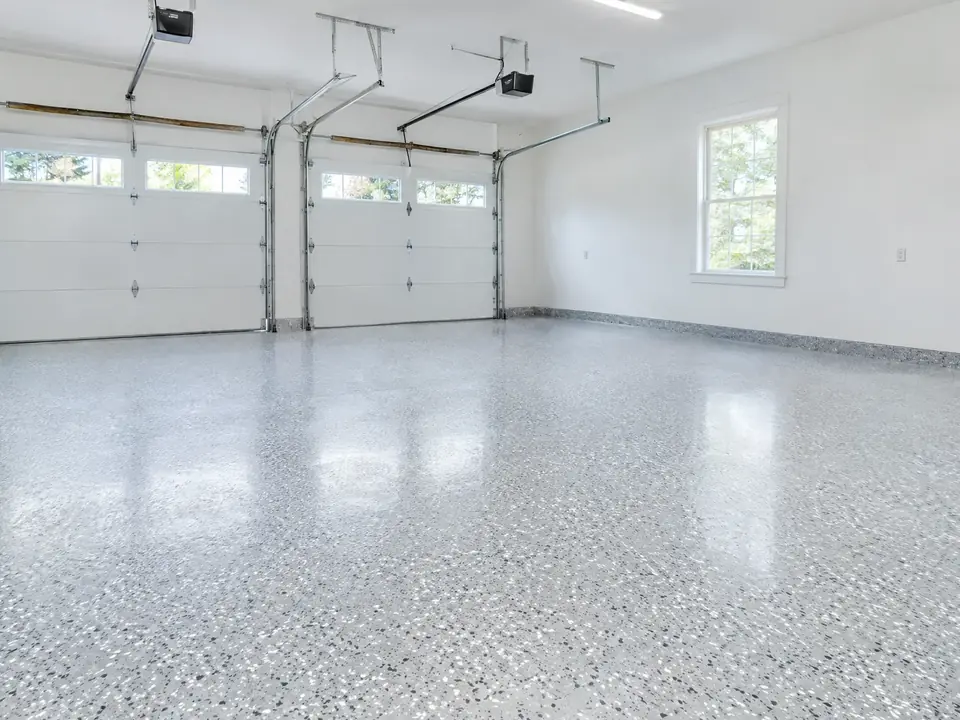
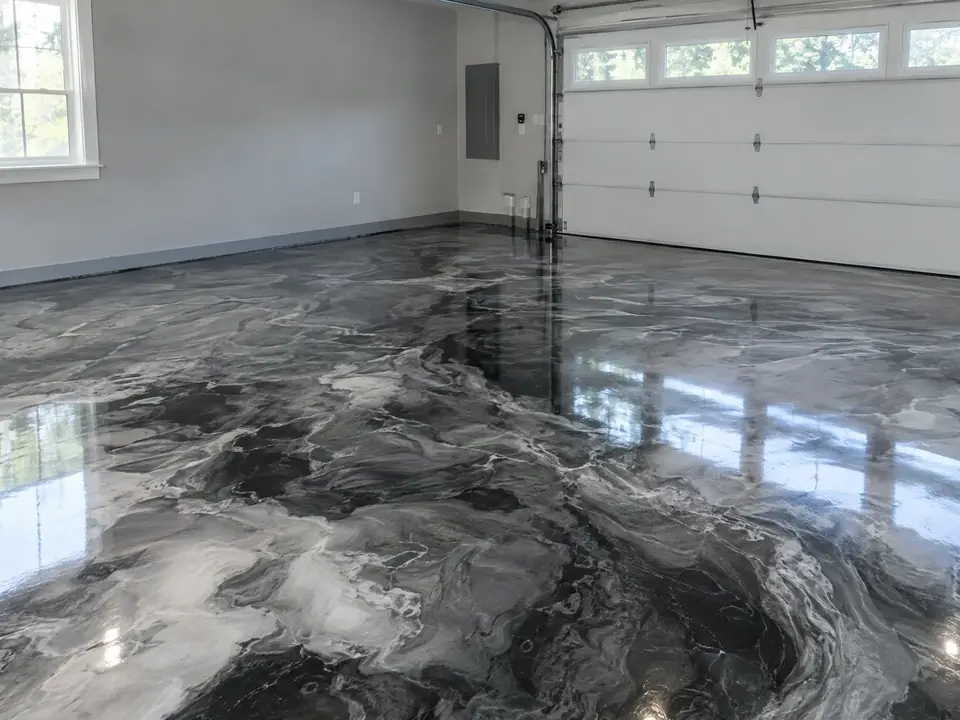
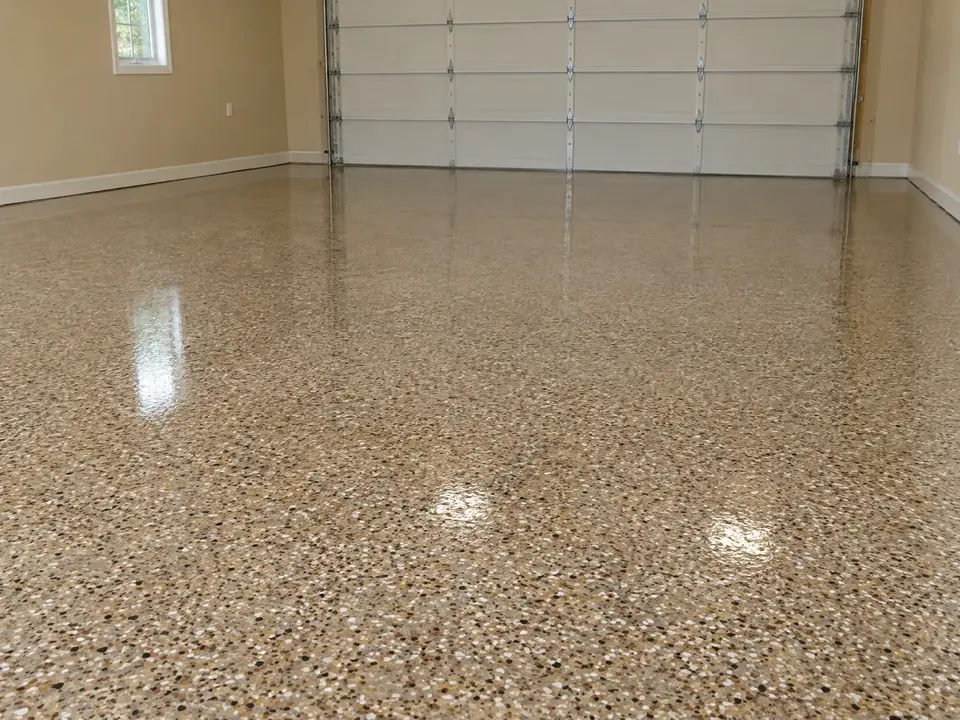
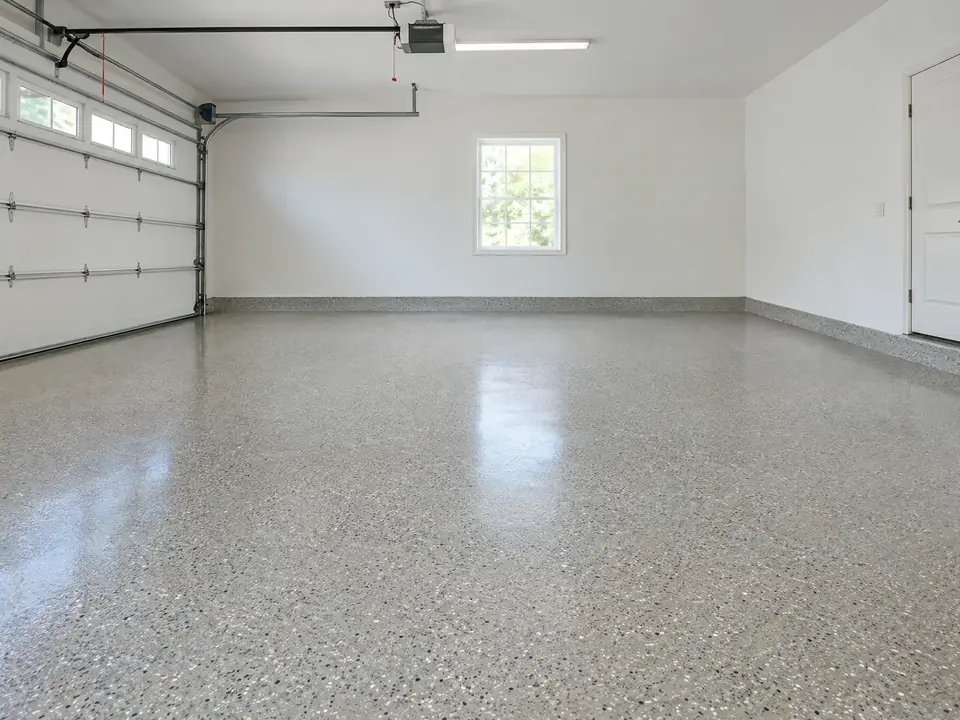
A sealed epoxy or polyaspartic floor stops bare concrete from shedding powder, but it cannot keep wind-blown desert dust out of the garage. What it does is make that dust easy to see and easy to remove. Seal the slab, seal the door edges, and dust mop before you wet mop.
Read the answer →To prepare a garage for epoxy, empty it completely, move vehicles out, clear the walls, unplug appliances and make sure the crew has access to power and the space around the floor. The crew handles grinding, crack repair and cleaning, so do not etch, paint or seal the floor yourself.
Read the answer →The best way to clean an epoxy garage floor is to dust mop or blow off the grit, then mop with warm water and a mild pH-neutral cleaner using a soft mop or microfiber pad. Rinse, then dry. Skip acids, harsh solvents, wax and abrasive pads that can dull the finish.
Read the answer →A two-car flake garage floor up to 400 square feet costs $2,600 to $4,000, which is $6.50 to $10 per square foot. Solid color runs $9.50 to $11.50 per square foot and starts at $3,800, and metallic is $12.50 to $18.50. Every project has a $2,600 minimum. Your free estimate gives you one fixed quote.
A three-car garage costs more than a two-car because there is more floor to coat. The same per square foot rates apply: flake is $6.50 to $10, solid color is $9.50 to $11.50 and metallic is $12.50 to $18.50. We measure the actual space and cracks before we give you a fixed written quote.
Epoxy bonds strongly to concrete and builds thickness, but it can amber in sun. Polyaspartic resists UV, stays clear and cures fast. Polyurea is the broader fast-setting family that polyaspartic belongs to. For most garages we use an epoxy or MVB base under a polyaspartic topcoat, which combines bond with sun resistance.
For the topcoat, usually yes, because polyaspartic holds its color in sun and resists hot tires. For the base, epoxy is often better because it bonds well and controls moisture. Neither product is best on its own, which is why we pair them in a hybrid system for most garages.
Yes, when the slab is properly ground, the coating is fully cured and a UV-stable topcoat is used. Hot-tire pickup happens when a weak coating softens under tires that come in hot after a long drive. Cars driven in 100F weather are exactly why we insist on thorough prep and a quality topcoat.
Yes, as long as the epoxy is sound, clean and properly profiled first. Polyaspartic over epoxy is how most hybrid systems work. If the old epoxy is lifting, chalky or contaminated, we grind it off before coating, because a new topcoat is only as good as the layer beneath it.
Garage floor resurfacing means repairing and recoating a garage slab that already has a failed or tired coating. We test the old layer, remove whatever is not bonded by diamond grinding, fix cracks and joints, then build a new primer, body coat and topcoat. The result looks like a new floor.
Yes. Diamond grinding cuts the bonding profile the coating needs and strips off old paint, sealers and weak concrete. Acid etching and washing do not open the surface as evenly or as deeply. Skipped or weak prep is the most common cause of peeling, in hot and cold climates alike.
Yes, with planning. Large floors have more joints, more cracks and a longer install schedule, so we inspect the entire slab and plan the work in sections. Flake or solid color with a polyaspartic topcoat handles tool traffic, tires and dust well. A site visit tells us how many days to schedule.
Yes, but the crew has to schedule around the heat. We start early, keep material out of the sun and watch the slab temperature, because a warming slab can bubble the coating and heat shortens the working time of the resin. That is why one-day flake installs in summer start in the morning.
Full-rejection flake over a moisture-barrier epoxy basecoat, sealed with a UV-stable polyaspartic topcoat. Installed in one day.
Learn more →A clean, seamless pigmented floor in gloss, satin or matte for garages, workshops, interiors and commercial spaces.
Learn more →Hand-guided metallic pigments create marble and lava effects, so no two floors look alike. A statement floor for homes and showrooms.
Learn more →Call (661) 545-6676 or send the form at the top of the page. We reply the same day with a time to measure.