 ACCENTEpoxy Floors
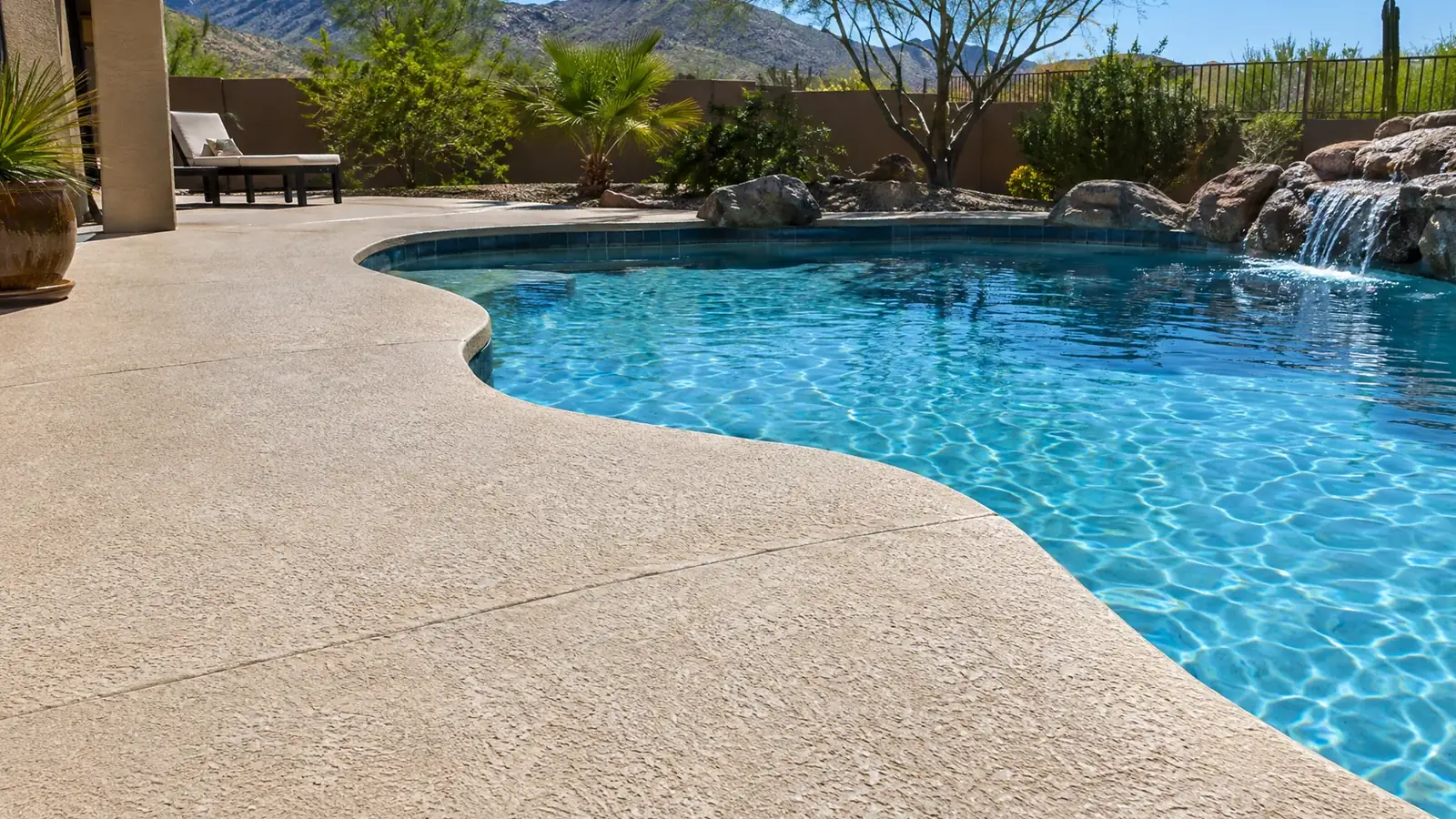
We grind, repair and coat outdoor concrete with a UV-stable topcoat and a texture chosen for traction, so it holds up to desert sun, wind and freezing nights.
Yes, concrete can be coated outdoors if the system is built for sun and not just for a garage. Accent uses diamond grinding, crack repair, color or quartz texture and a UV-stable polyaspartic topcoat. Patio, driveway and pool deck projects run $8 to $12 per square foot, typically $3,200 to $4,800.
An outdoor slab lives a harder life than a garage floor. It takes direct sun from morning to evening, the July average high in Lancaster is about 98F, and the same concrete can sit below freezing on roughly 68 mornings a year. Add wind that gusts past 45 mph in advisories and very little rain to wash the surface, and bare concrete does what you would expect. It fades, chalks, stains and cracks along its joints.
Outdoor concrete coatings are the answer to that. Accent Epoxy Floors coats patios, driveways, pool decks, stairs and walkways in Lancaster and across the Antelope Valley, and restores tired concrete that is still sound enough to keep. The finish can be a solid color, a color flake broadcast or a quartz finish, and every open-sun project gets a UV-stable polyaspartic topcoat and a texture picked for traction.
This page covers what actually works outside, how hot a coated surface feels, how we handle slip resistance and cracks, and what the work costs. It also covers the cases where we will tell you to repair a slab, or leave it alone, instead of coating it. A free estimate starts with a look at your concrete, because the condition of the slab decides the plan.
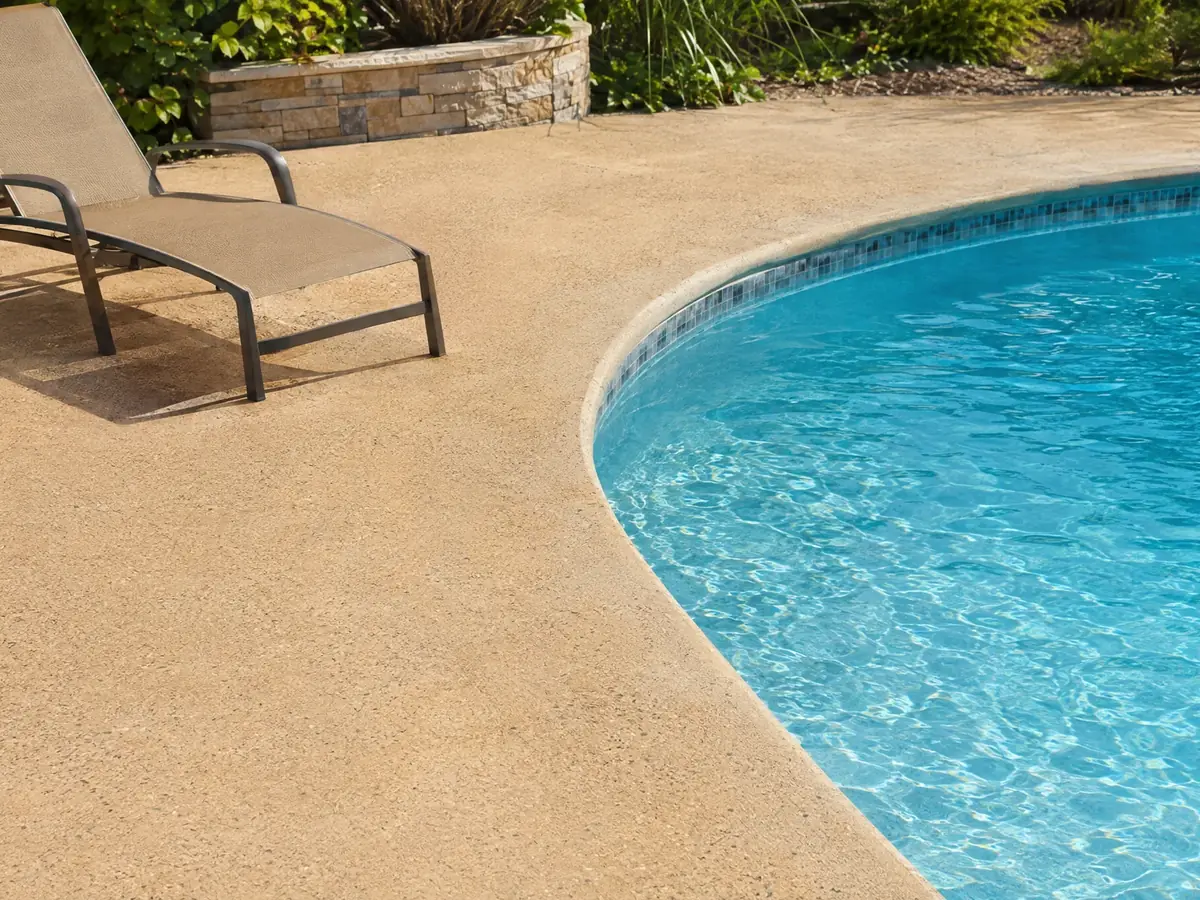
Yes, but not every product survives the sun. Standard epoxy is excellent indoors, yet ultraviolet light slowly ambers and chalks it when it sits in direct sun for years. That is why outdoor work needs a topcoat made to resist UV. Our outdoor systems start with diamond grinding to cut a bonding profile, then a pigmented base coat, a broadcast of color flake or quartz for texture, and a UV-stable polyaspartic topcoat that keeps its color and clarity. Polyaspartic also cures quickly, which helps on a patio where a gust of wind or an afternoon heat spike can ruin a slow coat. The sealant is VOC-free, so there is little odor near open doors and windows. A plain epoxy topcoat can still make sense on a covered patio or a shaded walkway, and we will say so when it does. For anything in open desert sun, we specify the UV-stable topcoat.
Every slab gets hot in the desert, coated or not, and no coating turns concrete into a cool surface. What changes is color and texture. Dark colors absorb more sun, so a charcoal or deep brown patio will feel hotter under bare feet than a light tan or pale gray one. A textured broadcast also scatters light differently than a smooth glossy film. We do not quote surface temperatures, because we have not measured them on your slab, and sun angle, shade and wind change the answer hour by hour. What we can do is help you choose. Look through the color chart, ask about samples at the free estimate, and test any sample in your own sun on a warm afternoon. Walking on it barefoot is the real test. For a pool deck, lighter colors and a fine broadcast make the most sense, since that is where bare feet matter most. Shade structures and light colors will do more for comfort than any coating.
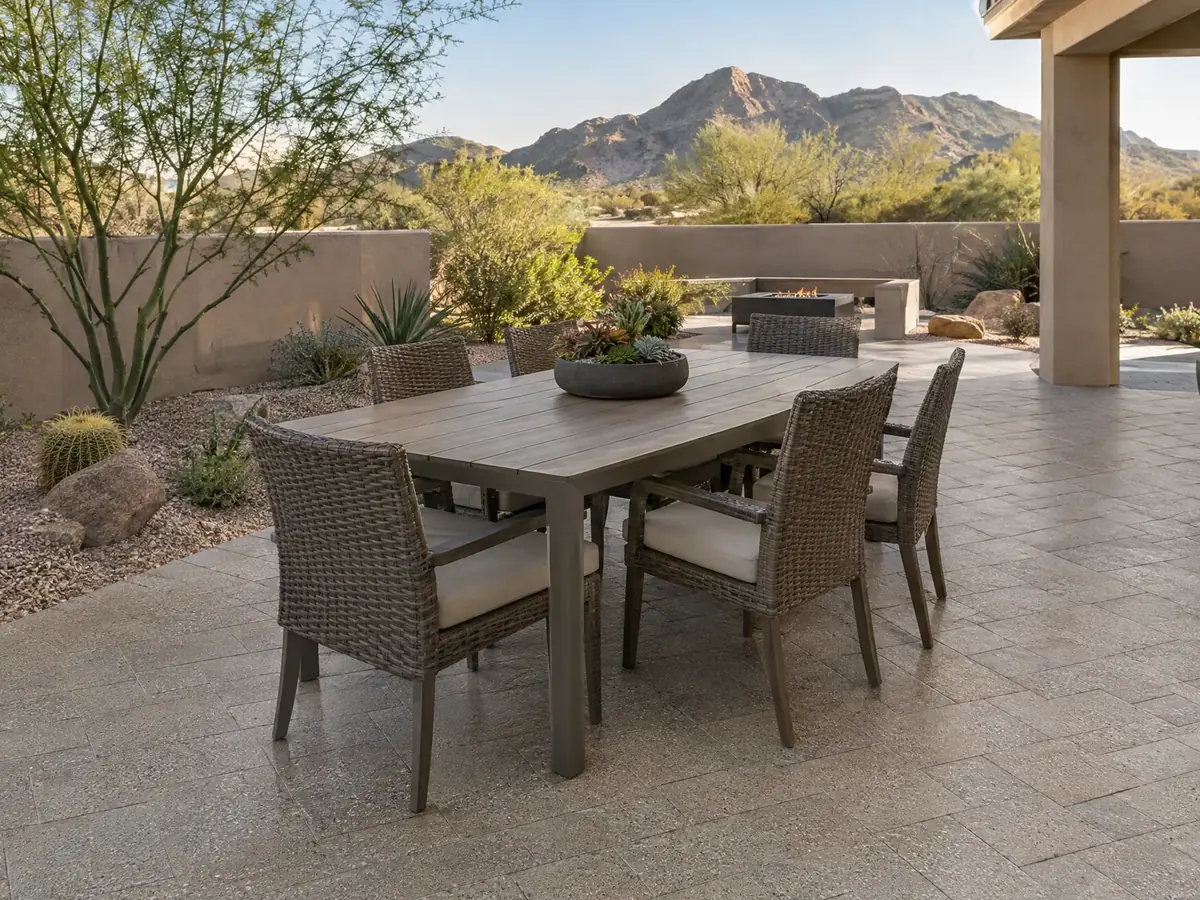
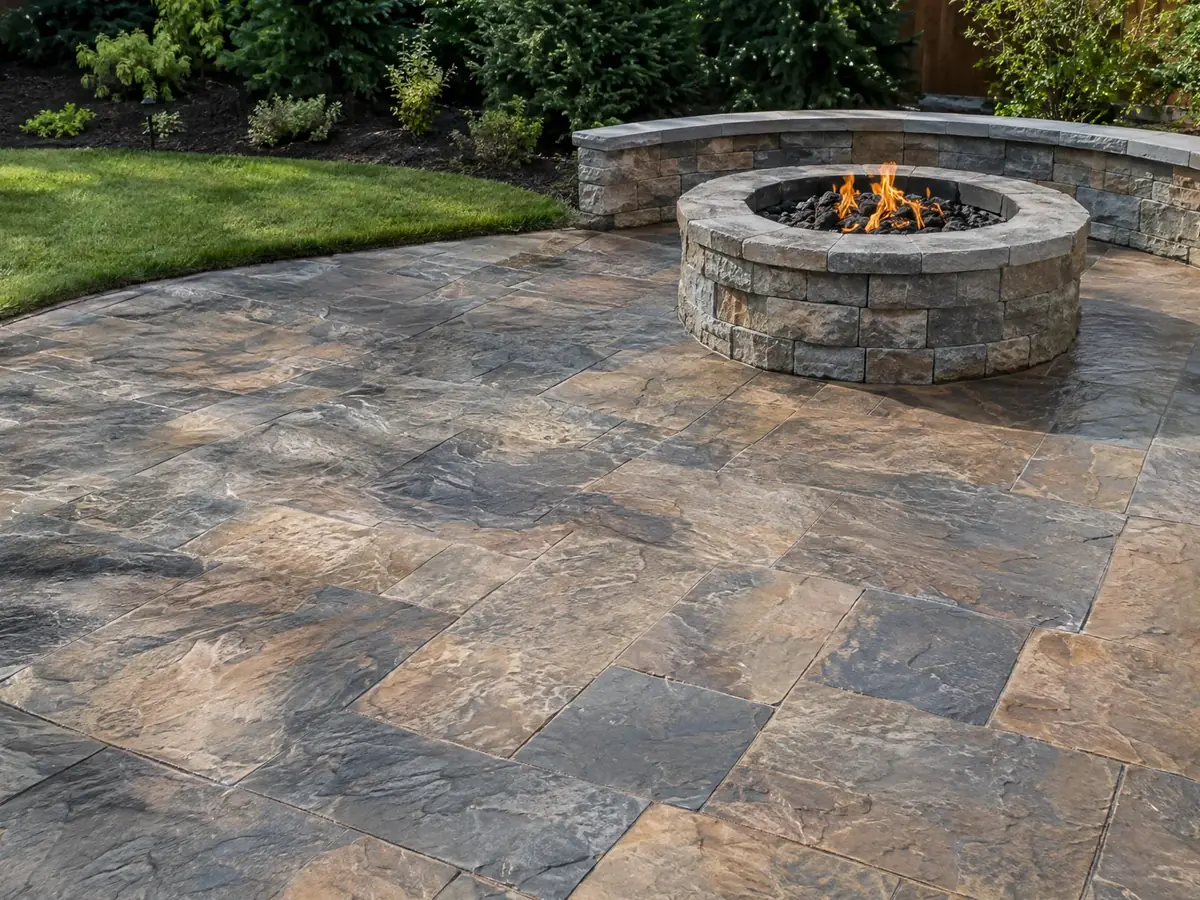
Texture does the work. A smooth, glossy coating is slick when wet, so outdoor floors get a broadcast of quartz, sand or color flake locked into the base coat and sealed under the topcoat. The size of that texture is a real tradeoff. A coarse broadcast grips better but is harder to clean, rougher on bare feet and knees, and holds dust and sunscreen. A fine broadcast is more comfortable but gives less bite. We match the texture to the spot. Steps, ramps and the edge of a pool deck get a more aggressive finish, while a dry seating area can be gentler. No coating is slip-proof, and we will not promise that. What we promise is that the surface is designed for wet shoes and bare feet, and that you can look at the texture and walk on a sample before you decide. Tell us at the estimate who uses the space, including kids, older relatives and pets.
Concrete moves, and a coating cannot stop that. Lancaster averages about a 30 degree swing between a July afternoon and the following morning, and winter nights drop to freezing often. Slabs expand and shrink with those swings, which is why installers cut control joints. The slab is meant to crack there, not across your patio. We respect those joints and treat them with flexible material instead of locking them solid with something rigid that will split. Hairline cracks are cleaned, filled and ground flush before coating. A crack that is still moving, from settling, tree roots or poor drainage, can show through again, and we will explain that at the estimate instead of hiding it. A coating protects and decorates concrete. It is not a structural repair. If a slab has heaved, dropped or crumbled through its depth, replacement is the honest answer, and we will tell you that.
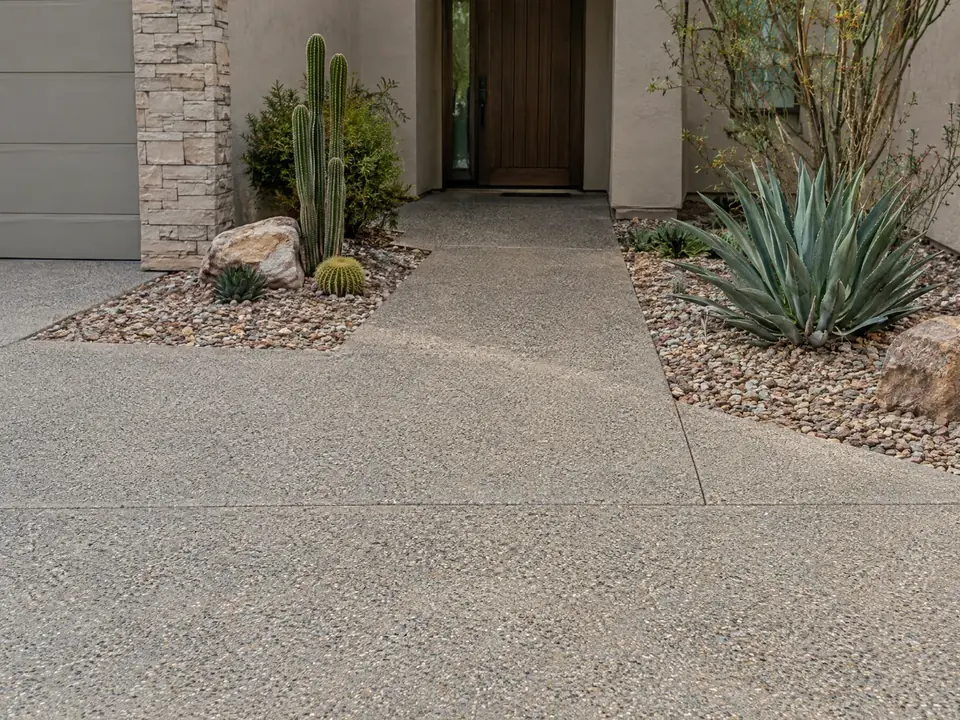
Your system sets the schedule, and the weather can move it. A flake system is typically one day, a quartz finish two to three days, and solid color three days, and your written quote lists the plan for your slab. Outdoor work starts early in the morning, before the slab warms and before afternoon wind builds. If the forecast shows strong gusts or extreme heat, we move the day rather than risk dust in the coating or a short pot life. The topcoat is firm enough for light foot traffic soon after it cures, and your quote states when furniture can go back and when vehicles can drive on it. Keep sprinklers, pets and children off the area until we give the all clear.
Choose an outdoor concrete coating when the slab is sound, you want color and traction, and you want a surface that is easy to clean. Choose grind and seal when you like the natural concrete look and want the lowest-cost protection. A solid color epoxy floor suits the garage, but outside the system needs the UV-stable topcoat. Choose replacement when the slab has heaved, dropped or crumbled through its depth, since no coating fixes structure. Pavers or stamped overlays suit a full redesign, while a coating suits keeping the slab you have and making it look new. Not sure which fits? A free estimate settles it.
The polyaspartic topcoat is made to resist ultraviolet light, so color and clarity hold up in open desert sun far better than a plain epoxy finish.
Quartz, sand or color flake locks into the coating, giving wet shoes and bare feet something to grip. We set the texture by location, from gentle on a patio to firmer on steps.
Faded, stained and patched concrete gets a uniform surface in a color you pick from the color chart, without the cost and mess of tearing it out.
A sealed surface sweeps and rinses clean, so windblown dust, leaves and spilled drinks do not soak into the pores of the concrete.
Oil drips, grease and pool chemicals stay on top of the sealed surface instead of sinking into bare concrete, where they leave dark marks.
Diamond grinding opens the concrete and gives the coating a bonding profile. That bond is what separates a lasting surface from one that peels after a summer.
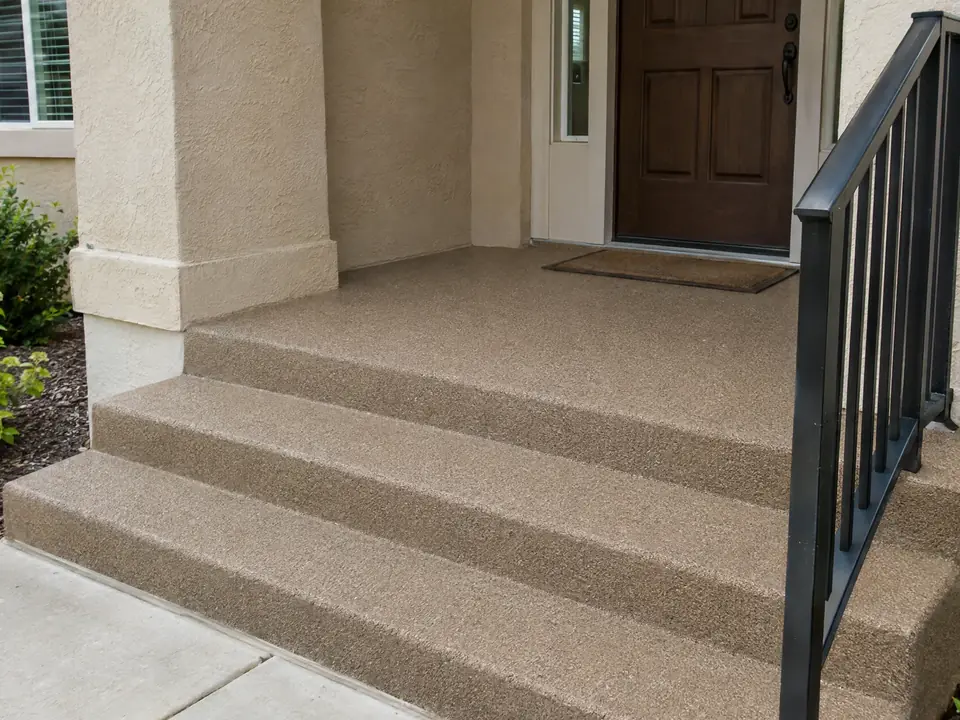
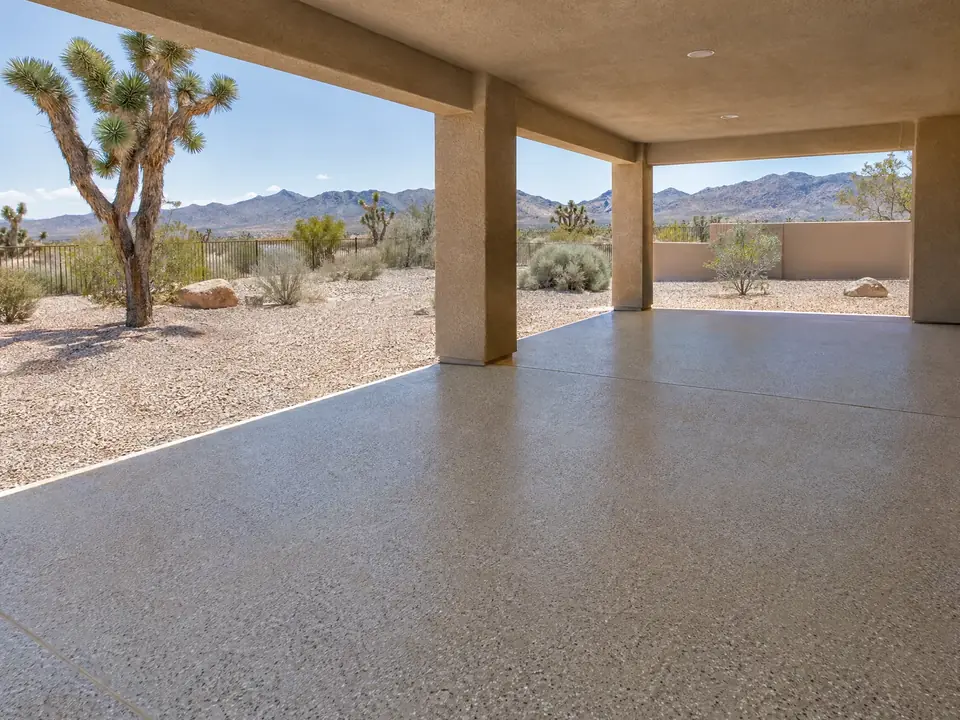
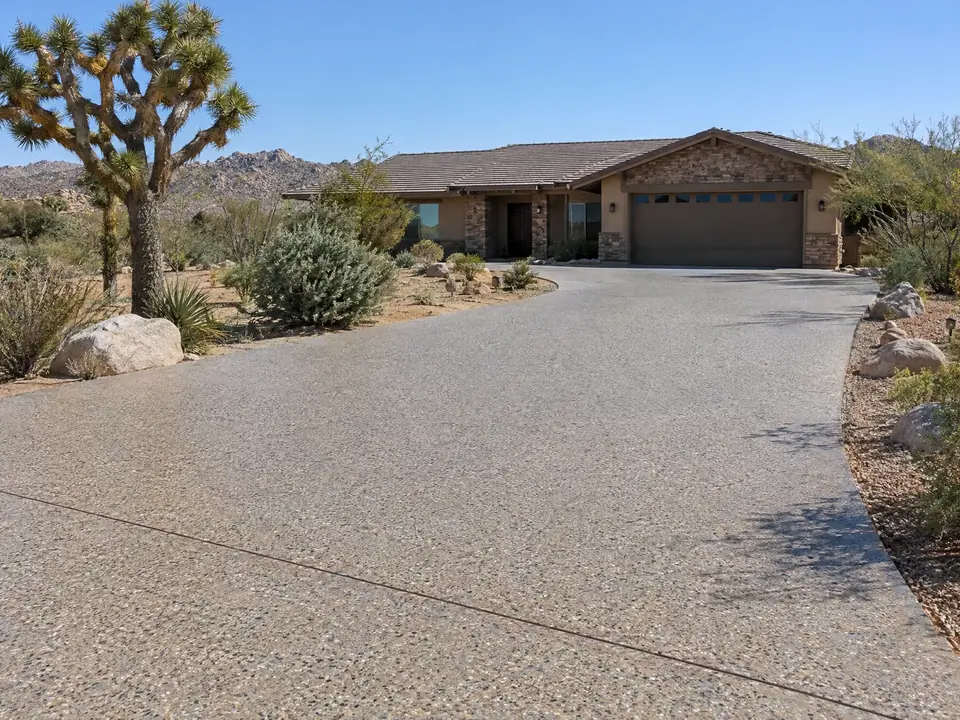
Typical ranges for Lancaster and the Antelope Valley. Minimum project $2,600. Commercial and industrial work is quoted after a site visit.
| System | Price per sq ft | Typical project |
|---|---|---|
| Flake system (garage, up to 400 sq ft) | $6.50 – $10 per sq ft | $2,600 – $4,000 |
| Solid color system | $9.50 – $11.50 per sq ft | $3,800 – $4,600 |
| Metallic epoxy system | $12.50 – $18.50 per sq ft | $5,000 – $7,400 |
| Quartz & sand finish system | $9 – $16.50 per sq ft | $3,600 – $6,600 |
| Grind & seal (clear sealer) | $6.50 – $9 per sq ft | $2,600 – $3,600 |
| Patio, driveway & pool deck | $8 – $12 per sq ft | $3,200 – $4,800 |
| Commercial & industrial | Quoted after a site visit | Quoted per project |
Prices and details reviewed November 2026. Project examples assume a two-car garage up to 400 sq ft. Free on-site measurement and written estimate. See the color chart to pick your color.
Yes, but the topcoat matters. Standard epoxy slowly ambers and chalks in direct sun, so outdoor floors need a UV-stable polyaspartic topcoat over a ground, repaired slab. A covered patio can be more forgiving. For open Antelope Valley sun, we build the UV-stable version.
A UV-stable polyaspartic topcoat over a ground slab with a pigmented base and a textured broadcast is the best fit for open desert sun. It resists fading, cleans easily and gives traction. The best choice for your slab depends on its condition, shade and use, which we check at the free estimate.
It depends on prep, system and exposure, so we do not promise a number of years. Diamond grinding, a UV-stable topcoat and a sound slab are what extend life. South and west facing slabs age faster than shaded ones. Ask us about the written warranty.
It should not be, if it is textured. A smooth glossy coating is slick, but a broadcast of quartz or sand under the topcoat adds grip for wet feet. No surface is slip-proof, so we match the texture to the edge, steps and seating areas, and you can see a sample first.
Any concrete in desert sun gets hot, and a coating does not change that. Lighter colors and a fine texture feel more comfortable than dark, smooth ones. We have not measured your slab, so test a sample in your own sun on a warm afternoon before choosing.
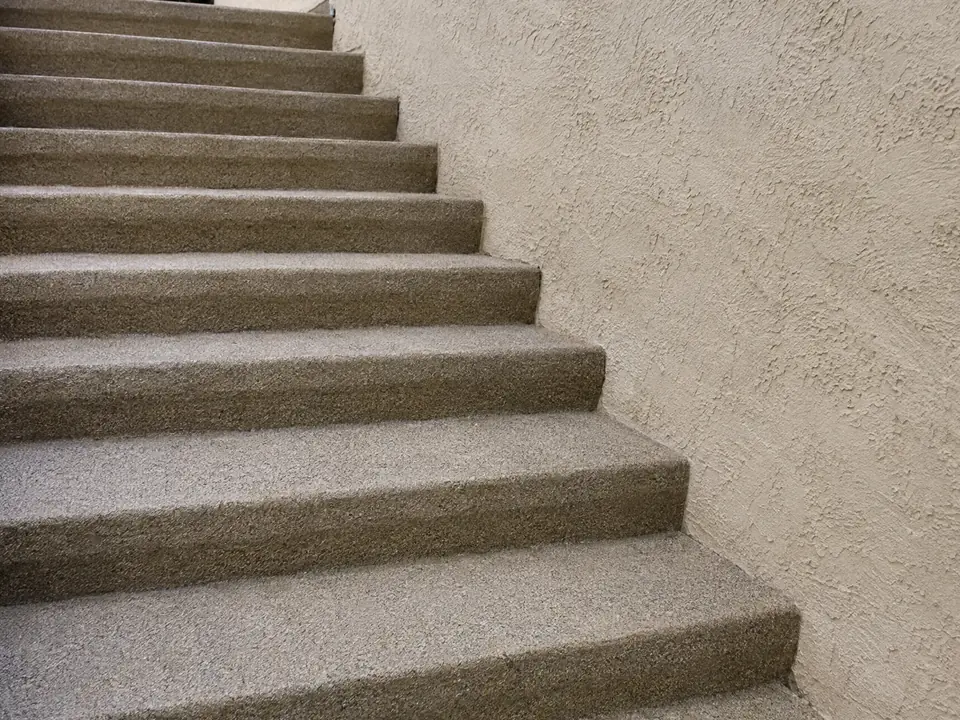
Yes. Stairs are ground, chipped edges are rebuilt, and treads get the most aggressive texture on the job. The front edge of each step takes the wear, so it gets extra attention. Stairs can be done on their own without coating a whole patio.
Driveway projects run $8 to $12 per square foot, with typical projects at $3,200 to $4,800. Repair needs, texture level, size and access move the price within that range. We give a fixed written quote after seeing the slab, so the number is settled before work begins.
Often yes. Sun fading, stains, rough surfaces, peeling paint and shallow spalls can be ground, patched and coated or sealed. Deep structural cracks, tilting slabs and widespread crumbling through the slab are replacement jobs, and we will tell you if that is what you have.
It is worth it when the slab is sound and you want color, traction and easy cleaning without replacing concrete. Cost is usually a fraction of replacement. It is not worth it when the slab is failing structurally. We tell you which case you have at the free estimate.
A coated pool deck is not slippery or too hot when it is built for the job. Slip resistance comes from texture added to the topcoat, and surface temperature depends mostly on color and sun. Lighter colors run cooler. Accent Epoxy Floors coats pool decks with a UV-stable topcoat and a grip finish.
Read the answer →Epoxy turns yellow because ultraviolet light and heat slowly break down the resin, a change called ambering. It shows first where sun hits the floor, usually near the garage door. A UV-stable polyaspartic topcoat, a color that hides slight change and less direct sun on the slab are what prevent it.
Read the answer →Yes, a garage slab should be checked for moisture before it is coated, even in a dry desert climate. Concrete can hold and pass water vapor, and that vapor can push a coating off the slab. Calcium chloride and in-slab relative humidity tests measure it, and a moisture-barrier basecoat protects against it.
Read the answer →Diamond-ground concrete finished with a clear sealer for a natural, low-maintenance floor at the lowest installed price.
Learn more →Full-rejection flake over a moisture-barrier epoxy basecoat, sealed with a UV-stable polyaspartic topcoat. Installed in one day.
Learn more →Double-broadcast colored quartz or a sand finish for extra grip and durability on stairs, patios, mudrooms and commercial floors.
Learn more →Call (661) 545-6676 or send the form at the top of the page. We reply the same day with a time to measure.