 ACCENTEpoxy Floors
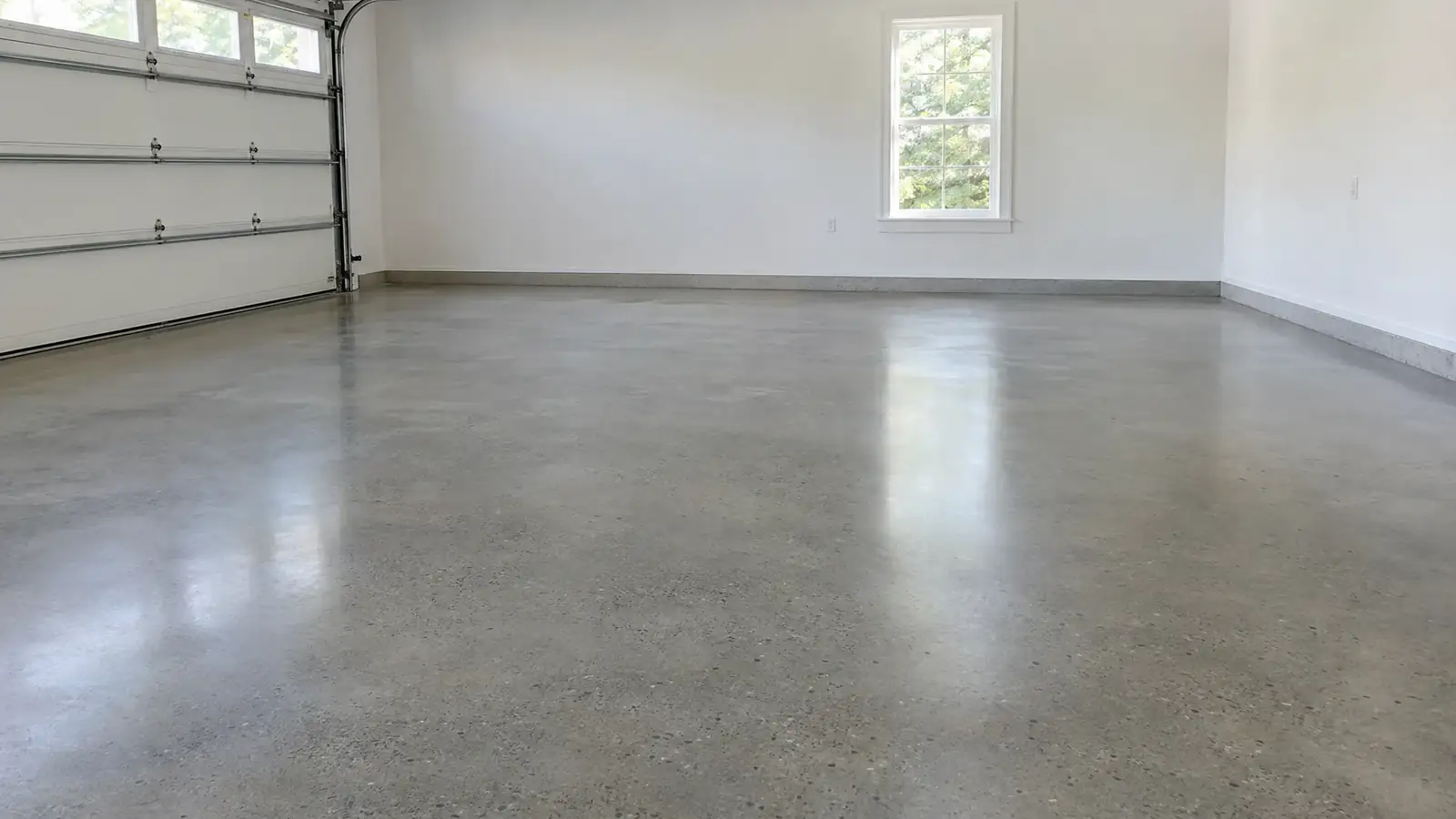
We diamond grind the surface of your slab, repair what needs repair and seal it with a clear coating, so you keep the honest look of concrete while shutting out desert dust, stains and wear.
Grind and seal means diamond grinding the top of a concrete slab to remove stains, old coatings and the weak surface layer, then applying a clear sealer to protect it. The floor keeps its natural look. In Lancaster it costs $6.50 to $9 per square foot, or $2,600 to $3,600 for typical projects.
Plenty of floors in the Antelope Valley do not need a color. They need to stop crumbling into powder. Walk across an unsealed garage slab in a dry summer and you leave a pale trail of fine dust, and every gust that comes through the open door adds more. Boxes sit gray and gritty, a car leaves oil rings that never quite scrub out, and the whole room feels dusty even right after you sweep. Grind and seal is the simplest cure we offer.
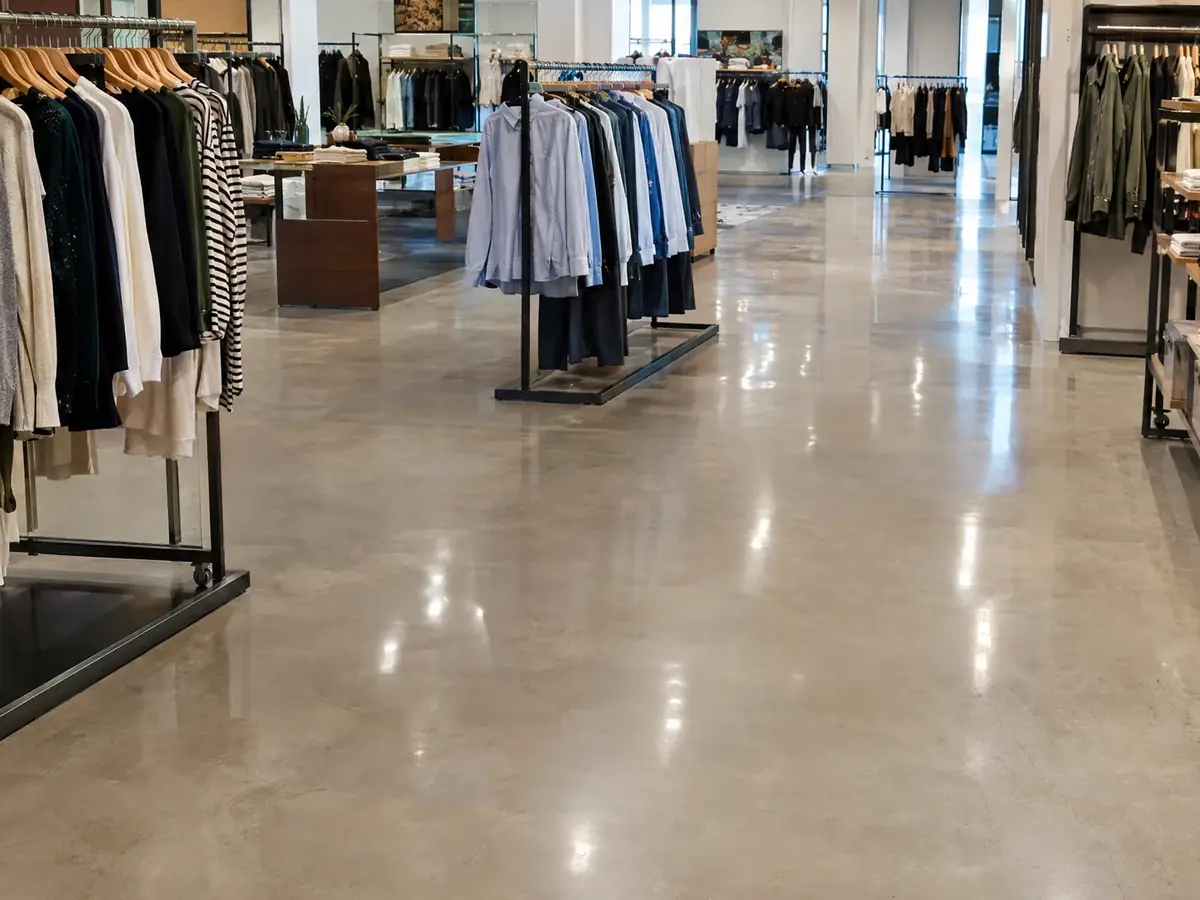
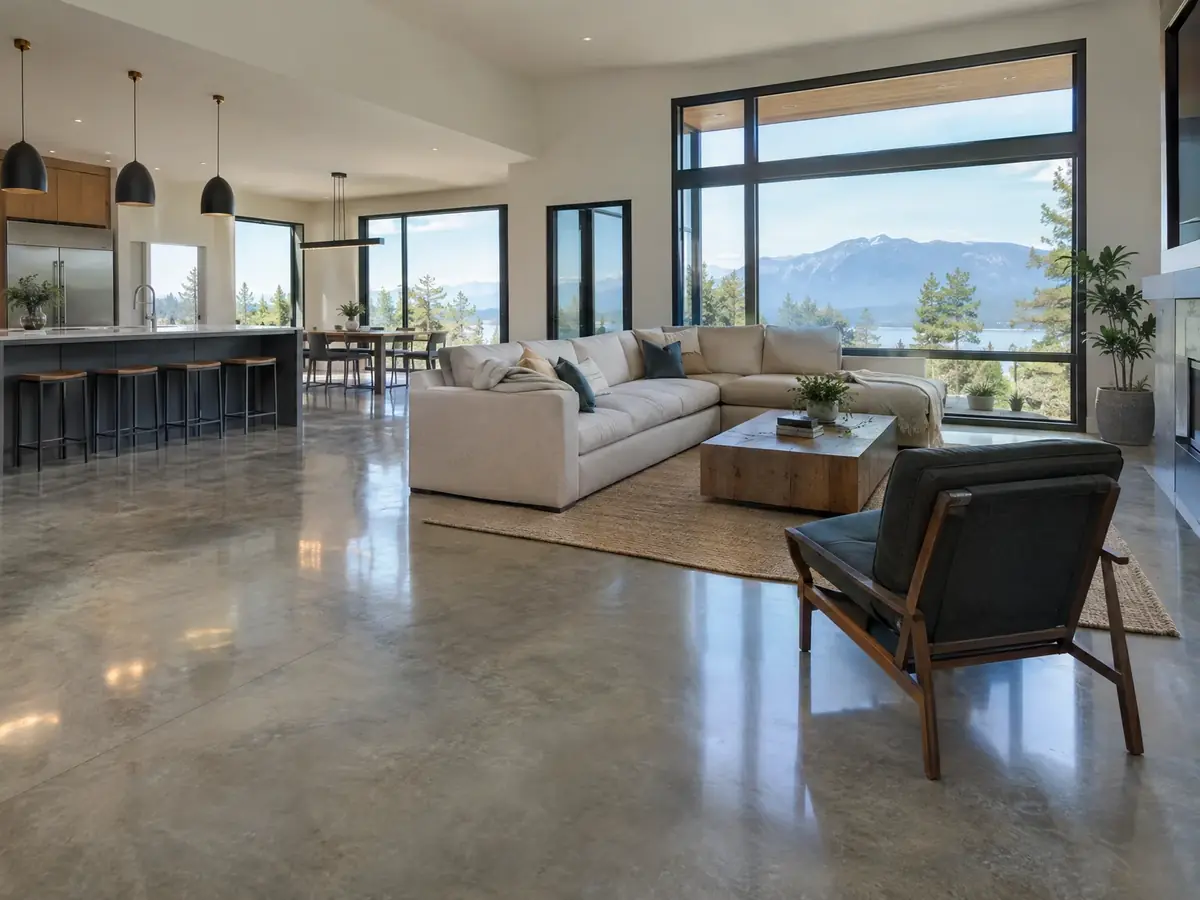
The idea is easy to explain. A diamond grinder takes the surface off the concrete, which removes oil-soaked film, old paint, glue and the weak top layer that causes the powdering. Then a clear sealer goes on, locking the pores shut and giving the floor a smooth, easy-to-clean finish. The floor still looks like concrete, only cleaner, more even and with a quiet sheen, anywhere from soft satin to a near-polished glow. It suits shops, storage rooms, back-of-house areas, rentals and homeowners who like the industrial look.
Accent Epoxy Floors is based in Lancaster and travels across the Antelope Valley for grind and seal work. This page explains what happens to your slab, how close it comes to polished concrete, when it is the wrong choice, how it handles desert dust and what it costs. Our free estimate starts with a hard look at your actual concrete, because the right answer depends on what is in it.
Sealing ends the powdery shedding of bare concrete, so tools, cars and stored boxes stay cleaner when the wind blows.
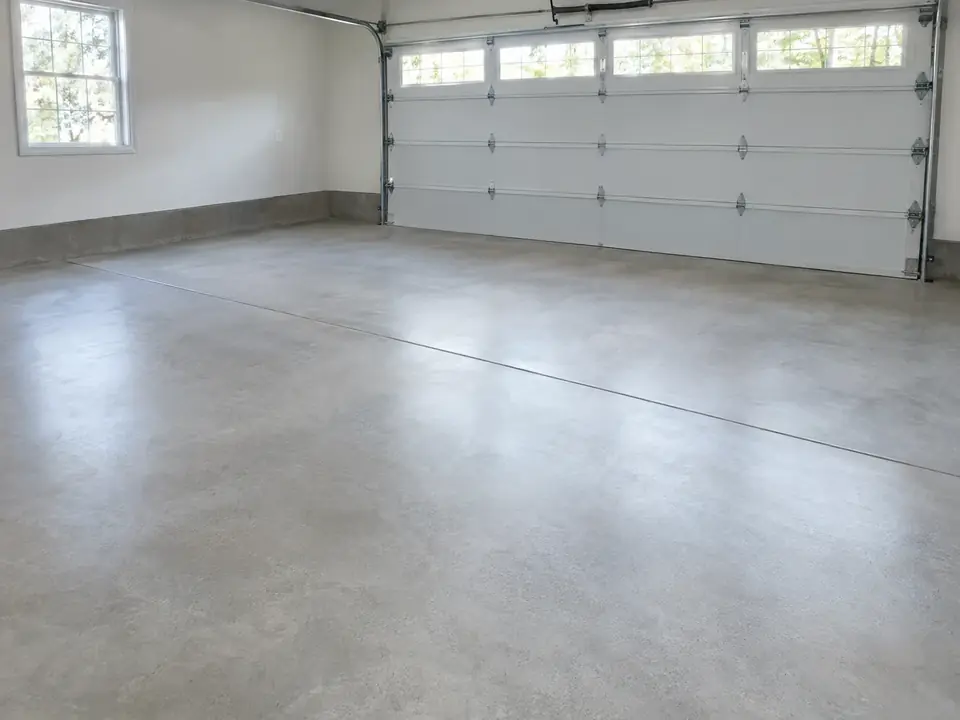
The concrete shows through the clear sealer, so you get an honest, industrial appearance without any added color.
At $6.50 to $9 per square foot it protects a slab for less than any colored system, and the ground surface can take a color coat later.
Choose a soft satin or a brighter semi-gloss sealer to get the finish that suits your light and your taste.
Dirt and spills stay on top of a sealed surface, so a broom and a damp mop handle most of the upkeep.
Grinding strips away worn paint, adhesive and failing sealer, so the new coating sits on solid concrete instead of a peeling layer.
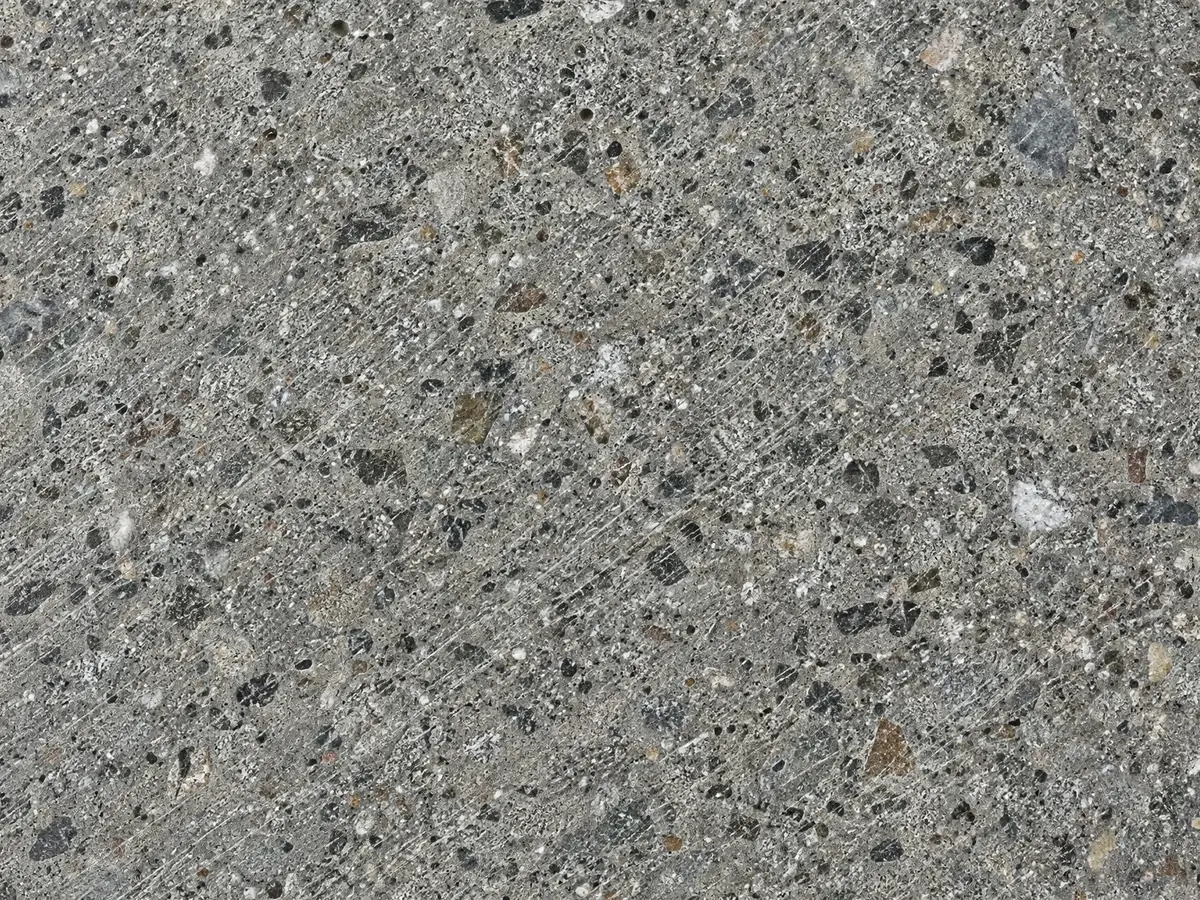
A grinder is a heavy machine with spinning plates fitted with metal-bonded diamond segments. Run across the slab, it shaves away a thin layer of the surface, taking old paint, glue, curing compound, sealer residue and the soft, chalky top skin with it. What is left is clean, sound, open concrete with a fine texture that a sealer can grip. We choose coarser or finer diamond grits depending on how much needs to come off and how smooth you want the result. Cracks, divots and joint edges are cleaned and filled with a repair material, then ground flush so the surface runs true. Every machine is hooked to an industrial vacuum, which captures the dust at the source instead of letting it drift through your garage and into the house. Before the machine starts, a quick scratch test and a few drops of water tell us how hard the slab is and whether an old sealer is hiding on it. This prep is the same bonding profile work we do before every epoxy floor, which is why a ground and sealed floor holds up so much better than one that was only swept and rolled.
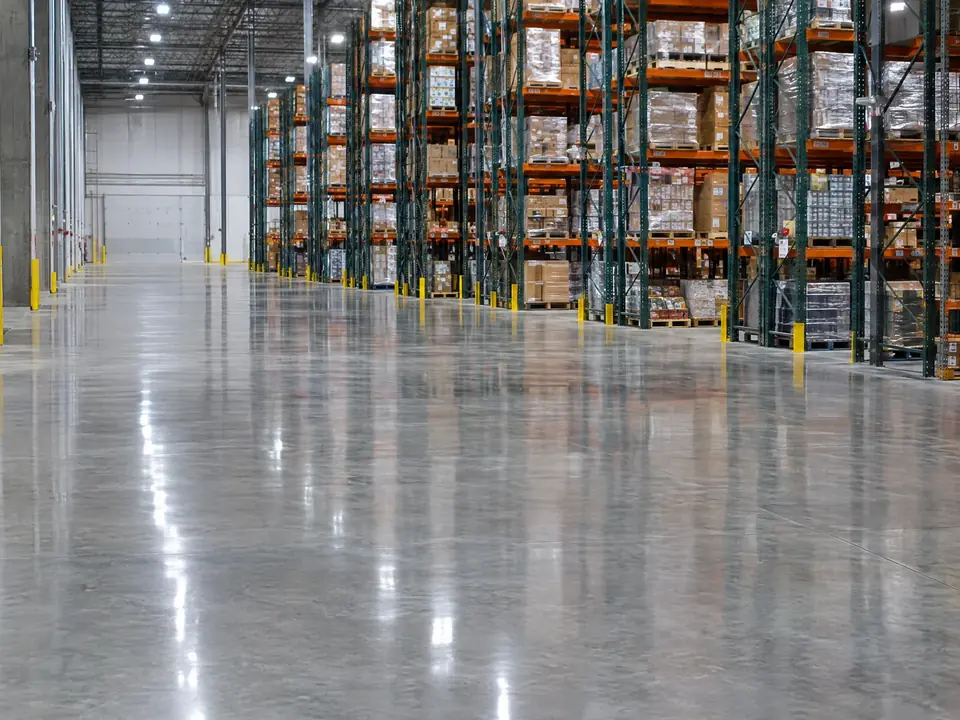
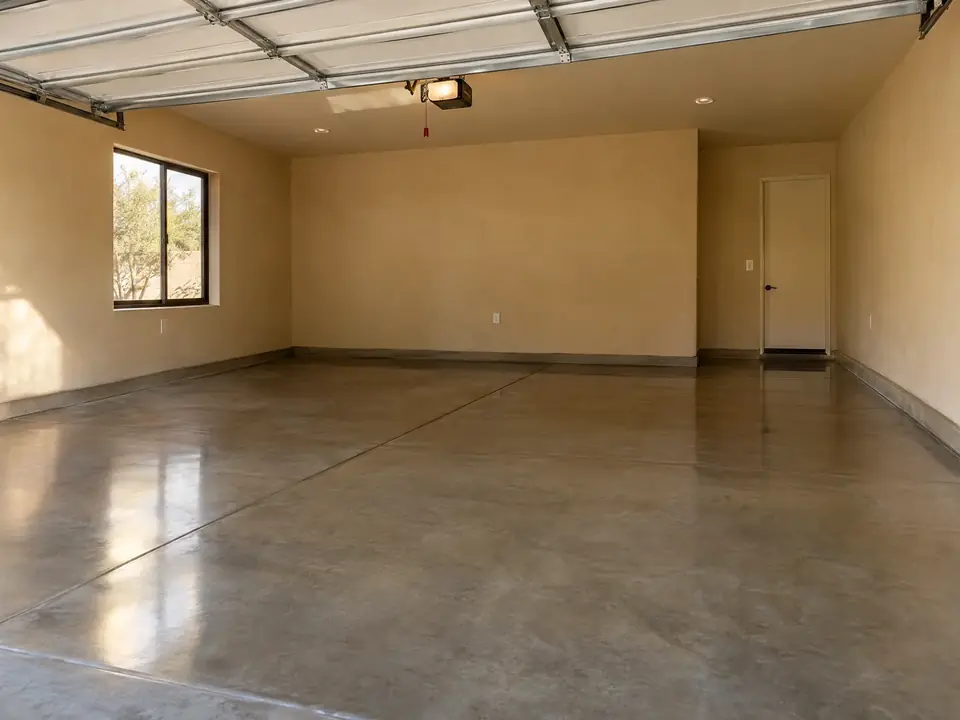
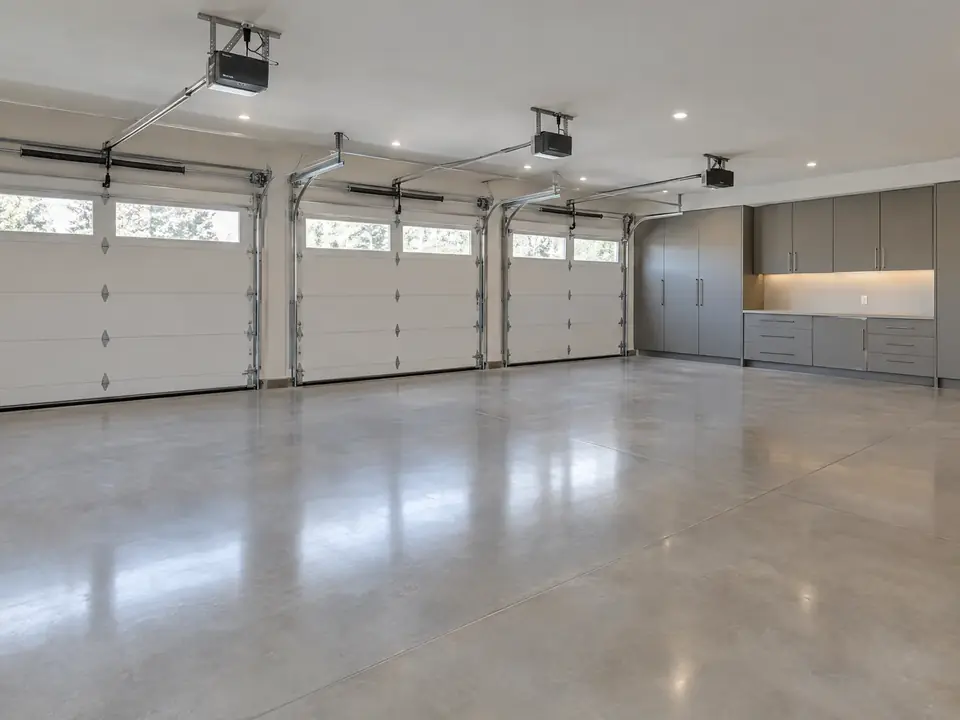
It will look clean and quietly glossy, but it is not the same as true polished concrete. Polishing means stepping through many finer diamond grits and adding a densifier to harden the slab until it takes a mirror shine. Grind and seal stops earlier, then protects the surface with a clear coating. Depending on the grit and sealer, the result can read as a soft satin, a pleasing semi-gloss or a brighter wet-look sheen. How the concrete looks underneath is up to the concrete. A light grind leaves a smooth gray with a gentle sheen. A deeper grind exposes the sand and small stones, giving a speckled, almost terrazzo look. Trowel marks, patches and color shifts from separate pours may still show, and cracks stay visible after they are filled, since the sealer is clear. Oil that soaked deep into the slab can leave a ghost that grinding softens but may not erase. Ask for sample squares in daylight, and tell us if a stain bothers you, because it may be better covered with a solid color epoxy floor.
Choose something else if you want to hide the slab. A clear sealer shows what the concrete shows, so heavy staining, uneven patches and big cracks stay in view. Choose something else if you drive in off a hot highway and park right away. A sealer is a thin film, and a flake epoxy floor or a thick polyaspartic system tolerates hot tires and heavy abrasion better. Choose something else if a slick surface worries you, since a glossy sealer can be slippery when wet. We can add a fine non-slip additive, but where water collects on a patio or pool deck, a quartz finish is the better answer. A slab with a moisture problem needs it solved before anything goes on, because a sealer can trap vapor and cloud or lift. And if you want strong color, there is no pigment here. On the other hand, if the slab is sound, the budget is tight and you like the look of concrete, grind and seal is hard to beat for value. It also leaves the door open to upgrade later with a colored coating over the ground surface.
Dust control is the headline. Bare concrete sheds a fine powder as the surface wears, and desert wind brings in more every time the door opens. National Weather Service advisories for Lancaster and Palmdale regularly cite gusts of 45 to 50 miles per hour and blowing dust. A sealed floor stops the powdering and gives the dust nowhere to settle, so a broom or dust mop clears it in minutes. On sun-exposed surfaces we pick a sealer that resists UV, because strong high desert sun can yellow a plain one. Summer heat also affects the work itself: sealers have a short working time on a warm slab, so we start early and apply in thin, even coats. Winter lows in the 30s slow curing, so we avoid sealing on a cold morning. Wipe oil and coolant promptly, damp mop with a neutral cleaner and skip acids and abrasive pads. Because a sealer is thinner than an epoxy build, it wears faster under tires and dragged metal, so plan on a recoat in heavy-use areas. That is a quick job on a floor that has already been ground.
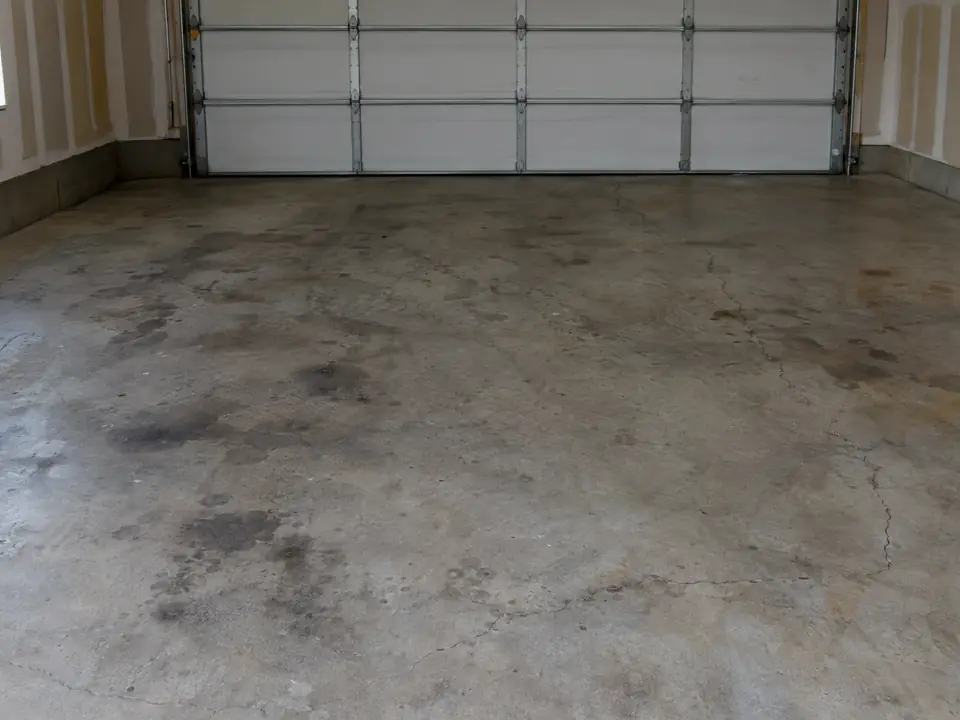
Of everything we install, this is the quickest. There are no color coats or broadcast layers to wait on, only grinding, repairs and a sealer, so the work typically wraps up in a day or two, and your written quote lists the exact plan for your floor. You can usually walk on it lightly soon after the final coat, while cars wait until your installer says the sealer has hardened. Warm slabs speed the cure and cold desert nights slow it, which is why summer jobs start at sunrise. If a gust has blown silt into the garage, we vacuum once more right before the sealer goes down, and we suggest holding off on a deep scrub for the first few days.
If the slab is sound, the goal is protection and the budget matters, grind and seal is the floor to pick. If you want stains and wear hidden in a single day, a flake epoxy floor does that better. If you want one bright, even color, a solid color epoxy floor is the answer. A metallic epoxy floor is for show, and a quartz finish is for grip. This system is the simple, honest option, and it asks you to like concrete.
Typical ranges for Lancaster and the Antelope Valley. Minimum project $2,600. Commercial and industrial work is quoted after a site visit.
| System | Price per sq ft | Typical project |
|---|---|---|
| Flake system (garage, up to 400 sq ft) | $6.50 – $10 per sq ft | $2,600 – $4,000 |
| Solid color system | $9.50 – $11.50 per sq ft | $3,800 – $4,600 |
| Metallic epoxy system | $12.50 – $18.50 per sq ft | $5,000 – $7,400 |
| Quartz & sand finish system | $9 – $16.50 per sq ft | $3,600 – $6,600 |
| Grind & seal (clear sealer) | $6.50 – $9 per sq ft | $2,600 – $3,600 |
| Patio, driveway & pool deck | $8 – $12 per sq ft | $3,200 – $4,800 |
| Commercial & industrial | Quoted after a site visit | Quoted per project |
Prices and details reviewed November 2026. Project examples assume a two-car garage up to 400 sq ft. Free on-site measurement and written estimate. See the color chart to pick your color.
A sealed epoxy or polyaspartic floor stops bare concrete from shedding powder, but it cannot keep wind-blown desert dust out of the garage. What it does is make that dust easy to see and easy to remove. Seal the slab, seal the door edges, and dust mop before you wet mop.
Read the answer →Yes, a garage slab should be checked for moisture before it is coated, even in a dry desert climate. Concrete can hold and pass water vapor, and that vapor can push a coating off the slab. Calcium chloride and in-slab relative humidity tests measure it, and a moisture-barrier basecoat protects against it.
Read the answer →To prepare a garage for epoxy, empty it completely, move vehicles out, clear the walls, unplug appliances and make sure the crew has access to power and the space around the floor. The crew handles grinding, crack repair and cleaning, so do not etch, paint or seal the floor yourself.
Read the answer →Grind and seal is a way to finish a concrete floor without covering it. Diamond grinding shaves off stains, old paint and the crumbly top skin, and a clear sealer then soaks in and coats what is left. You get cleaner, harder, less dusty concrete that still looks like concrete.
Grind and seal costs $6.50 to $9 per square foot in the Antelope Valley, and typical projects run $2,600 to $3,600. That is below our decorative epoxy systems. The price covers diamond grinding, crack and joint repair and the clear sealer. We give a fixed written quote after a free on-site estimate.
Yes, grind and seal costs less than our pigmented epoxy systems, because there are no color or broadcast layers and the job moves faster. The tradeoff is that it shows the concrete as it is and gives up some toughness under hot tires. For a sound slab you are happy to see, it is the best value.
Yes, ground concrete should be sealed. Grinding opens the pores, so unsealed concrete absorbs oil and moisture and keeps shedding dust. A clear sealer locks the surface, improves cleanability and brings out a satin or semi-gloss sheen. Leaving the slab bare after grinding defeats most of the purpose.
A sealed floor lasts for years with normal care, but the sealer is the layer that wears, not the concrete. Heavy tire traffic and dragged metal wear it faster, and strong sun ages a plain sealer outdoors. When it looks tired, a light scuff and recoat refreshes it on a floor that has already been ground.
No, polished concrete uses many finer diamond steps and a densifier to produce a mirror-like sheen, which costs more. Grind and seal uses fewer steps and a clear sealer for a satin or semi-gloss look. If you want a very high sheen, ask us about both so you can compare.
Not if it is done properly. Our grinders connect to an industrial vacuum that captures dust at the source, and the floor is vacuumed again before sealing. Some fine dust can still reach the surrounding area, so move items and close doors to the house. Dust-controlled grinding is the standard for any indoor job.
Yes, but outdoors it needs a sealer with UV resistance and often a non-slip additive, because gloss turns slick when wet. For a pool deck or exterior stairs, a quartz finish gives more traction and holds up better in sun. We recommend the right system for each exterior area.
Grind and seal does not hide cracks, trowel marks, patches or deep oil stains, because the sealer is clear. Grinding can soften them but not erase them. If you need an even color, a solid color epoxy floor or a flake system covers those flaws far better, and we will tell you which one fits.
Yes, a ground surface can be upgraded to a colored system later. The old sealer has to be tested or removed first, so the new coating bonds. This makes grind and seal a smart first step if the budget is tight now but you may want color or flake in the future.
Durable, easy-to-clean garage floors that resist hot-tire pickup, oil and salt. Most two-car garages are done in one day.
Learn more →A clean, seamless pigmented floor in gloss, satin or matte for garages, workshops, interiors and commercial spaces.
Learn more →Full-rejection flake over a moisture-barrier epoxy basecoat, sealed with a UV-stable polyaspartic topcoat. Installed in one day.
Learn more →Call (661) 545-6676 or send the form at the top of the page. We reply the same day with a time to measure.