 ACCENTEpoxy Floors
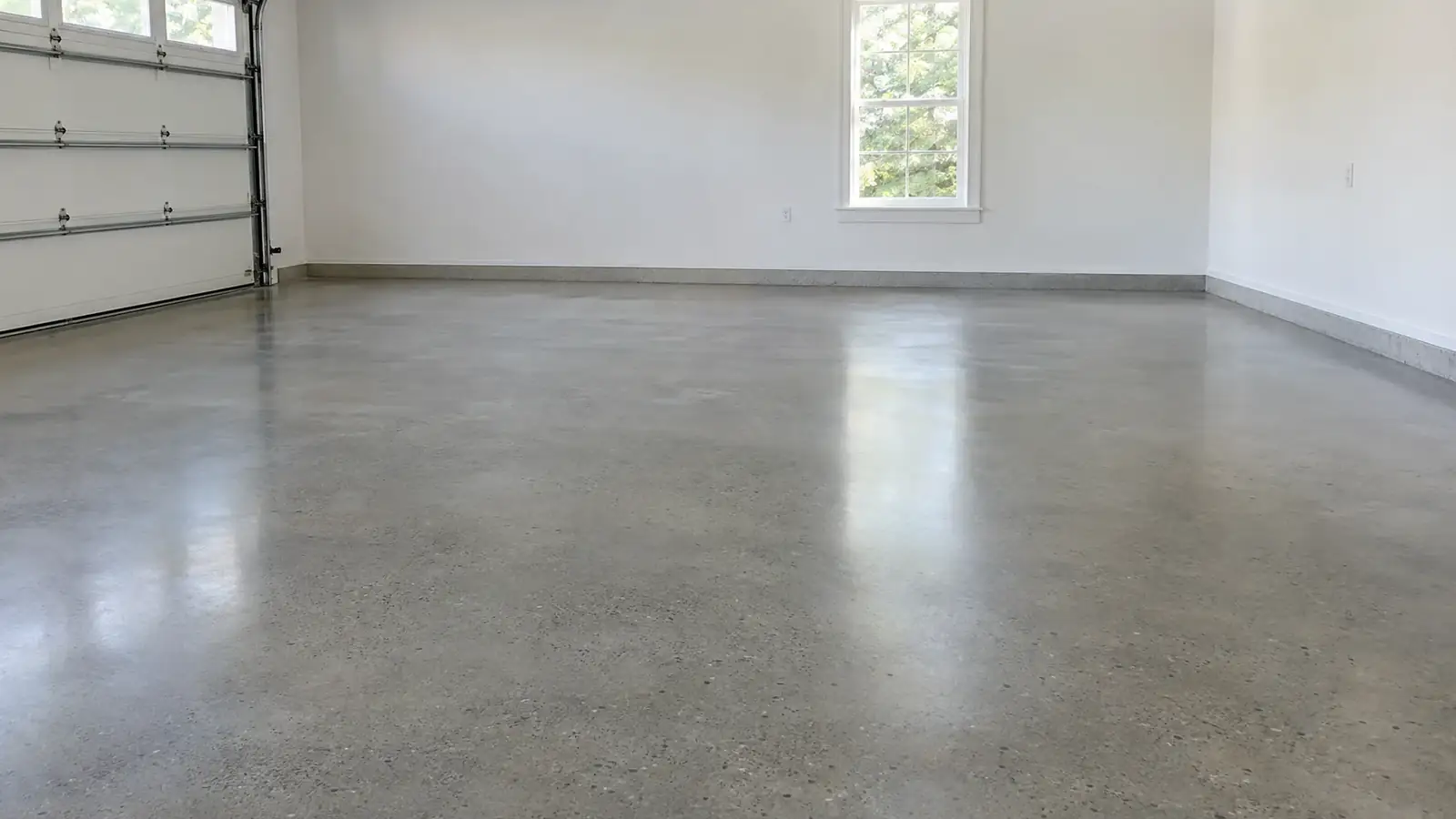
A sealed epoxy or polyaspartic floor stops bare concrete from shedding powder, but it cannot keep wind-blown desert dust out of the garage. What it does is make that dust easy to see and easy to remove. Seal the slab, seal the door edges, and dust mop before you wet mop.
A sealed epoxy or polyaspartic floor stops bare concrete from shedding powder, but it cannot keep wind-blown desert dust out of the garage. What it does is make that dust easy to see and easy to remove. Seal the slab, seal the door edges, and dust mop before you wet mop.
If you live in Lancaster, Palmdale or Rosamond, you already know the feeling. A windy week passes, and a fine tan film sits on the car, the workbench and the garage floor. People often ask whether epoxy fixes this. The honest answer has two parts, because there are two different kinds of dust in a garage, and a coating handles only one of them. This guide separates them, explains what a sealed floor really does, which finishes hide dust, and how to clean and control it without scratching your new floor.
There are two sources. The first is the slab itself. Bare concrete is porous and the surface slowly wears, releasing a fine white powder every time you walk, drag or sweep across it. That is called dusting, and it gets onto tools, boxes and shoes. The second source is the outdoors. Wind carries sand and silt into any garage with a gap under the door, a vent or an open bay. These two look alike, but they are fixed differently. Slab dust comes from the concrete, so it can be stopped with a seal. Wind-blown dust comes from outside, so it is reduced by closing the building, not by a coating. Knowing which one you have saves time. If the floor is chalky even after a calm week, the slab is the problem. If it is clean until the wind blows, the door is.
The valley is a wide, dry basin, and wind is part of life here. National Weather Service advisories for Lancaster and Palmdale regularly mention gusts of about 45 to 50 mph, and 50 to 60 mph during stronger events, with blowing dust that can drop visibility below a mile. Dust storms have closed stretches of Route 14 and Route 138 for hours. With very little rain to rinse the area, fine particles sit in the open until the next gust moves them. A garage with an open door or a worn door seal collects that material on every surface. Dust is also abrasive. Grit underfoot and under tires acts like fine sandpaper on any floor, which is why how you clean matters as much as what is on the floor. The goal is to reduce what comes in and remove the rest gently.
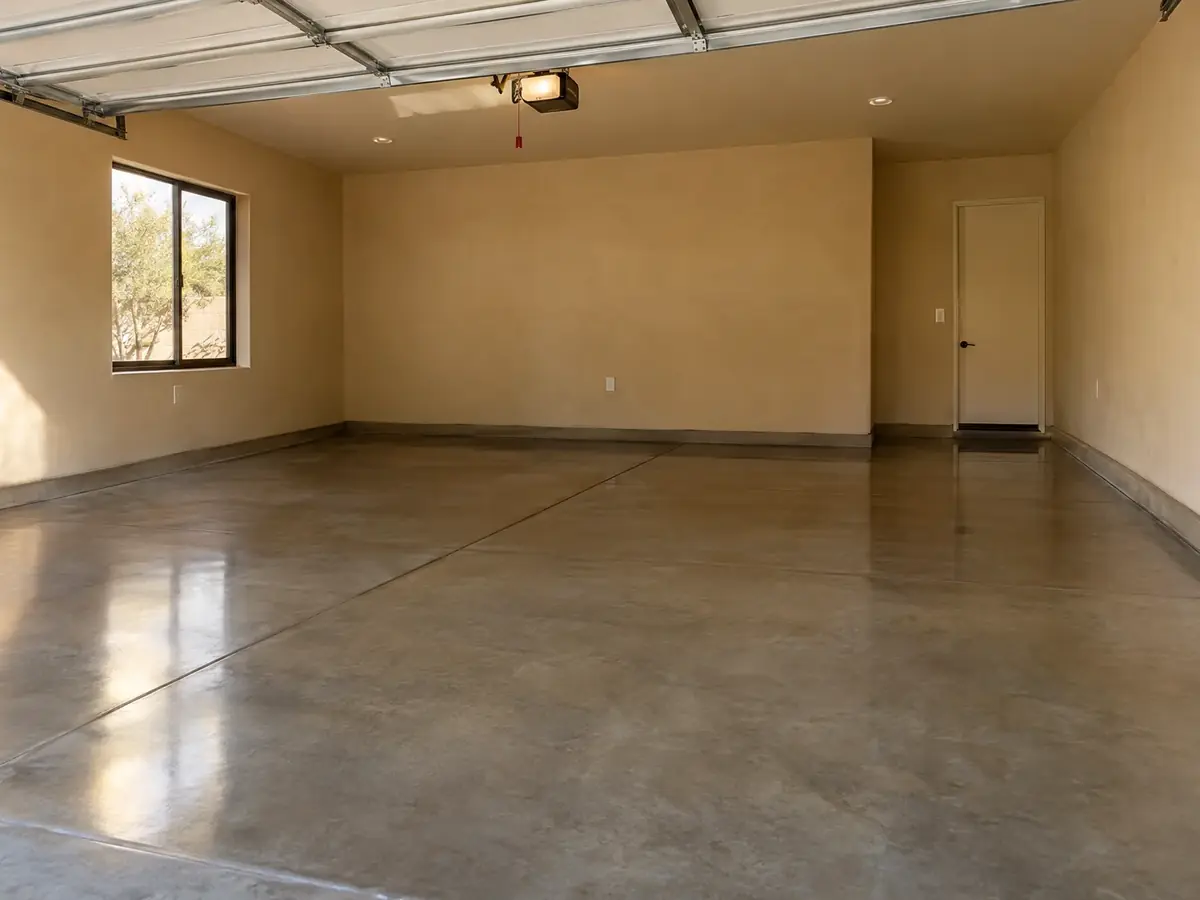
It stops one kind and helps with the other. A sealed epoxy or polyaspartic floor does not release concrete powder, so slab dust ends once the surface is ground, repaired and sealed. If your complaint is chalky residue on everything, a coating or a grind and seal will fix it. Epoxy does not keep outside dust from entering, and it cannot reduce the wind. What it does is give you a smooth, nonporous surface where fine dust sits on top and wipes away, instead of working into the pores of bare concrete where it turns to mud when wet. That is a major improvement. A coated floor also does not stain from the grime that dust carries. Think of the coating as making dust manageable, and the door seal as making it rarer. You need both for a truly clean garage.
The color of the dust here is a pale tan, so floors in the same family hide it best. A flake epoxy floor blended in tan, gray and brown is the most forgiving. The mix of colors breaks up the surface, and a light film does not read as dirt. A medium gray or tan solid color epoxy floor shows less than black or white. Very dark glossy floors are the least forgiving, because dust stands out against them, and a pure white floor shows tire marks and tracked-in dirt as well. Texture is a tradeoff. A heavy broadcast adds grip but holds more dust in the surface, while a fine texture or satin finish cleans faster. If the floor sees a lot of wind, ask for a moderate flake blend and a light texture. The color chart is a good place to compare tones.
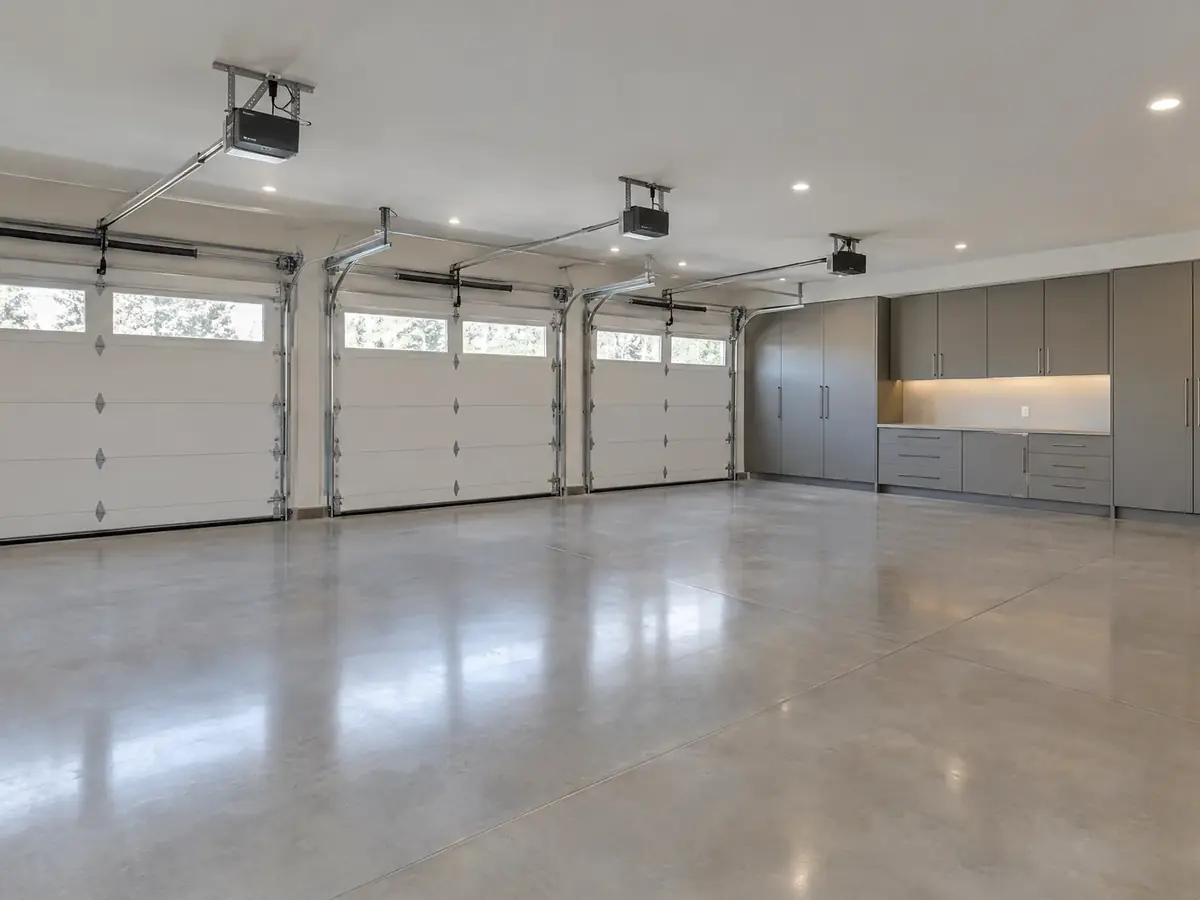
Go dry first, then wet. Start with a dust mop, a soft push broom or a microfiber head, which lifts fine dust instead of pushing it around. A leaf blower works well in a large garage if you start at the back and move toward the door. Avoid dragging stiff brooms with grit trapped in the bristles, since that scratches gloss. Then damp mop with warm water and a neutral floor cleaner, rinse with clean water and let it dry. Skip acids, citrus-heavy degreasers and anything that leaves a film. Do not scrub with abrasive pads. Wipe up any wet dust quickly, because mud dries into a stain-colored film. After a big wind event, clean sooner rather than later so tires do not grind the dust into the surface. A rinse and squeegee also works if your garage slopes toward the door.
Seal the building, because the floor cannot. The most effective fix is a new bottom seal on the garage door, plus side and top weatherstripping, so there are no gaps along the edges. Replace any worn rubber, since it hardens in the sun. Keep the door closed during wind advisories whenever you can, and avoid opening it just to ventilate. Check vents, pet doors, side doors and any windows, as small gaps let in a surprising amount of fine material. An entry mat at the house door catches dust from shoes. Parking a damp towel or a threshold seal along a leaky door is a cheap trial before buying new parts. None of this needs a contractor, and none of it replaces a coating. Together, a sealed floor and a sealed door give you a garage that stays clean and wipes down easily.
A coated floor will not stop the wind, but it ends slab dust and makes everything that blows in simple to remove. Pair a sealed floor with a tight door seal, a blend that hides tan dust and a dry-then-wet cleaning routine. To get a garage floor that stays clean in desert wind, call Accent Epoxy Floors at (661) 545-6676 for a free estimate. Call (661) 545-6676 for a free estimate.
It stops the dust that bare concrete sheds, but not dust blown in from outside. A sealed floor leaves no powder behind and makes wind-blown dust easy to wipe away. To keep outside dust out, you also need good door seals and weatherstripping.
Bare concrete releases fine powder as its surface wears, and wind can also blow desert dust in through door gaps. If the floor is chalky in calm weather, the slab is the cause. If it gets dusty after wind, the garage needs better sealing.
Yes, sealing concrete stops the powdery dust the slab itself produces. Grinding removes the weak surface, and a sealer or coating locks the rest. A grind and seal is the lowest cost route, and a thicker epoxy system adds color and wear resistance.
Seal the garage door edges, keep the door closed in wind and dust mop the floor soon after a dusty spell. A sealed floor wipes clean quickly, while bare concrete holds the dust. A mat at the entry door also helps.
Dust mop or blow off the loose dust first, then damp mop with warm water and a neutral cleaner. Avoid stiff brooms, abrasive pads and acidic cleaners. Cleaning dust before wet mopping prevents scratches and keeps mud from forming.
Yes, dark glossy floors show tan dust the most, and white shows tire marks. A tan, gray or mixed flake blend hides desert dust best. A satin finish and a light texture also help the floor look clean between cleanings.
Durable, easy-to-clean garage floors that resist hot-tire pickup, oil and salt. Most two-car garages are done in one day.
Learn more →Diamond-ground concrete finished with a clear sealer for a natural, low-maintenance floor at the lowest installed price.
Learn more →Full-rejection flake over a moisture-barrier epoxy basecoat, sealed with a UV-stable polyaspartic topcoat. Installed in one day.
Learn more →The best way to clean an epoxy garage floor is to dust mop or blow off the grit, then mop with warm water and a mild pH-neutral cleaner using a soft mop or microfiber pad. Rinse, then dry. Skip acids, harsh solvents, wax and abrasive pads that can dull the finish.
Read the answer →Yes, a garage slab should be checked for moisture before it is coated, even in a dry desert climate. Concrete can hold and pass water vapor, and that vapor can push a coating off the slab. Calcium chloride and in-slab relative humidity tests measure it, and a moisture-barrier basecoat protects against it.
Read the answer →Yes, epoxy can handle an RV garage or workshop, because the concrete slab carries the weight and the coating protects its surface. The slab must be sound. A good system adds a deep bond, traction and a UV-stable topcoat. Large floors are measured and quoted at a free estimate.
Read the answer →Call (661) 545-6676 or send the form at the top of the page. We reply the same day.