 ACCENTEpoxy Floors
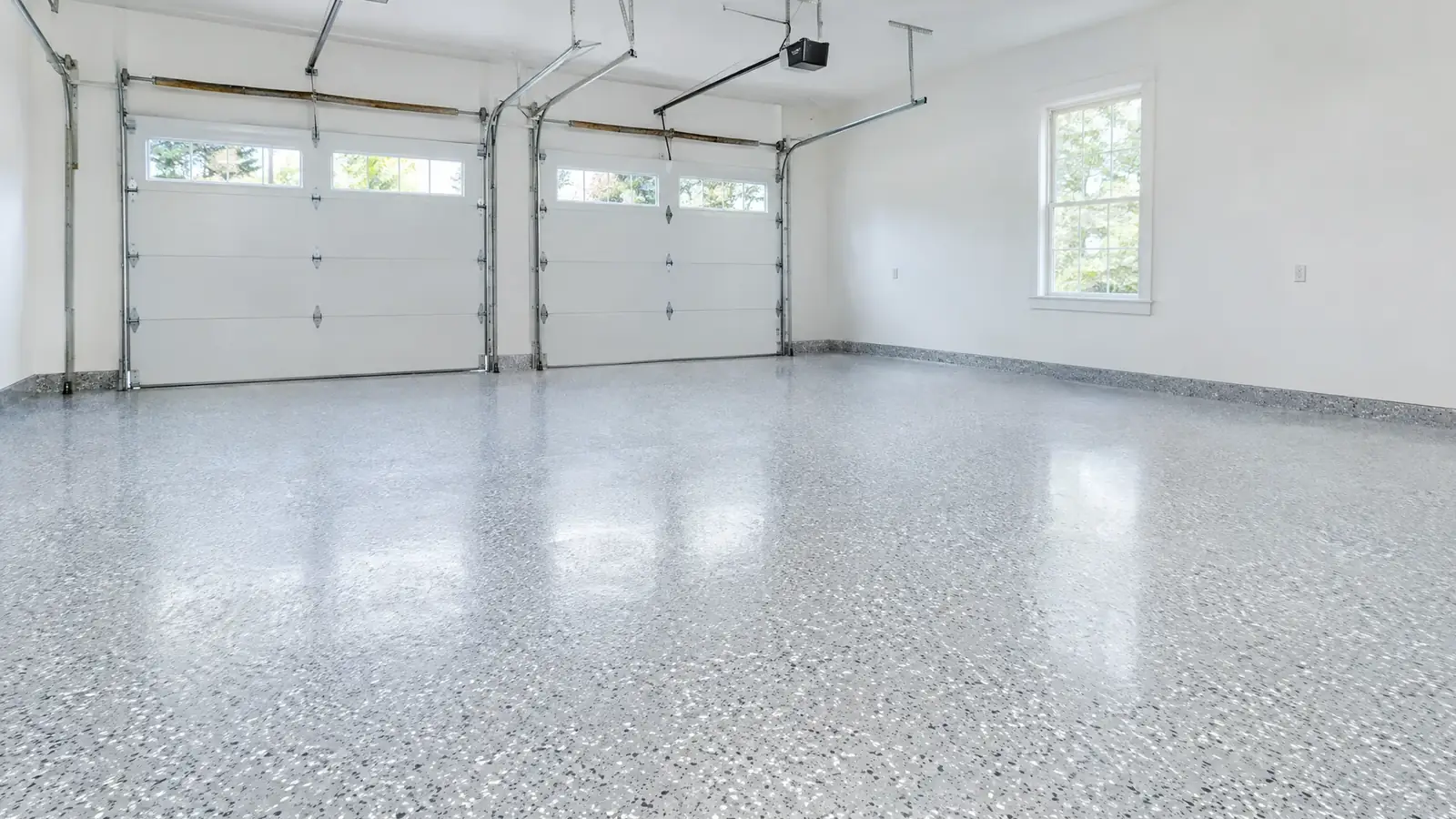
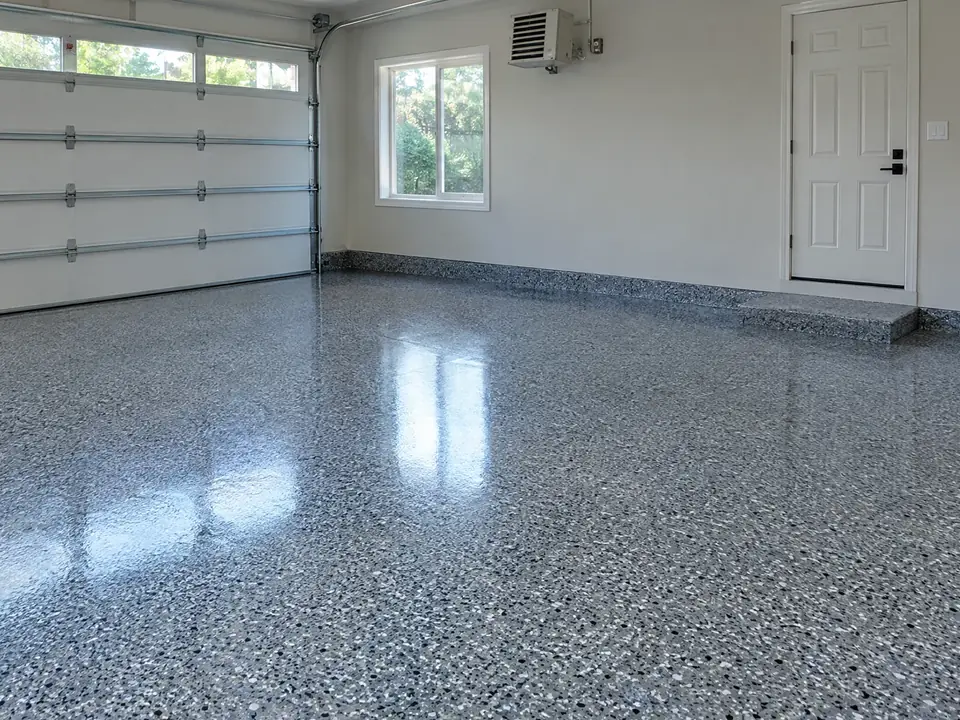
Colored flakes are broadcast into a wet basecoat until the floor is fully covered, then sealed under a UV-stable topcoat. The result hides dust and tire marks, grips underfoot and is finished in one day.
Epoxy flake flooring is made by broadcasting colored vinyl flakes into a wet basecoat, then sealing them under a clear topcoat. A two-car flake floor in Lancaster takes one day and costs $2,600 to $4,000, which works out to $6.50 to $10 per square foot.
If you have seen a garage floor with a speckled, textured finish that looks the same from wall to wall, you have seen a flake floor. It is the most popular system we install in the Antelope Valley, and for good reasons. It hides the dust that blows through the valley, covers stains and slab flaws, gives a little grip underfoot and is the only decorative system we can finish in a single day.
A flake floor is not a thin coat of paint with some glitter on top. It is a stack of layers, each doing a job: a ground slab for the bond, a primer or moisture barrier, a pigmented basecoat, flakes broadcast until the color is fully covered, and a clear UV-stable polyaspartic topcoat. Skip or shortcut any of those layers and the floor shows it within a season or two.
Accent Epoxy Floors builds flake floors for garages, shops, laundry rooms, entries and commercial spaces across Lancaster, Palmdale and the rest of the Antelope Valley. This page walks through the full system step by step, how flake size and color change the look, what the desert does to an install day, what a flake floor costs and how long it lasts.
The speckled, multicolor surface breaks up wind-blown silt, tire marks and small stains, so the floor looks clean longer between mopping.
A standard two-car garage goes from grinding to topcoat in a single day, so you are back in your garage faster than with any other decorative system.
Full-rejection broadcast hides patched cracks, old stains and uneven concrete that would show through a smooth solid color finish.
The flake texture gives better traction than a smooth, glossy coating, and we can add a slip-resistant additive where water is a concern.
A polyaspartic topcoat resists the sun that ambers plain epoxy, so the floor keeps its color in bright garages and entries.
At $6.50 to $10 per square foot, flake is our most affordable decorative system, and you get a fixed written quote before we start.
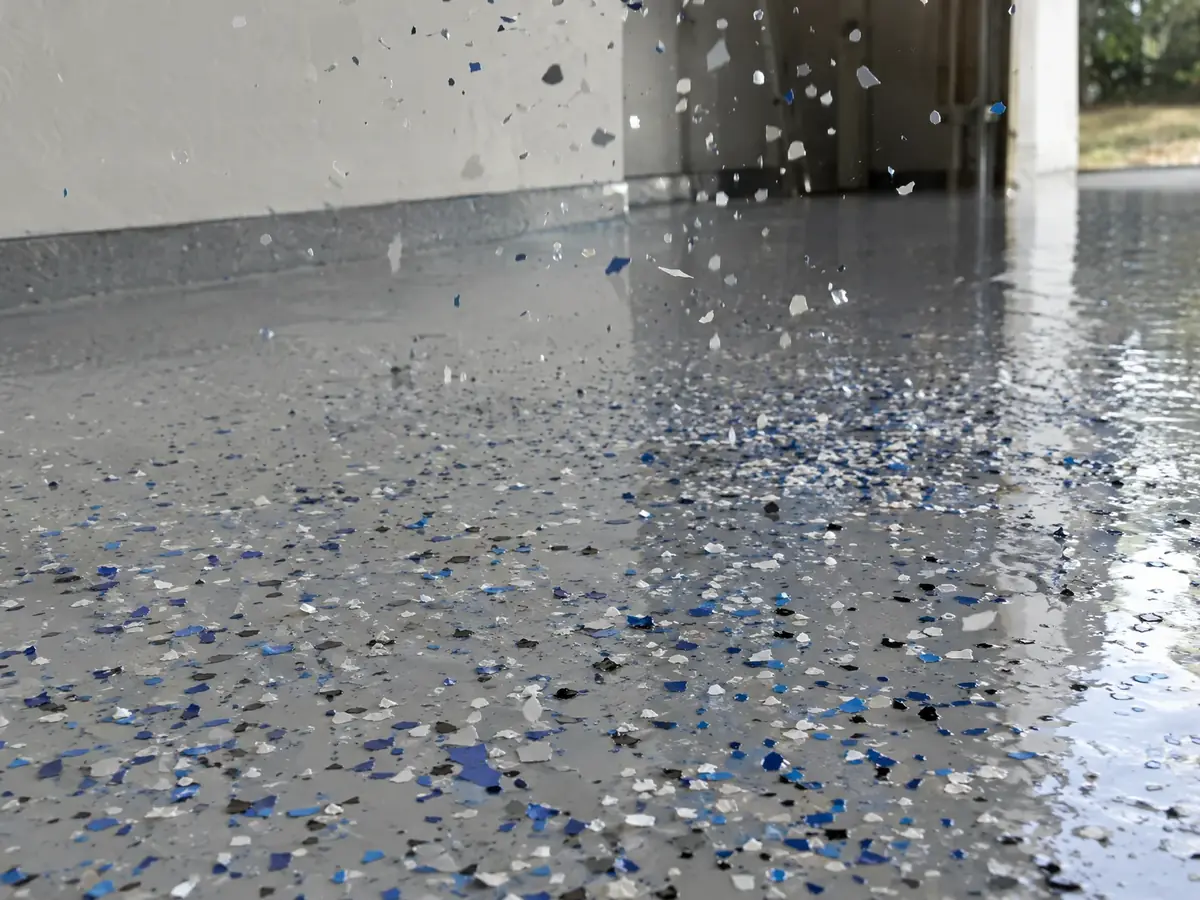
A flake floor takes about eight steps, and a crew that moves through them in order can finish a two-car garage in a day. First we inspect the slab and test for moisture, then walk the floor with you and mark cracks, old coatings, oil spots and joints. Second comes diamond grinding. A grinder with metal-bonded diamonds removes paint, sealer and weak concrete and cuts a bonding profile into the surface, with a dust shroud and vacuum attached so the garage stays clean. Third, we repair. Cracks and control joints are opened, cleaned and filled, spalled edges are patched, and the repairs are ground flush so nothing telegraphs through the finished coat. Fourth is the primer. We apply a moisture-resistant primer, or a moisture-barrier epoxy basecoat known as MVB where the slab calls for it, which stops vapor from pushing up under the coating. Fifth, a pigmented basecoat goes down at a measured thickness. Sixth, while the basecoat is still wet, the crew broadcasts flakes by hand, throwing them into the air so they fall flat and evenly until no basecoat shows. That is a full-rejection broadcast: more flake goes down than the wet coat can hold, so the excess rejects and coverage is complete. Seventh, once the surface firms, we scrape it to knock down any standing flakes, then vacuum the loose chips for reuse or disposal. Eighth, we seal the floor with a UV-stable polyaspartic topcoat that locks the flakes in, adds gloss or satin sheen and protects against UV, chemicals and hot tires. If you want one, a cove base runs the coating a few inches up the wall for easier cleaning. Before we leave, we walk the finished floor with you and explain when you can walk on it and when the car can return.
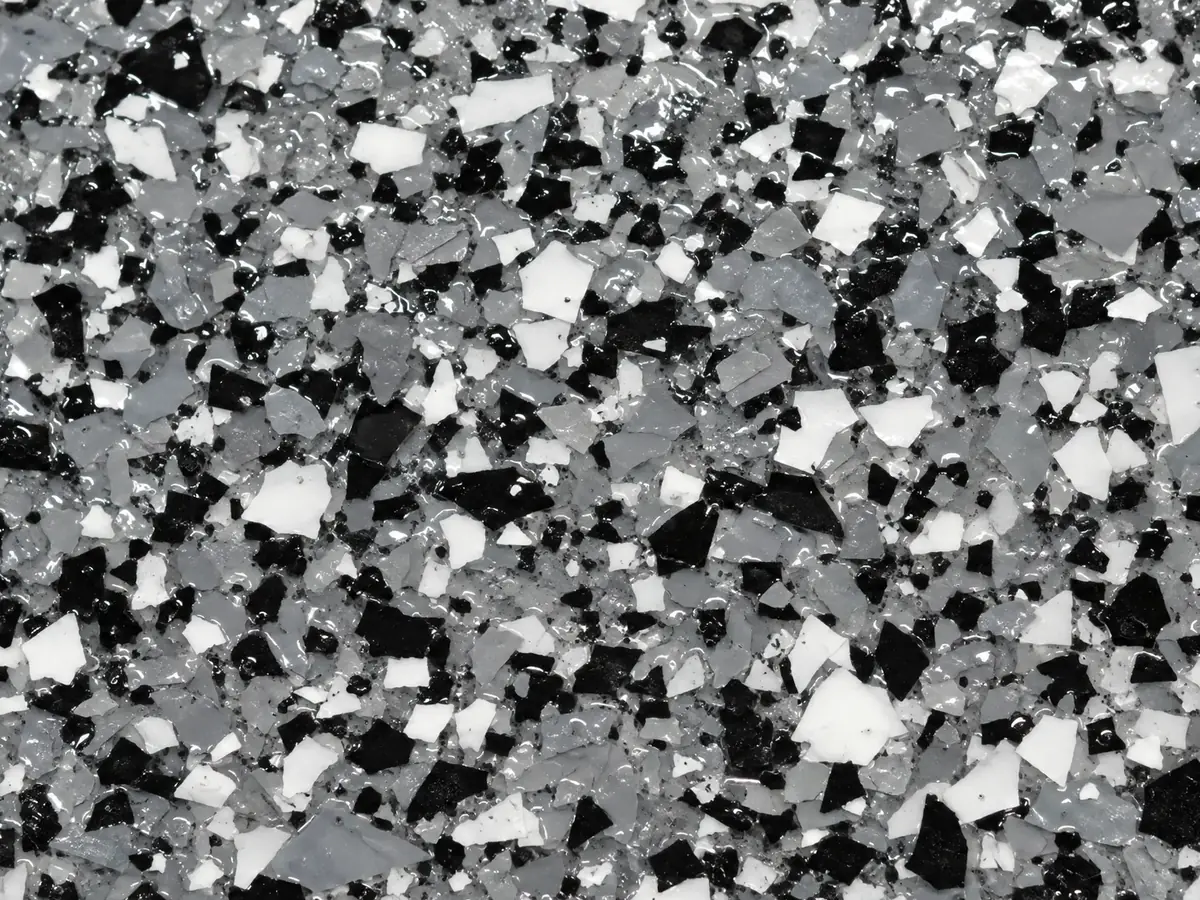
Two decisions shape how a flake floor looks: the flake itself and the amount of coverage. On coverage, full broadcast is the standard. Flakes cover the basecoat completely, which is what makes the floor hide stains, dust and slab flaws and gives it texture. A light or partial broadcast leaves basecoat showing through and gives a softer, sparser look, but it hides less. On size, the rule is simple: smaller flake gives a finer, more uniform speckle that looks calm and blended, and larger flake gives a bolder, chunkier pattern with more depth. We bring samples so you can handle both before you choose. Then comes color. Our chart has 13 standard flake blends, 10 marble flake colors with a softer, stone-like finish and 6 metallic flake colors that catch the light as you move across them. In a windy valley, mid-tone multicolor blends do the best job of hiding fine silt and tire marks. Very dark floors are dramatic, but they show dust and scratches more and absorb more heat where sun hits the floor, while very light floors show tire marks and brake dust sooner. Think about where the light falls, what color your cabinets and walls are, and how much you want to wipe the floor down. Remember that colors look different under a bright desert sky than under a garage light, so look at the sample both inside and outside. Check the color chart, narrow it to three, and we will bring those blends to your free estimate.
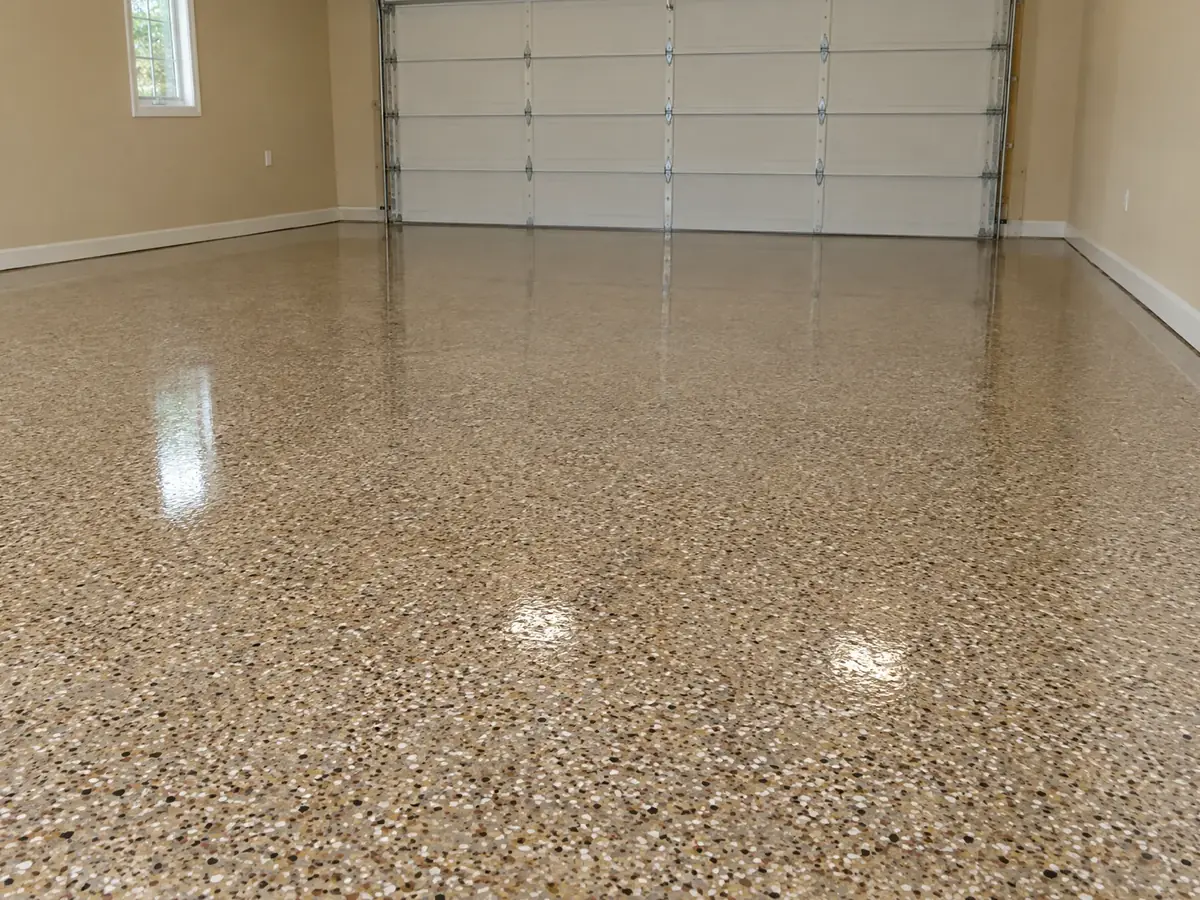
A flake floor is a one-day job, which makes timing everything. In summer, the risk is heat. A slab in the sun can run well above the air temperature, and a warming slab can outgas, pushing trapped air up through a fresh coat and leaving pinholes or bubbles. Heat also shortens the time the resin stays workable, so a bucket left in the sun can begin to set before it is rolled out. For that reason we start early, shade the garage when we can, keep material in the cool and watch the slab temperature trend, not just the air temperature. If a hot afternoon will push the slab too far, we say so and adjust the plan rather than rush the work. In winter, the problem flips. Valley mornings often start at or below freezing, and every coating has a minimum slab and air temperature, so we start later in the day and give the floor time to cure. Then there is wind. Dust blows in through a half-open garage door, and fine silt landing on a wet coat leaves a rough, gritty finish. We close up where we can, vacuum right before the topcoat and keep the door management tight. These steps are why we say a flake floor is a one-day job, not a rush job. A standard two-car garage is finished in a day. Larger garages, shop buildings and floors with heavy crack repair can take longer, and your written quote lists the schedule for your floor.
Flake is our most affordable decorative system. It runs $6.50 to $10 per square foot, and a two-car garage up to 400 square feet costs $2,600 to $4,000. Every project has a $2,600 minimum. Slab condition, crack repair, old coatings, size and options such as a cove base move the price inside that range, so we quote after we measure. Compare that with solid color, which starts at $3,800, and with metallic at $5,000 to $7,400 for a similar garage. How long does a flake floor last? Longer than a coating that was rushed, and it depends on four things: how well the slab was ground, whether moisture was handled, how much sun and traffic the floor sees, and how it is cleaned. A floor with a UV-stable polyaspartic topcoat keeps its color and gloss well in strong sun, which is a major reason we use it in the desert. Ask us about the written warranty at your estimate. A few honest tradeoffs apply. The flake texture holds a little more dirt than a smooth solid floor, so it wants a damp mop or a soft deck brush now and then, and the textured surface is slip-resistant but not rough. A very heavy or sharp impact can chip the topcoat. Care is simple: sweep or dust mop, wash with a neutral cleaner and warm water, wipe up spills and avoid acid cleaners and stiff abrasive pads. Clean and treated this way, a flake floor will look sharp for years.
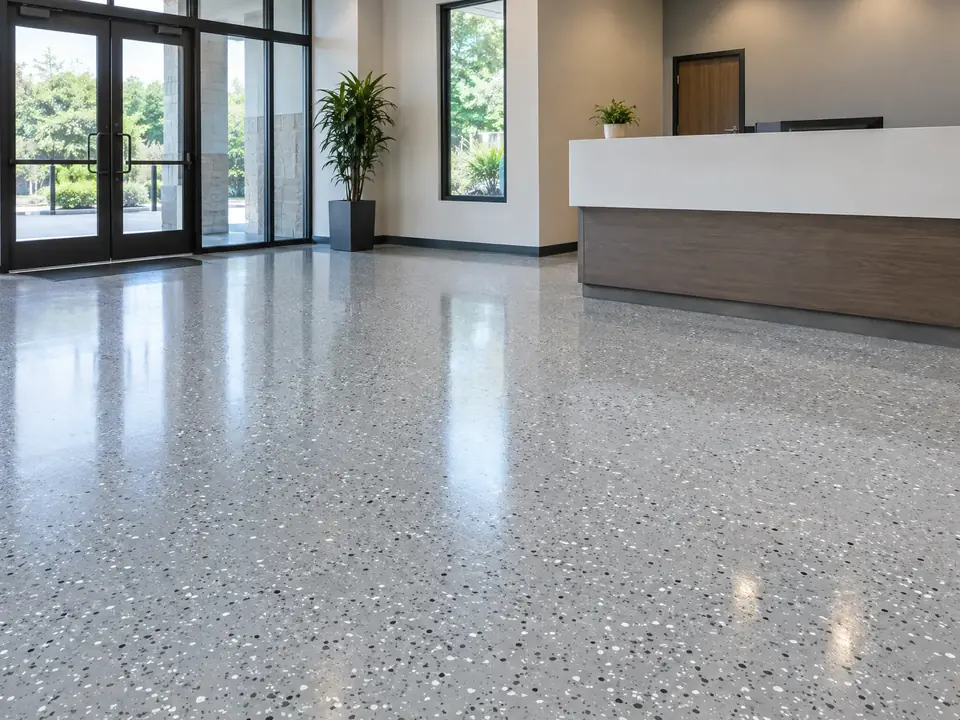
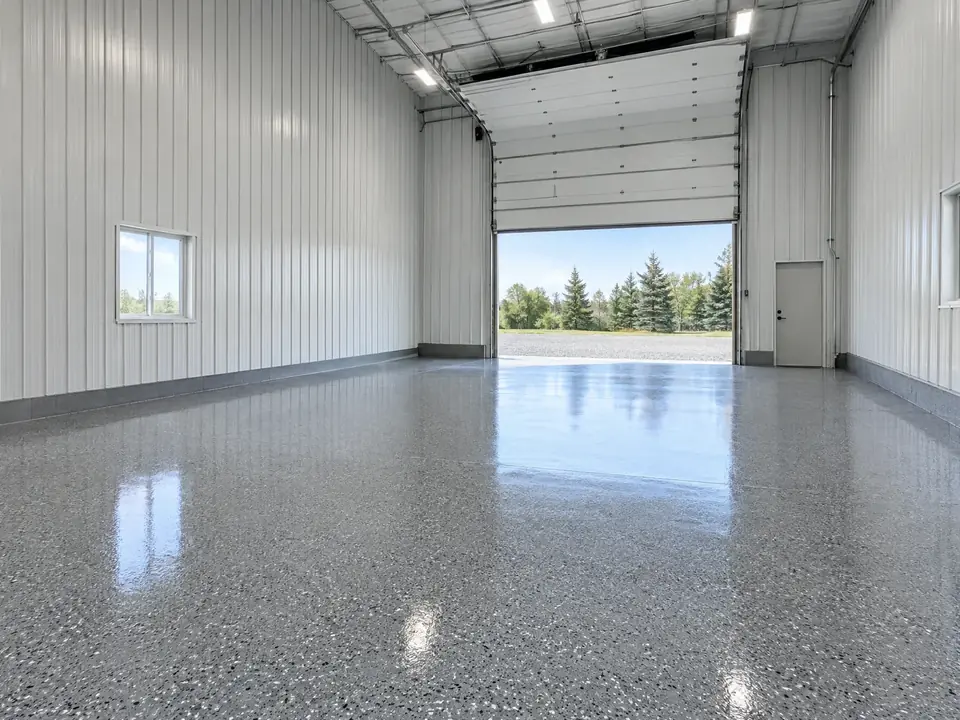
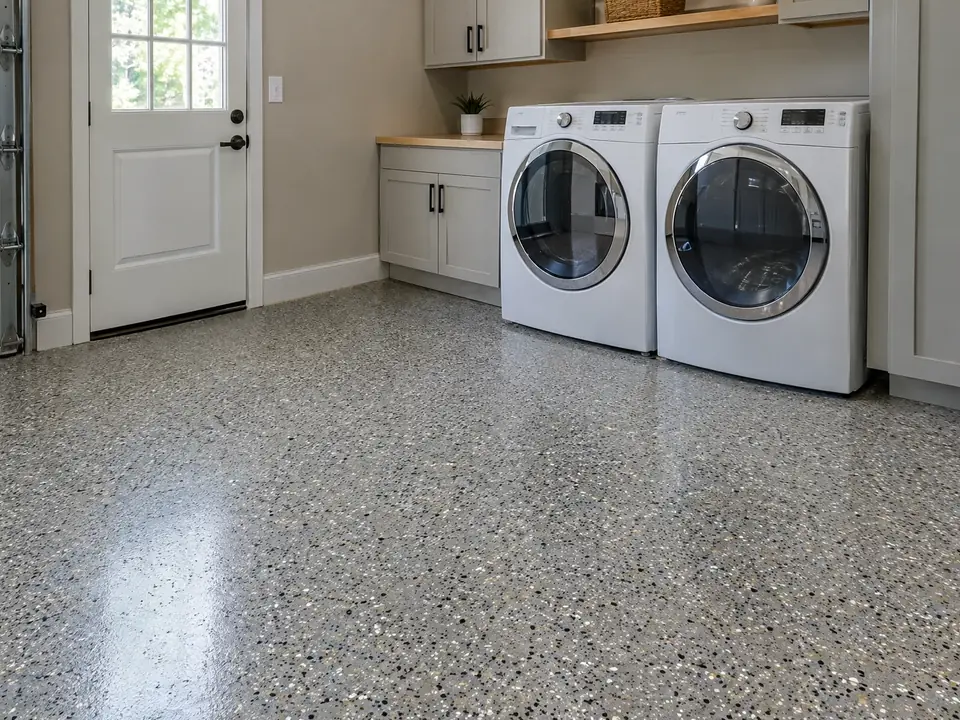
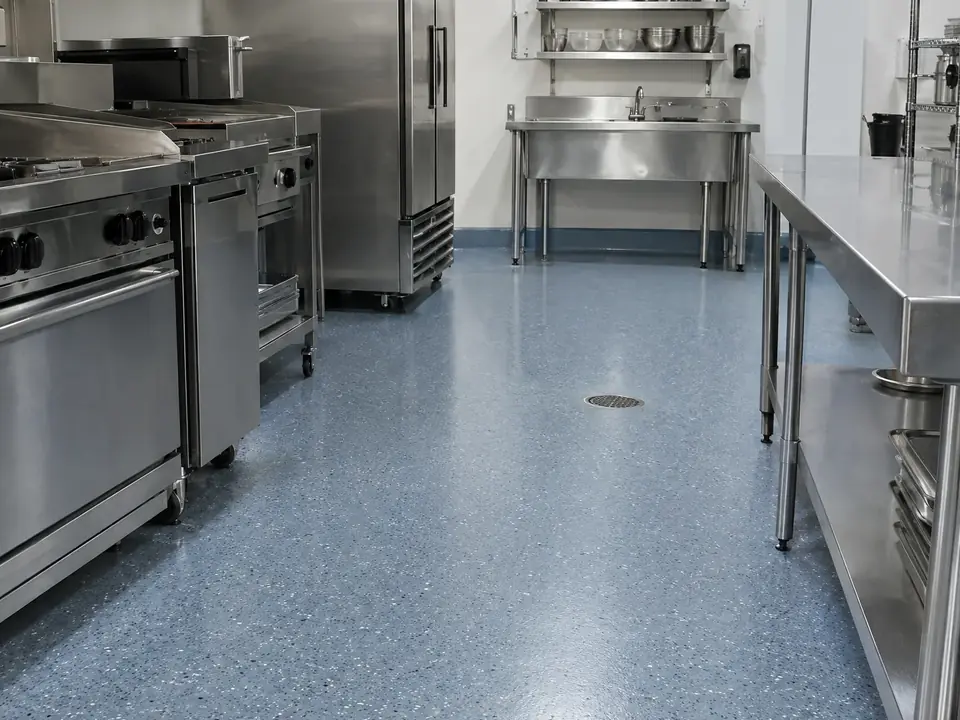
A standard two-car flake floor is installed in one day. Solid color takes about 3 days, metallic takes 3 to 4 days and quartz and sand finishes take 2 to 3 days, so flake is the quickest decorative option. Summer slab heat shortens the working time of the resin, so we start early in the morning, and in winter we begin later so the slab is warm enough to cure. Dust and wind are managed before the topcoat goes down. Larger garages, shops and floors with heavy repairs can take longer, and your quote lists the schedule. At the final walkthrough we tell you exactly when you can walk on the floor and when the car can return.
Pick a flake epoxy floor if you want a one-day install, a surface that hides dust and a fair price. Pick a solid color epoxy floor for a clean, even look. Pick a metallic epoxy floor for depth and a showpiece finish, and a quartz finish when traction is the top priority. Choose grind and seal if you like the natural concrete look and want to spend less. For most garages in the Antelope Valley, flake is the sensible default. If you are unsure, the free estimate settles it, because we look at your slab and your sun exposure before recommending a system.
Typical ranges for Lancaster and the Antelope Valley. Minimum project $2,600. Commercial and industrial work is quoted after a site visit.
| System | Price per sq ft | Typical project |
|---|---|---|
| Flake system (garage, up to 400 sq ft) | $6.50 – $10 per sq ft | $2,600 – $4,000 |
| Solid color system | $9.50 – $11.50 per sq ft | $3,800 – $4,600 |
| Metallic epoxy system | $12.50 – $18.50 per sq ft | $5,000 – $7,400 |
| Quartz & sand finish system | $9 – $16.50 per sq ft | $3,600 – $6,600 |
| Grind & seal (clear sealer) | $6.50 – $9 per sq ft | $2,600 – $3,600 |
| Patio, driveway & pool deck | $8 – $12 per sq ft | $3,200 – $4,800 |
| Commercial & industrial | Quoted after a site visit | Quoted per project |
Prices and details reviewed November 2026. Project examples assume a two-car garage up to 400 sq ft. Free on-site measurement and written estimate. See the color chart to pick your color.
Epoxy turns yellow because ultraviolet light and heat slowly break down the resin, a change called ambering. It shows first where sun hits the floor, usually near the garage door. A UV-stable polyaspartic topcoat, a color that hides slight change and less direct sun on the slab are what prevent it.
Read the answer →The best way to clean an epoxy garage floor is to dust mop or blow off the grit, then mop with warm water and a mild pH-neutral cleaner using a soft mop or microfiber pad. Rinse, then dry. Skip acids, harsh solvents, wax and abrasive pads that can dull the finish.
Read the answer →Yes, epoxy can handle an RV garage or workshop, because the concrete slab carries the weight and the coating protects its surface. The slab must be sound. A good system adds a deep bond, traction and a UV-stable topcoat. Large floors are measured and quoted at a free estimate.
Read the answer →Epoxy flake flooring is a decorative floor made by broadcasting colored vinyl flakes into a wet epoxy basecoat, then sealing them under a clear topcoat. It is also called chip or decorative flake flooring. The flakes give the surface color, texture and the ability to hide dust and stains.
A flake epoxy garage floor costs $6.50 to $10 per square foot, which is $2,600 to $4,000 for a two-car garage up to 400 square feet. Every project has a $2,600 minimum. Cracks, old coatings, size and a cove base can change the price, so we quote after measuring.
A standard two-car garage flake floor takes one day, from grinding to the final topcoat. Larger garages, shops and floors with heavy crack repair can take longer. We tell you the schedule in your written quote and confirm when you can walk on the floor and drive on it at the final walkthrough.
No, a flake floor grips better than a smooth coating. The broadcast flakes create a textured surface that gives traction underfoot, even when damp. For wash areas, pool decks and ramps, we can add a slip-resistant additive to the topcoat. Tell us where water will be present and we will choose the right texture.
Mid-tone, multicolor blends hide dust and dirt best because the speckles break up fine silt and tire marks. Very dark floors show dust and scratches, and very light floors show tire marks sooner. In a windy valley with a lot of dust, a medium blend is the most forgiving choice.
Our color chart has 13 standard flake colors, 10 marble flake colors and 6 metallic flake colors, which is 29 flake choices in all. Standard flakes are the classic speckle, marble flakes give a softer stone-like finish and metallic flakes add a glint. Zoom in on the swatches on the color chart page.
Full rejection means we throw more flake into the wet basecoat than it can hold, so the excess rejects and no basecoat shows through. That gives complete coverage, a textured surface and the best stain and flaw hiding. After the coat firms, we scrape and vacuum the loose flake away.
Sweep or dust mop, then wash with a neutral cleaner and warm water using a mop or soft deck brush. Wipe up oil, coolant and brake fluid soon after they land. Avoid acid cleaners and stiff abrasive pads, which can dull the topcoat. In a dusty valley, a quick sweep every week keeps the floor looking new.
Yes, when the slab is ground properly and the system is fully cured. Hot-tire pickup happens when a weak or poorly bonded coating softens under tires that come in hot after a long drive. A flake floor with a polyaspartic topcoat resists it well, even in Antelope Valley summers.
A well-prepared flake floor with a UV-stable topcoat can last many years in a home garage, but the exact life depends on slab prep, sun exposure, traffic and cleaning habits. Preparation matters more than the product name. Ask us about the written warranty when we give your free estimate.
Durable, easy-to-clean garage floors that resist hot-tire pickup, oil and salt. Most two-car garages are done in one day.
Learn more →Double-broadcast colored quartz or a sand finish for extra grip and durability on stairs, patios, mudrooms and commercial floors.
Learn more →A clean, seamless pigmented floor in gloss, satin or matte for garages, workshops, interiors and commercial spaces.
Learn more →Call (661) 545-6676 or send the form at the top of the page. We reply the same day with a time to measure.