 ACCENTEpoxy Floors
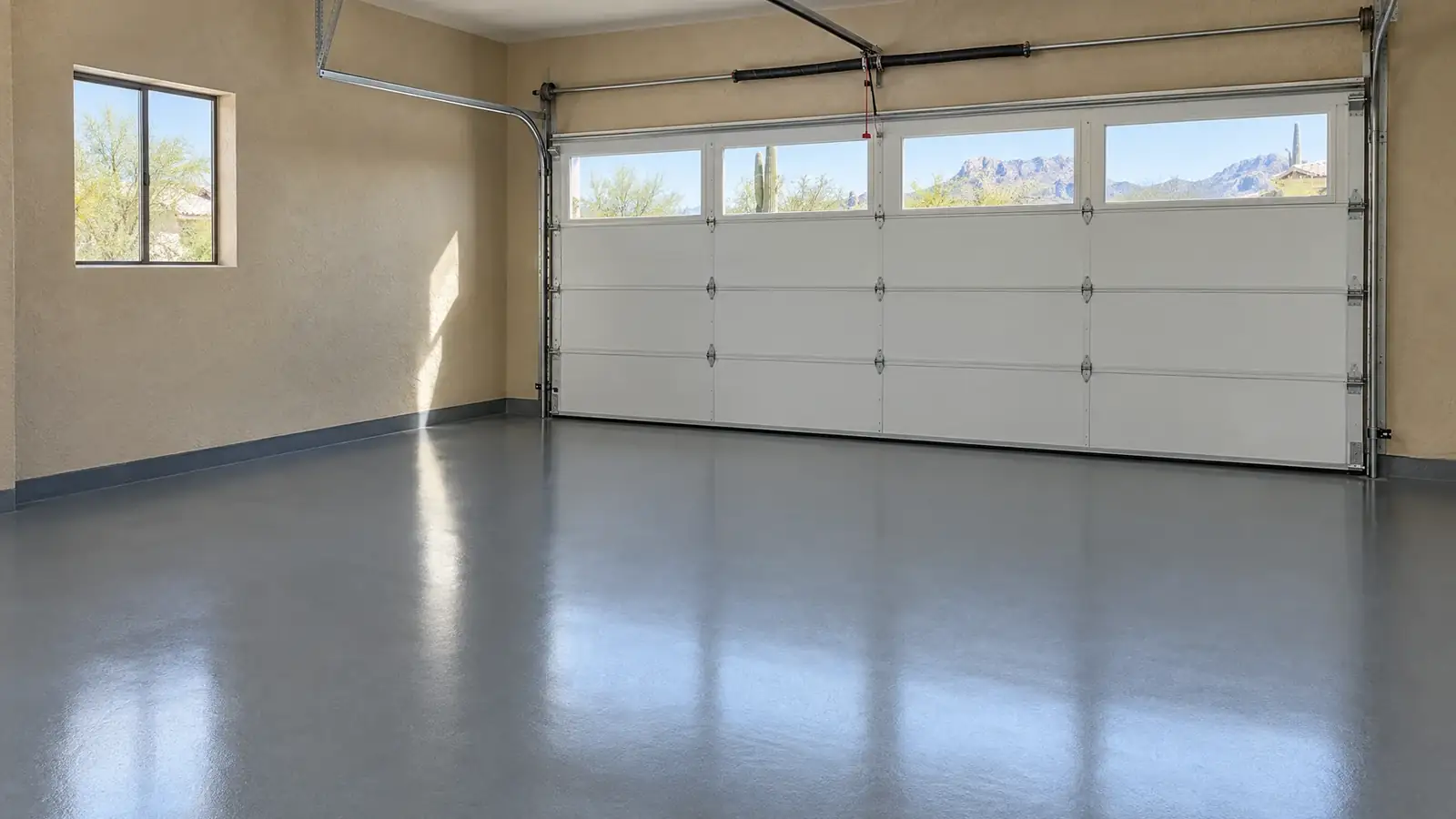
A solid color epoxy floor gives your garage, shop or storefront a clean, uniform surface in the shade you pick from our color chart, with a matte or gloss finish and a topcoat built for desert sun.
A solid color epoxy floor is a pigmented coating rolled over a ground slab in one uniform shade, then sealed with a protective topcoat. It hides concrete flaws and wipes clean easily. In Lancaster, solid color projects start at $3,800 and run $9.50 to $11.50 per square foot, with a three day install.
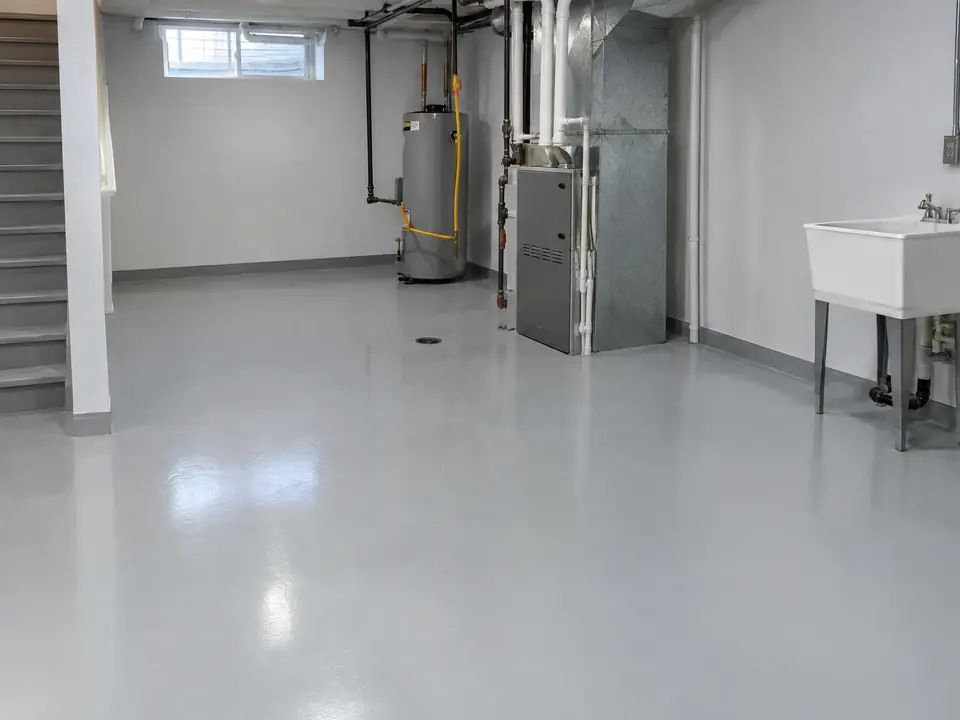
Some floors should be loud and some should simply look finished. A solid color epoxy floor is the second kind. There are no flakes, swirls or speckles to look at, just a flat, even surface in the color you chose, running from wall to wall. When the garage door opens, the room looks bigger, brighter and cleaner than the gray concrete it replaced. Shop owners and homeowners in the Antelope Valley often pick it for exactly that reason: it reads as tidy and intentional, and it stays that way with very little effort.
Behind that calm look is a real coating system. We diamond grind the slab to open the pores and create a bonding profile, repair cracks and spalls, prime the surface, and then roll pigmented epoxy in as many coats as the floor needs for full, even coverage. A clear or tinted topcoat finishes the job and decides whether the floor reads matte, satin or gloss. Because the color is the whole story here, the quality of the prep shows. Every trowel mark, patch and dip in the slab can telegraph through a plain color, so we spend our time where it counts.
Accent Epoxy Floors is based in Lancaster and installs solid color floors across the Antelope Valley, from Palmdale and Quartz Hill to Rosamond, Acton and California City. This page walks through how to choose a shade, how matte and gloss differ, where the system shines, what it costs and how to keep it clean. If you would rather see samples than read about them, ask for color samples at your free estimate and judge them in your own light.
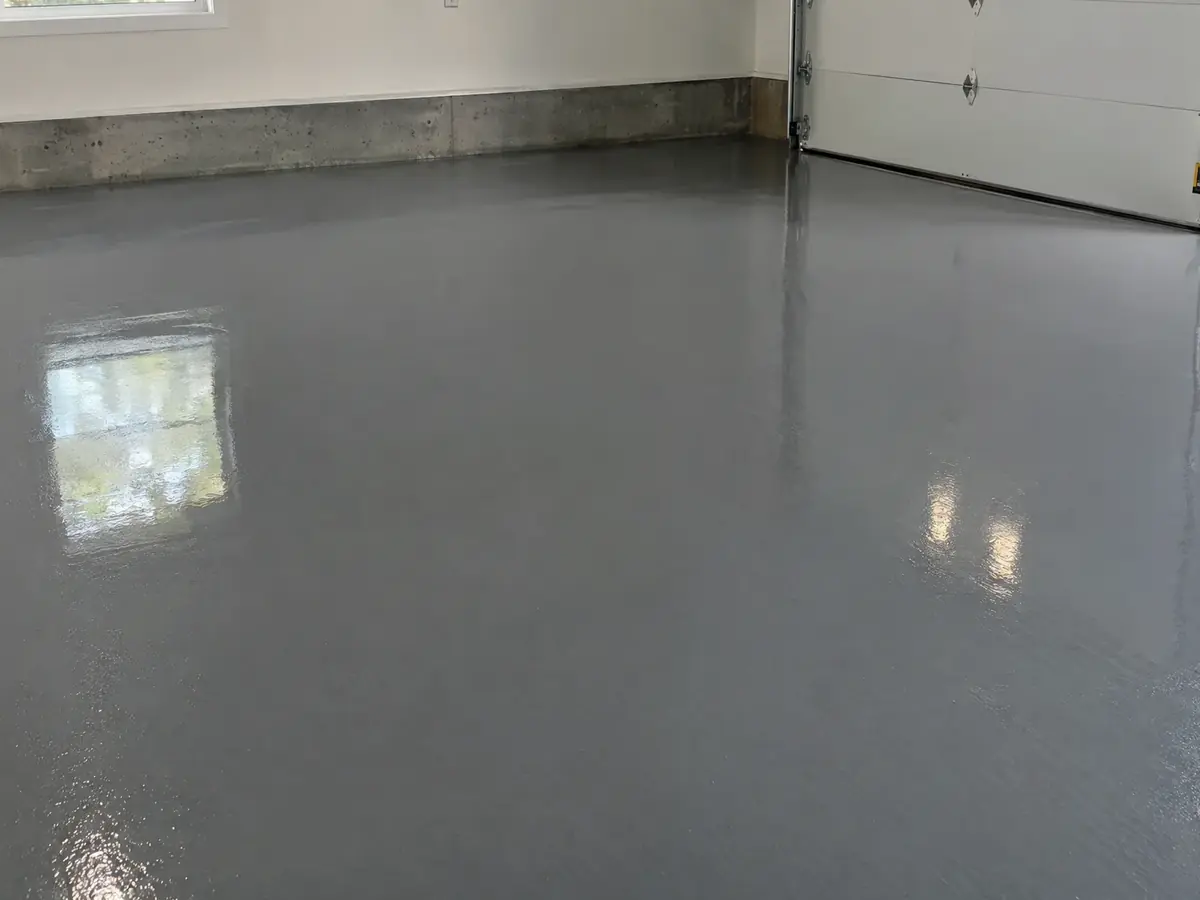
Start with how the room is used, then look at the color chart. Light gray, pale sand and white reflect the most light, so a garage with a single bulb and a small window feels twice as bright. They also show tire marks and boot prints more readily, which some owners like because it tells them when to mop. Mid gray and tan tones sit in the sweet spot: they hide dust, tire residue and the fine desert silt that blows in on windy days, and they never look dirty between cleanings. Dark gray, charcoal and black look sharp and photograph well, but they show every speck of pale dust and every dried water spot, and a dark floor in direct sun runs warmer underfoot. Bold colors such as red or blue suit a hobby shop or showroom bay where you want the floor to carry the room. A good test is to hold the chart sample against your garage door, cabinets and walls in daylight, because the same shade reads differently under LED, fluorescent and window light. Tell us what you park, what you store and how often you clean, and we will narrow the choice to two or three shades before you commit.
Gloss is the showroom look. It bounces light off the floor, deepens the color and makes a small garage feel larger, but it also shows scuffs, swirl marks and every low spot in the slab, and it can feel slick when wet. Matte and satin finishes soften all of that. Light scatters instead of mirroring, so tiny imperfections and fine scratches nearly vanish, and the surface gives more grip under wet shoes. Many owners of a working shop pick satin as the middle path. The finish comes from the topcoat, not the color coats, so you can see both options on a sample square before you decide. For sun-exposed garages and open bays we favor a UV-stable polyaspartic topcoat over the pigmented epoxy, because high desert sunlight is strong enough to push plain epoxy toward yellowing on a floor near an open door. For areas that stay wet, such as a wash bay or a laundry corner, a light non-slip additive can be mixed into the final coat. Ask about it at the estimate, since it changes how the floor feels and how it cleans, and it is much easier to include on day one than to add later.
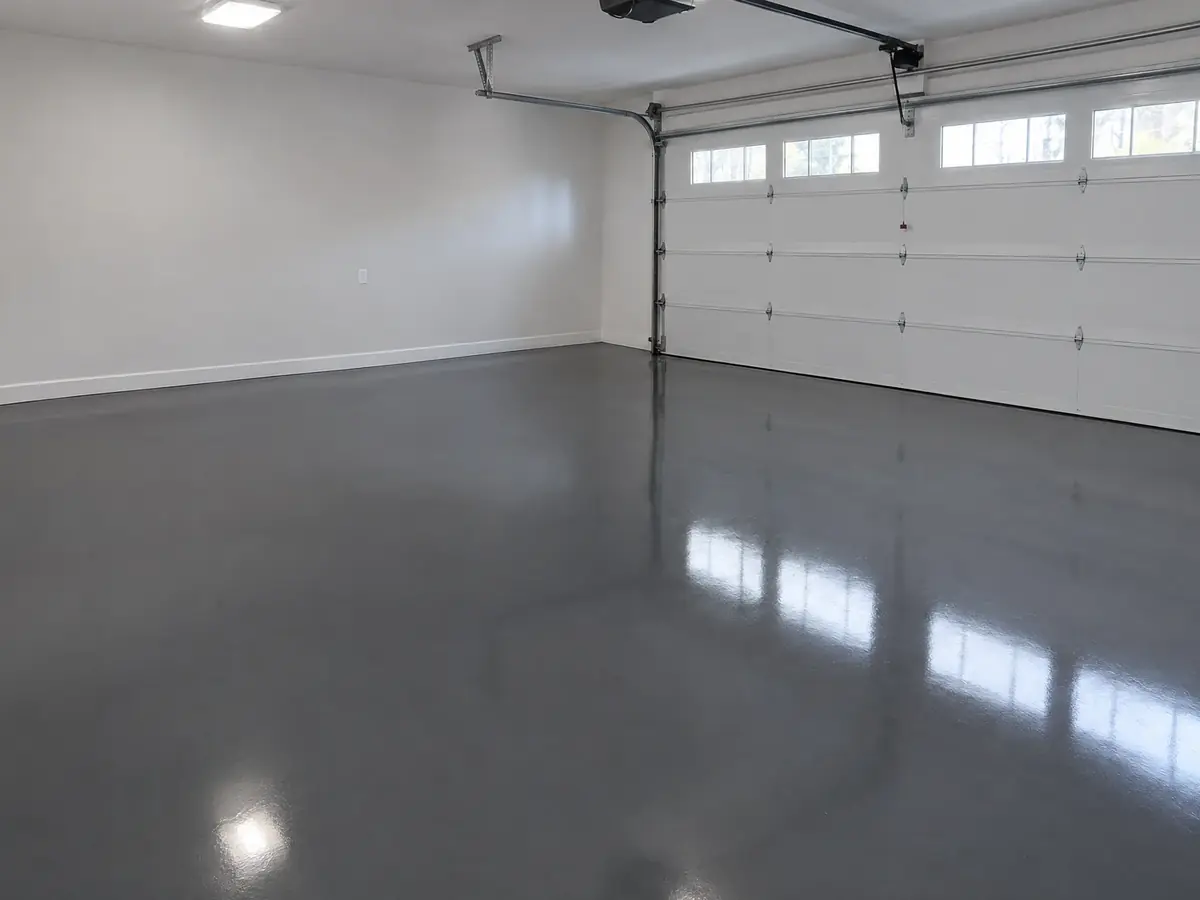
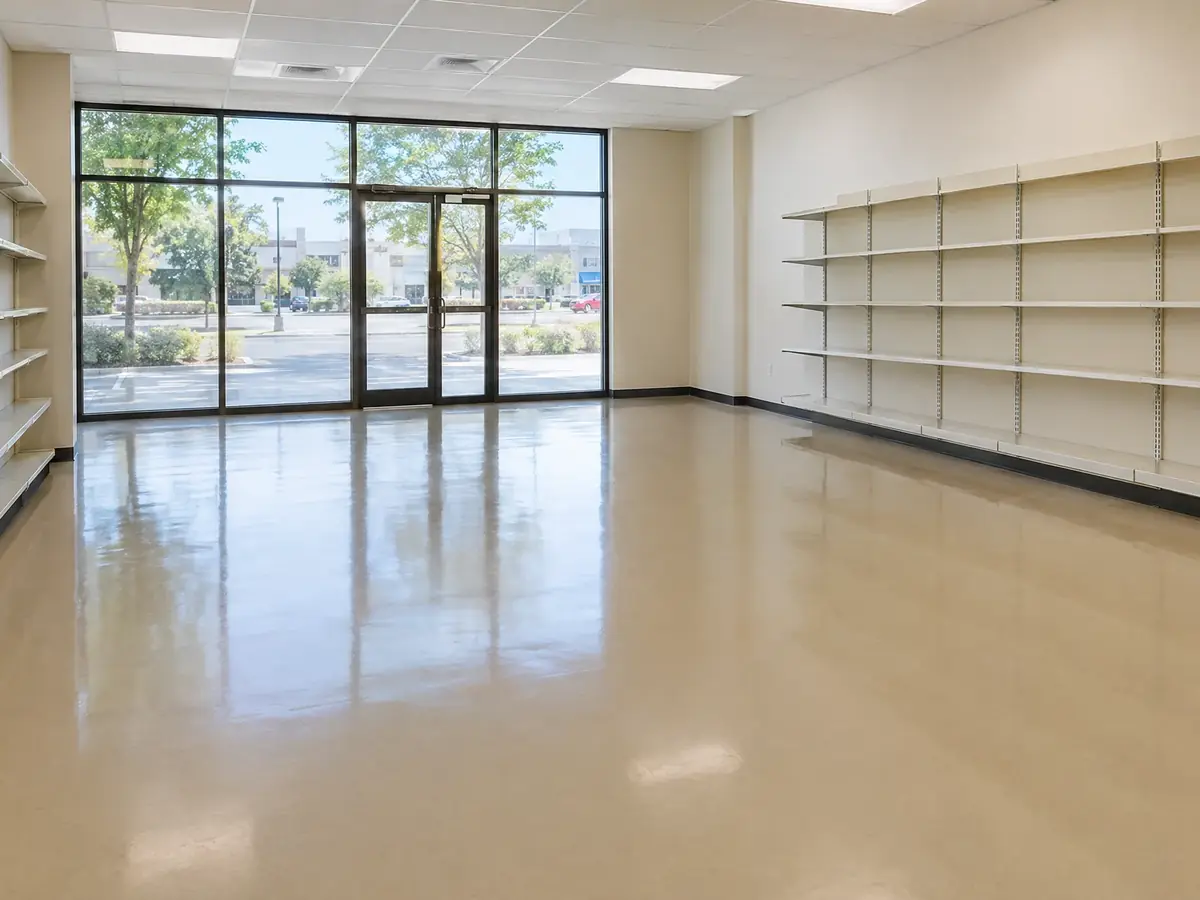
In a home garage, solid color is the choice for owners who want the plainest, cleanest result and the most color control. It pairs well with painted walls and matching cabinets, and it makes a good canvas for a workbench and a toolbox. In a workshop or storage building, it gives a bright, even surface where dropped screws and small parts are easy to spot. As a commercial floor in an office, salon, retail shop, showroom or back-of-house corridor, the uniform color reads professional, resists foot traffic and wipes down fast. Many commercial customers choose it because staff can mop it nightly without worrying about grout lines, seams or texture trapping grime. We can add cove base where the floor turns up the wall, which makes cleaning easier and keeps liquids from seeping at the edges. Solid color is a thinner build than a full flake system, so it relies on its topcoat to resist hot tires and abrasion. If you drive in off a hot highway and park right away, tell us, and we will choose the topcoat accordingly. For rougher use, a flake epoxy floor hides wear better, and for traction on stairs and patios, a quartz finish is the better call.
Sweep or dust mop weekly, because fine desert silt acts like sandpaper under shoes and tires if it is left to grind in. Damp mop every few weeks with warm water and a neutral floor cleaner, and let the floor dry before parking. Wipe oil, coolant and brake fluid when you see them rather than when you remember. A soft deck brush handles stubborn spots. Skip vinegar, citrus cleaners, ammonia and abrasive pads, which dull the topcoat over time. Felt or rubber caps on jack stands, and a mat under rolling tool chests, protect against point loads that can scratch a gloss finish. Wind carries a lot of dust through the valley, so a floor that is mopped after a blowing spell stays looking new far longer than one that is left alone. Solid color shows its age mostly through scratches, not stains, so a satin sheen and a polyaspartic topcoat give you the most forgiving result. When the topcoat finally looks worn, a scuff and recoat refreshes it without starting over, which is one of the quiet advantages of a well-built system.
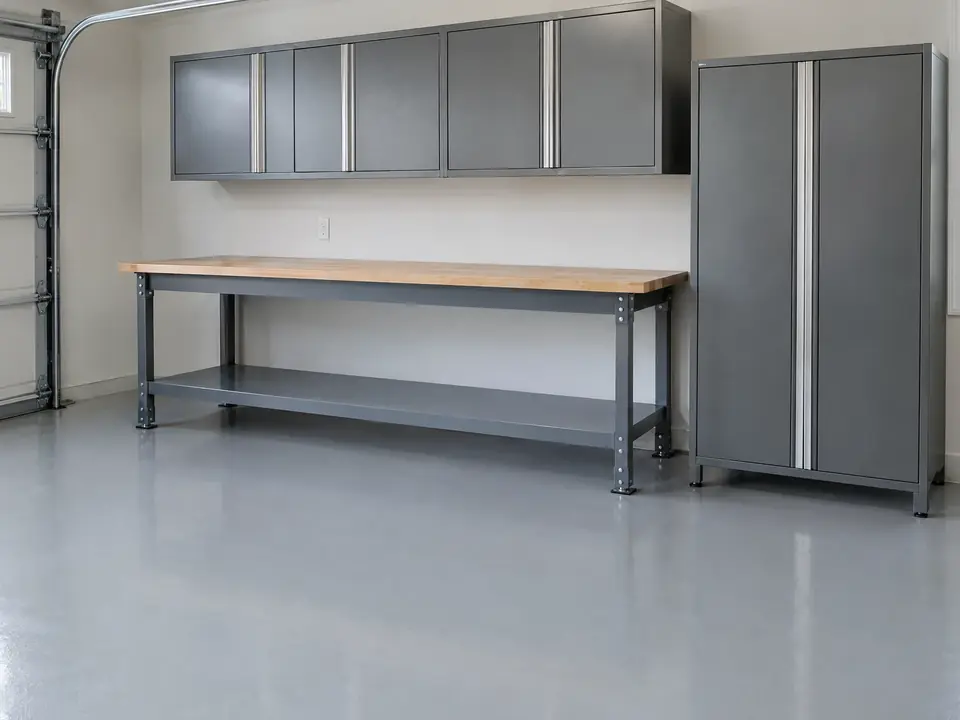
A solid color floor is a three day install. A typical schedule uses the first day for grinding, crack repair and primer, the second for the pigmented color coats, and the third for the topcoat, though your written quote lists the plan for your floor. Light foot traffic is usually fine the next day, and vehicles come back on once the topcoat has hardened, which your installer will confirm. In the high desert, heat shortens the working time of every mixed batch, so we start early and keep material out of the sun. A slab that warms through the day can also push air up through the coating and leave pinholes, so we watch how the slab is trending instead of trusting the thermometer alone.
Choose solid color when you want the cleanest uniform look and full control of the shade. Pick a flake epoxy floor if you want the system to hide dirt and wear in one day. Pick a metallic epoxy floor for depth and movement. Pick a quartz finish where traction matters, and choose grind and seal when you like the natural concrete look and want the lowest cost. Solid color sits between them: more polished than flake, quieter than metallic, and well suited to anyone who wants the room to look calm and bright.
One consistent color from wall to wall gives a garage or shop a finished, orderly appearance that no patchy gray slab can match.
You choose the color from our color chart instead of settling for what a blend of flakes happens to produce.
Pick the sheen that fits the room: a bright showroom gloss or a forgiving satin that hides fine scratches.
Stains, patches and old repairs disappear under pigment once the slab has been ground and repaired properly.
A seamless, non-porous surface sweeps and mops quickly, which suits busy shops, salons and storefronts.
Lighter shades reflect lamp and window light, so a dim garage or back room feels bigger and easier to work in.
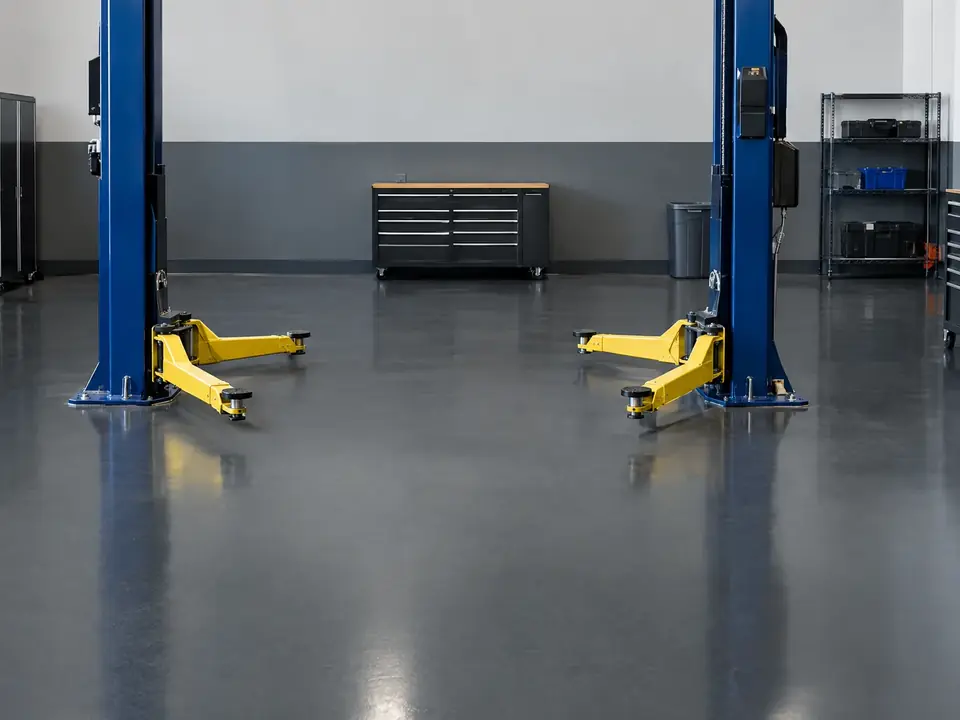
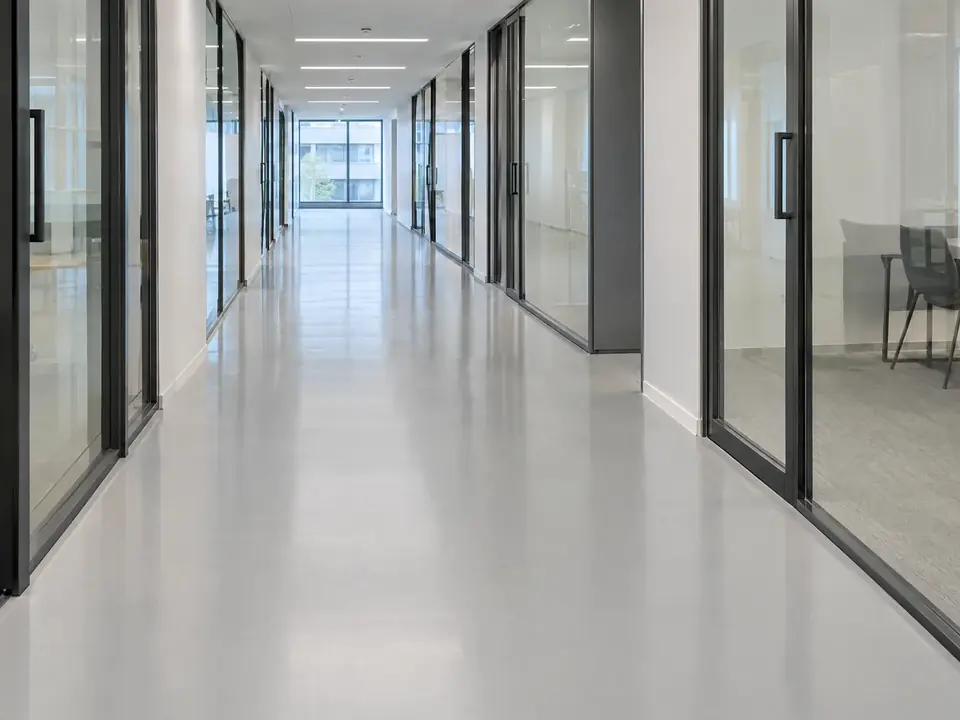
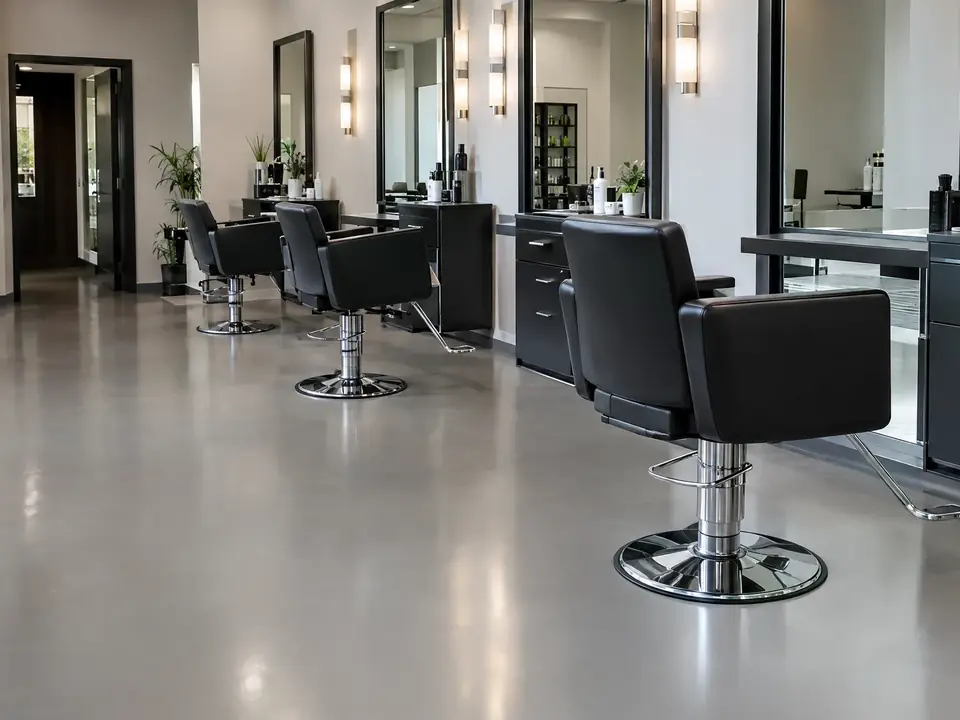
Typical ranges for Lancaster and the Antelope Valley. Minimum project $2,600. Commercial and industrial work is quoted after a site visit.
| System | Price per sq ft | Typical project |
|---|---|---|
| Flake system (garage, up to 400 sq ft) | $6.50 – $10 per sq ft | $2,600 – $4,000 |
| Solid color system | $9.50 – $11.50 per sq ft | $3,800 – $4,600 |
| Metallic epoxy system | $12.50 – $18.50 per sq ft | $5,000 – $7,400 |
| Quartz & sand finish system | $9 – $16.50 per sq ft | $3,600 – $6,600 |
| Grind & seal (clear sealer) | $6.50 – $9 per sq ft | $2,600 – $3,600 |
| Patio, driveway & pool deck | $8 – $12 per sq ft | $3,200 – $4,800 |
| Commercial & industrial | Quoted after a site visit | Quoted per project |
Prices and details reviewed November 2026. Project examples assume a two-car garage up to 400 sq ft. Free on-site measurement and written estimate. See the color chart to pick your color.
Solid color epoxy runs $9.50 to $11.50 per square foot, and projects start at $3,800, with typical garages landing between $3,800 and $4,600. The price covers diamond grinding, crack repair, primer, pigmented coats and the topcoat. We give a fixed written quote after a free on-site estimate, so there are no surprises on install day.
Mid gray or tan is the safest pick for most garages because it hides dust, tire marks and desert silt between cleanings. Light shades brighten a dim garage but show dirt sooner, and dark shades look sharp but show pale dust. Check the color chart against your walls and cabinets in daylight before choosing.
Gloss can feel slick when it is wet, while matte and satin finishes give more grip. If the floor sees water, choose a satin sheen or ask us to add a fine non-slip additive to the final coat. A dry gloss garage floor is fine for normal walking, but wet shoes and wet tires change the picture.
Yes, solid colors show dust more than flake or metallic floors do, especially very light and very dark shades. Mid tones disguise it best. Weekly sweeping and a periodic damp mop keep any shade looking crisp. In windy stretches in the Antelope Valley, a quick mop after a blowing spell is worth the five minutes.
Solid color is one uniform pigmented shade, while flake epoxy has decorative chips broadcast into the coating for a speckled, textured look. Flake hides dirt and wear better and installs in a day. Solid color installs in three days and gives a cleaner, more modern look with a smoother surface.
A properly cured, well-bonded system resists hot-tire pickup when the topcoat matches the use, but a thinner solid color build is less forgiving than flake. Tell us if you park right after a hot highway drive. We can specify a tougher topcoat so the pigmented layer does not lift when the tires cool.
Yes, solid color suits offices, salons, retail shops, showrooms and back-of-house areas because it mops quickly and looks professional. We can add cove base along the walls and a slip-resistant finish where needed. Industrial areas with fuel or chemical exposure are specified after a site visit, so the system fits the real use.
Solid color takes three days from grinding to the final topcoat. Day one is prep and primer, day two is the color coats, and day three is the topcoat. You can usually walk on it lightly the next morning, and vehicles return once the topcoat has hardened, which your installer will confirm.
Yes, after the old coating is ground off. Epoxy bonds to clean, open concrete, not to peeling paint or sealer, so diamond grinding removes the old layer and creates a bonding profile. Oil-soaked spots are cleaned and tested, and cracks are filled, before any color goes down.
Plain epoxy can yellow or amber in strong sunlight, which is why we put a UV-stable polyaspartic topcoat over sun-exposed floors. High desert sun is intense, especially near an open garage door. With the right topcoat, the color stays true and the floor keeps its look for years, which a plain epoxy finish may not.
To prepare a garage for epoxy, empty it completely, move vehicles out, clear the walls, unplug appliances and make sure the crew has access to power and the space around the floor. The crew handles grinding, crack repair and cleaning, so do not etch, paint or seal the floor yourself.
Read the answer →Epoxy or polyaspartic is a good base for a garage gym, but it is not a replacement for mats. The coating handles racks, benches and foot traffic well. It does not cushion impact, so dropped weights can chip it. Use mats or platforms where you lift heavy and drop plates.
Read the answer →For a car collector or show garage, a metallic epoxy floor gives the most dramatic showroom look, while a flake floor is the easier one to live with. Metallic shows dust, scratches and tire marks more and costs more. Flake hides wear, installs in one day and costs less.
Read the answer →Durable, easy-to-clean garage floors that resist hot-tire pickup, oil and salt. Most two-car garages are done in one day.
Learn more →Full-rejection flake over a moisture-barrier epoxy basecoat, sealed with a UV-stable polyaspartic topcoat. Installed in one day.
Learn more →Hand-guided metallic pigments create marble and lava effects, so no two floors look alike. A statement floor for homes and showrooms.
Learn more →Call (661) 545-6676 or send the form at the top of the page. We reply the same day with a time to measure.