 ACCENTEpoxy Floors
Yes, a fully cured epoxy or polyaspartic floor is a safe, easy-to-clean surface for dogs, kennels and grooming rooms. The sealed surface does not soak up urine or fur. The real tradeoffs are paw traction when wet, which cleaners you use, and keeping animals off the floor until it has cured.
Yes, a fully cured epoxy or polyaspartic floor is a safe, easy-to-clean surface for dogs, kennels and grooming rooms. The sealed surface does not soak up urine or fur. The real tradeoffs are paw traction when wet, which cleaners you use, and keeping animals off the floor until it has cured.
A dog changes how you judge a floor. Carpet holds smells, bare concrete drinks up every accident, and tile grout never really comes clean. That is why so many Antelope Valley dog owners, breeders, groomers and boarding operators ask about a coated concrete floor. It can be a very good fit, but it is not a magic surface, and a few details decide whether you love it or fight it. Below is what actually matters: safety around curing, what urine and cleaning products do to the coating, whether nails scratch it, how paws grip it when wet, and how a kennel or grooming room should be planned.
Once a coating has fully cured, it is a hard, sealed, non-porous layer. Dogs can walk, lie and play on it without any concern we know of, and the surface will not shed into their coats or paws the way a worn-out carpet or crumbling slab can. The risk sits in the install window, not in the finished floor. Fresh resin gives off fumes while it sets, and a curious dog can step into wet material and track it through the house. So the rule is simple: pets stay out of the work area and out of the fumes until the crew says the floor is ready for traffic. For a garage floor that often means the dog stays inside, or at a friend's place, for the install day and a short return-to-service period. Our polyaspartic sealant is a VOC-free, eco-friendly product, which helps with smell, but we still ask owners to keep animals clear. If your dog is sensitive, ask for the product data sheets during the free estimate and show them to your vet. We would rather you check than guess.
A cured coating does not absorb urine the way bare concrete does. On untreated concrete, urine soaks into the pores, and the smell can return every humid day or every time you mop. On a sealed floor, liquid stays on top, so you can wipe it up and be done. That is the big win. Here is the honest part. If urine dries on the surface again and again, it can leave a faint film or dull spot, especially on a glossy dark color, and that is a cleaning habit more than a failure. Chips and cracks matter more. If the coating is damaged, urine can reach the slab underneath and bring the old smell back. Cleaners need the same attention. Mild soap and water handles most days. Many disinfectants are fine when diluted as the label says, but harsh solvents, strong acids and undiluted products can dull or mark a coating, and we do not give a blanket yes to any one brand. Check the label against your coating's data sheet, rinse well, and do not mix products. Warm water and a soft mop beat a strong chemical almost every time.
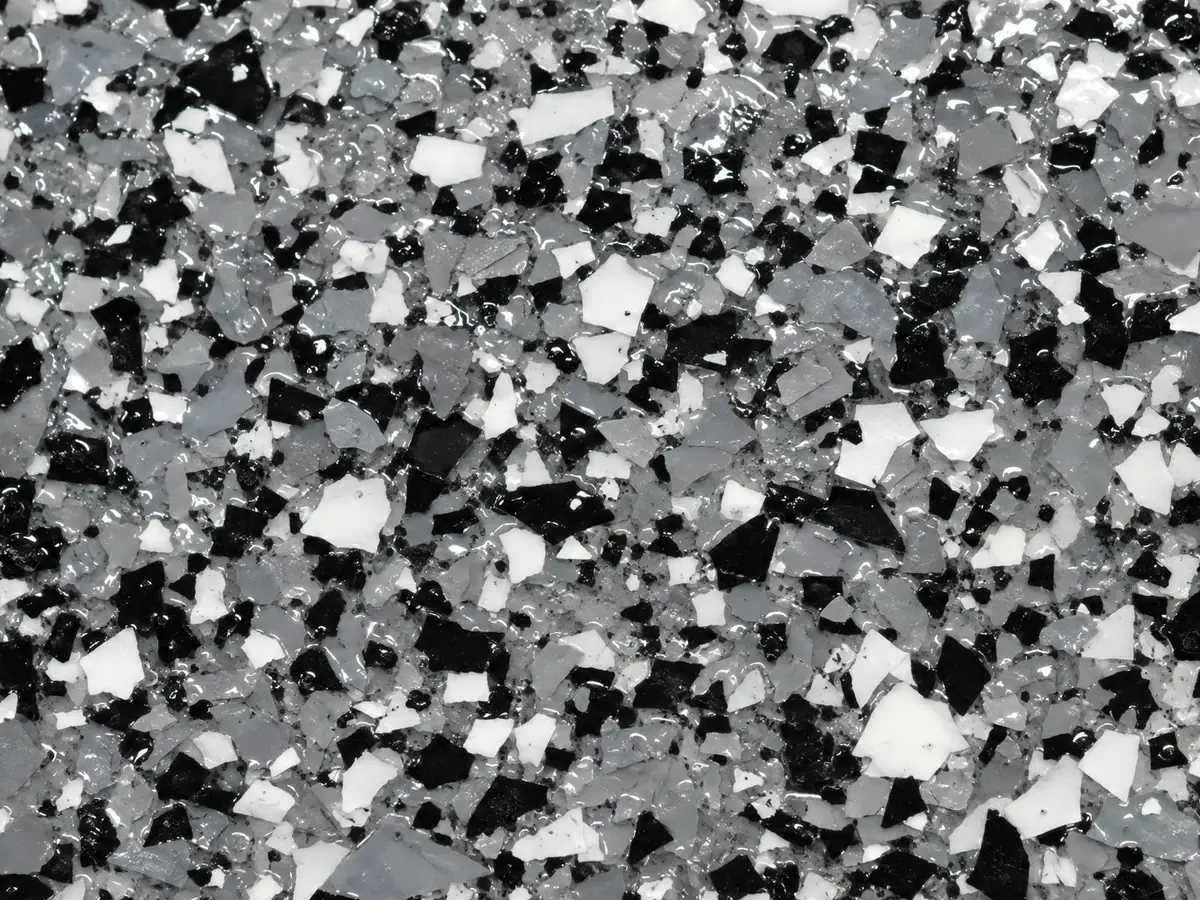
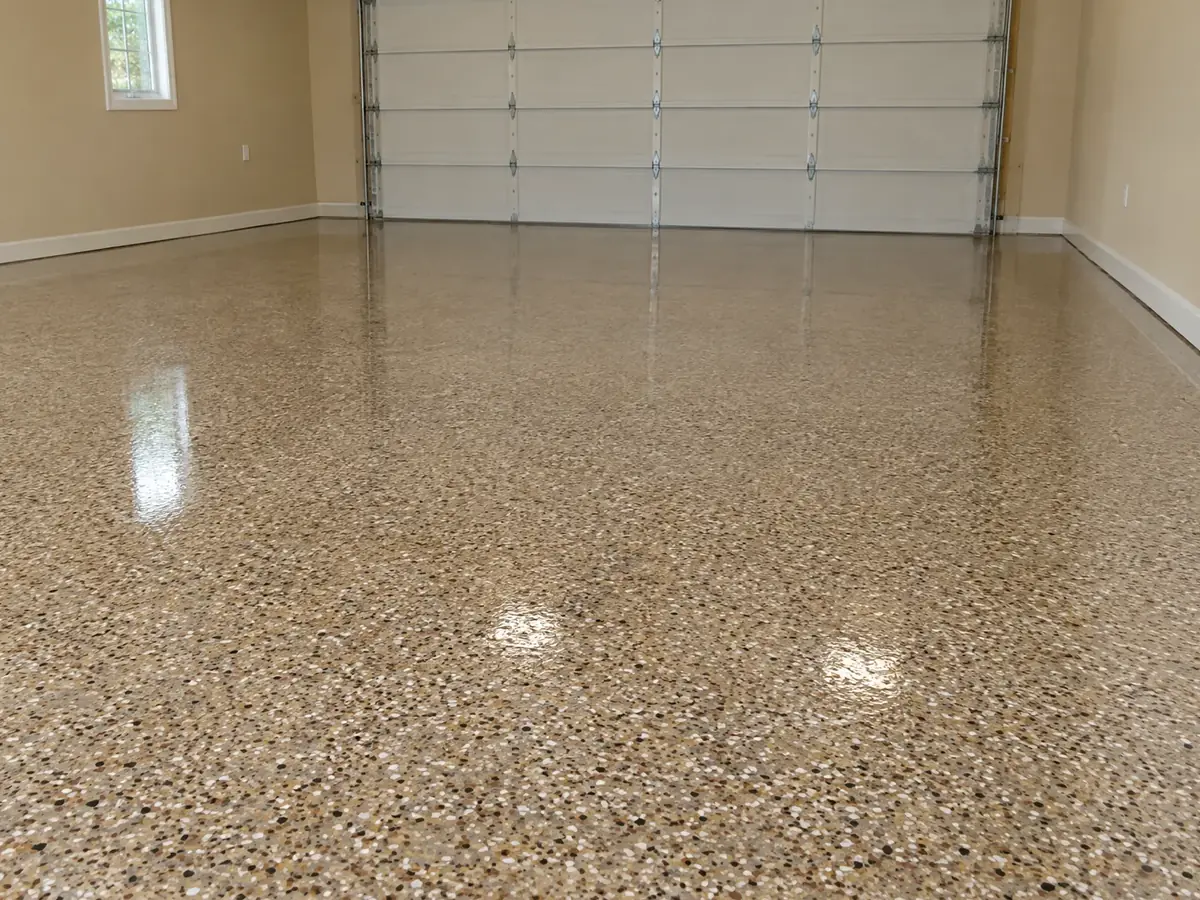
No coating is scratch-proof, but a well-built floor holds up to dog nails far better than most surfaces. A polyaspartic topcoat is hard and cross-linked, so ordinary walking, playing and the occasional zoomie across the garage will not wear through it. Large, heavy dogs that dig in when they turn can leave fine surface marks over the years, and those marks show most on a smooth gloss in a dark solid color. Two things help. First, texture and color. A flake epoxy floor with a blend of colors hides tiny scratches and daily dust, so it ages gracefully with pets. Second, a satin sheen shows fewer scuffs than a high gloss. If you want a very sleek showroom look, expect to see more of the life your dog lives on it. Keeping nails trimmed is the cheapest protection there is. Scratches on a sealed floor are almost always cosmetic. They do not cut through to the concrete the way a gouge in a soft coating might, though a deep gouge from a dropped tool is a different story and can be spot-repaired.
A smooth glossy floor can be slippery for a dog, particularly on wet paws after a bath or a rainy walk, and that is the one place where the wrong finish becomes a safety problem. Puppies and older dogs with weak hips feel it first. The fix is traction built into the floor, not a rug you have to keep rearranging. Flake broadcast adds natural texture, and a fine aluminum-oxide additive in the topcoat adds grip without making the floor hard to clean. More texture also traps more hair and grime, so the trick is picking enough grip for safety and no more. Outdoor dog runs and patios bring a different issue in the high desert. July highs are typically in the high 90s F, and sun-warmed concrete runs hotter than the air above it. Dark coatings can get uncomfortably hot for paws. Lighter colors stay cooler, and a simple test helps: if the surface is too hot for the back of your hand, it is too hot for your dog. Shade, lighter colors and early morning use all make an outdoor run kinder.
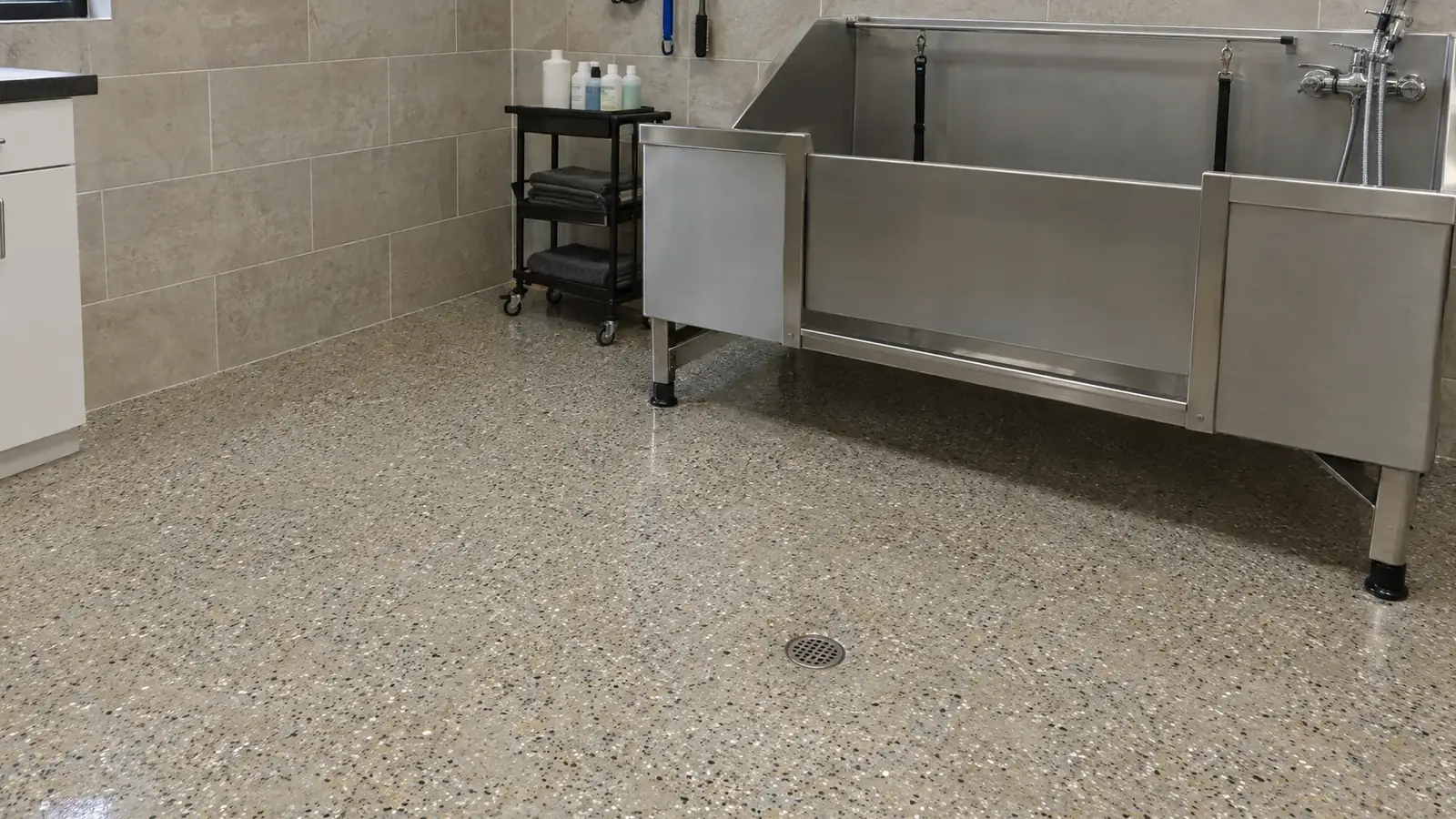
Kennels and grooming rooms are working floors, so the plan matters more than the color. Start with water. Coating a floor does not change its slope, so a room that pools water will still pool water after it is sealed. Drains, falls toward them, and clean edges where the floor meets the wall decide whether you can hose the room out each morning. A cove base, which curves the coating a few inches up the wall, removes the sharp seam where hair, moisture and bacteria like to hide. Next, think about noise and comfort. Hard floors echo, so a boarding room may need sound treatment on the walls and ceiling, and resting areas can have raised beds so dogs are not lying on cold concrete on a frozen Lancaster morning. For grooming, expect clipped fur everywhere and chemical shampoos, so choose a floor you can squeegee and a cleaner your coating tolerates. Because every business has its own layout, commercial floors are quoted after a site visit, not from a web page. A solid color system suits clinics and grooming rooms that want a clean look, while flake suits kennels that want to hide wear.
The coating work has to fit around living animals, which is a bigger puzzle for a boarding business than for a home. A flake epoxy floor is typically installed in one day, a solid color floor takes about three days, and metallic runs three to four, so the length of the closure depends on the system you choose. Boarding facilities usually phase the job: one run or room at a time, with dogs moved to the finished area or to a partner facility. Homeowners have it easier. Pet beds, bowls and crates come out of the garage the day before, the dog stays in the house, and everyone avoids walking on the floor until we confirm it is ready. Diamond grinding creates dust and noise, which can stress a nervous dog, so a quiet room at a relative's house is sometimes the kind option. As for budget, a standard two-car garage flake floor falls in our approved range, and our how much does epoxy cost guide explains the numbers. Commercial and kennel floors are priced after we see the space. The free estimate covers all of it, and you get a fixed written quote.
A coated floor can make life with dogs much easier, as long as the finish has real traction, the room drains properly and you clean with the right products. If you have a garage, kennel or grooming room in Lancaster or anywhere in the Antelope Valley, call Accent Epoxy Floors at (661) 545-6676 for a free estimate. Call (661) 545-6676 for a free estimate.
Yes, once the coating has fully cured, it is a sealed, hard surface that dogs can walk and sleep on. The concern is the install window, when fumes and wet material are present. Keep pets away from the work area until the crew confirms the floor is ready for traffic.
Yes, as long as the room is planned well. A sealed floor with a cove base, proper drainage and enough traction is easy to hose and disinfect. The coating cannot fix poor slope or missing drains, so those details should be settled before the floor goes in.
Yes, a sealed floor does not soak up urine, so accidents wipe away instead of sinking into the concrete. Repeated dried residue can dull the surface, and chips or cracks can let urine reach the slab. Clean quickly with mild soap and water, and keep the coating intact.
Heavy wear over the years can leave fine surface marks, though a polyaspartic topcoat resists them well. Flake blends and a satin sheen hide scratches best, while gloss solid colors show them most. Trimmed nails are the easiest protection, and the marks are almost always cosmetic.
A sealed concrete floor with a cove base and added traction is a strong choice, because it hoses clean and has no seams for hair and moisture to settle in. Flake hides wear, and solid color gives a cleaner look. The right system is chosen after a site visit.
Keep your dog out until the crew confirms the floor is ready, which depends on the system and the temperature. Install time is about one day for flake, three days for solid color, and three to four for metallic. We give you the exact return-to-service timing at the walkthrough.
Durable, easy-to-clean garage floors that resist hot-tire pickup, oil and salt. Most two-car garages are done in one day.
Learn more →Full-rejection flake over a moisture-barrier epoxy basecoat, sealed with a UV-stable polyaspartic topcoat. Installed in one day.
Learn more →A clean, seamless pigmented floor in gloss, satin or matte for garages, workshops, interiors and commercial spaces.
Learn more →The right aircraft hangar floor is one specified for the hangar, not borrowed from a garage. It must resist fuel, Skydrol and hydraulic fluid, carry tugs, jacks and aircraft loads, stay slip resistant, and fit your downtime. Accent Epoxy Floors specifies the system after a site visit.
Read the answer →Plan on about one day of coating work for a flake system, two to three days for quartz, three days for solid color and three to four days for metallic. Your total closure also depends on moving stock, repairs and cure time before heavy traffic, so we confirm a schedule during the site visit.
Read the answer →To prepare a garage for epoxy, empty it completely, move vehicles out, clear the walls, unplug appliances and make sure the crew has access to power and the space around the floor. The crew handles grinding, crack repair and cleaning, so do not etch, paint or seal the floor yourself.
Read the answer →Call (661) 545-6676 or send the form at the top of the page. We reply the same day.