 ACCENTEpoxy Floors
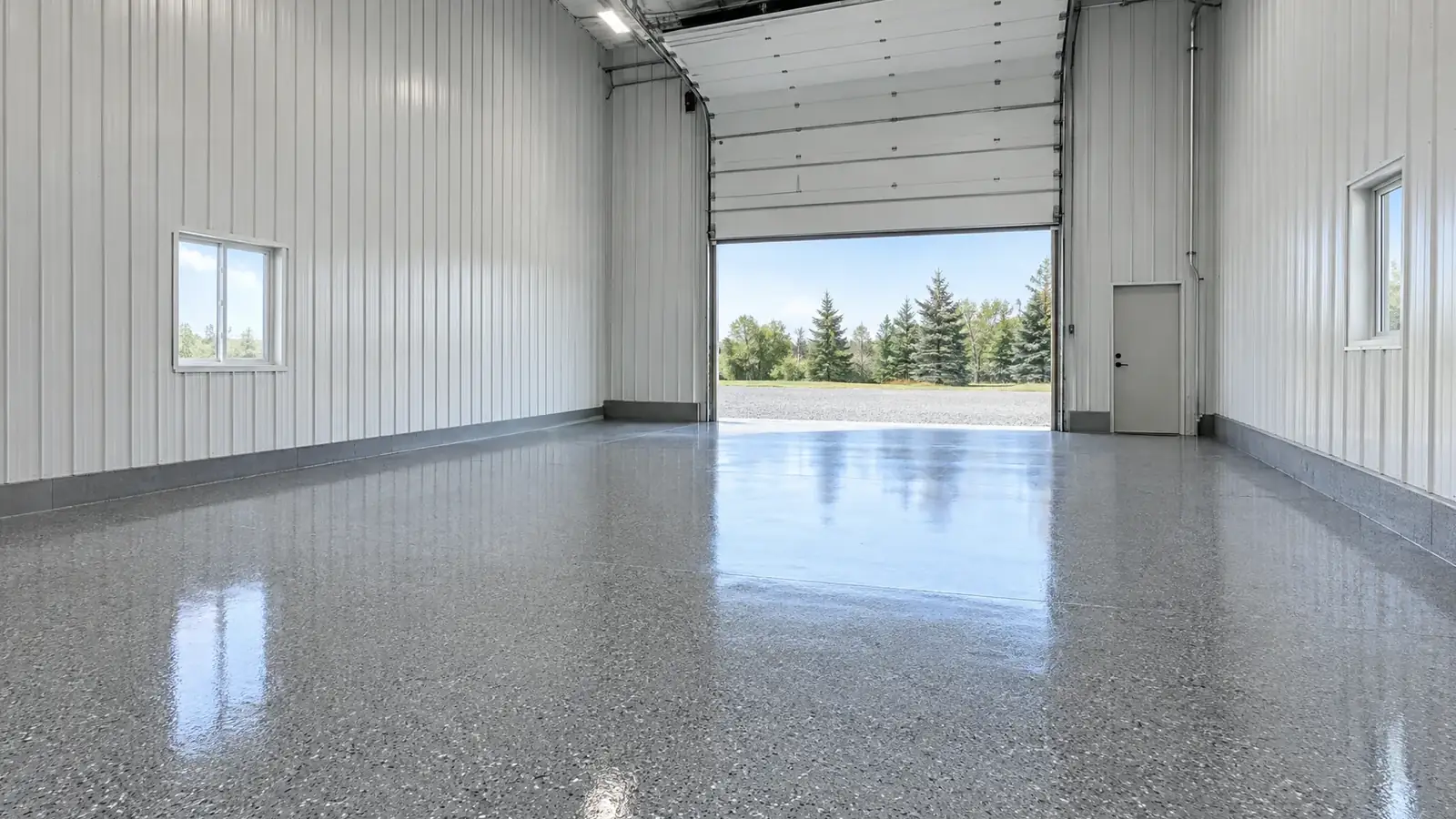
Yes, epoxy can handle an RV garage or workshop, because the concrete slab carries the weight and the coating protects its surface. The slab must be sound. A good system adds a deep bond, traction and a UV-stable topcoat. Large floors are measured and quoted at a free estimate.
Yes, epoxy can handle an RV garage or workshop, because the concrete slab carries the weight and the coating protects its surface. The slab must be sound. A good system adds a deep bond, traction and a UV-stable topcoat. Large floors are measured and quoted at a free estimate.
Plenty of garages in the Antelope Valley are not ordinary two-car garages. There are tall RV bays, detached shop buildings, three and four car garages and workshops with lifts, welders and a lifted truck parked inside. Owners of these buildings ask a fair question: can a coating survive that? The short answer is yes, with conditions. This guide explains what the slab does and what the coating does, how heavy vehicles and hot tires change the plan, what a workshop adds, how a big floor is installed and priced, and what to expect from desert sun through a tall door.
The coating does not carry the weight. The concrete does. A coating bonds to the slab and protects its surface, so the real question is whether your slab is thick, sound and well supported enough for the vehicle. A slab that already handles your RV without cracking, settling or crumbling will keep doing so under a coating. A slab with deep cracks, a hollow sound or sunken sections needs repair or an opinion from a concrete professional first. Epoxy cannot fix structure. What a good system adds is a strong bond to the surface, which resists pulling and chipping where weight concentrates. Watch point loads, such as jack pads, leveling blocks and stabilizer feet, which push all the weight through a small area. Use wide pads under them. We inspect the slab at the free estimate and tell you plainly if it is ready for coating.
They are harder on a coating than the weight alone. A heavy vehicle turning its wheels while stopped scrubs the surface, and tires that are hot after a drive can soften a weak coating, which is how hot-tire pickup starts. In the high desert, an RV that has just pulled in from a hot highway is a real test. The defense is a deep bond from diamond grinding, a properly cured, full-thickness system and a hard UV-stable polyaspartic topcoat. A flake epoxy floor or a quartz finish also adds body that hides marks and gives traction. Do not park on a new floor before the cure date in your written quote, and avoid turning the steering wheel with the vehicle stopped. These habits help any floor, and they matter more under a heavy rig.
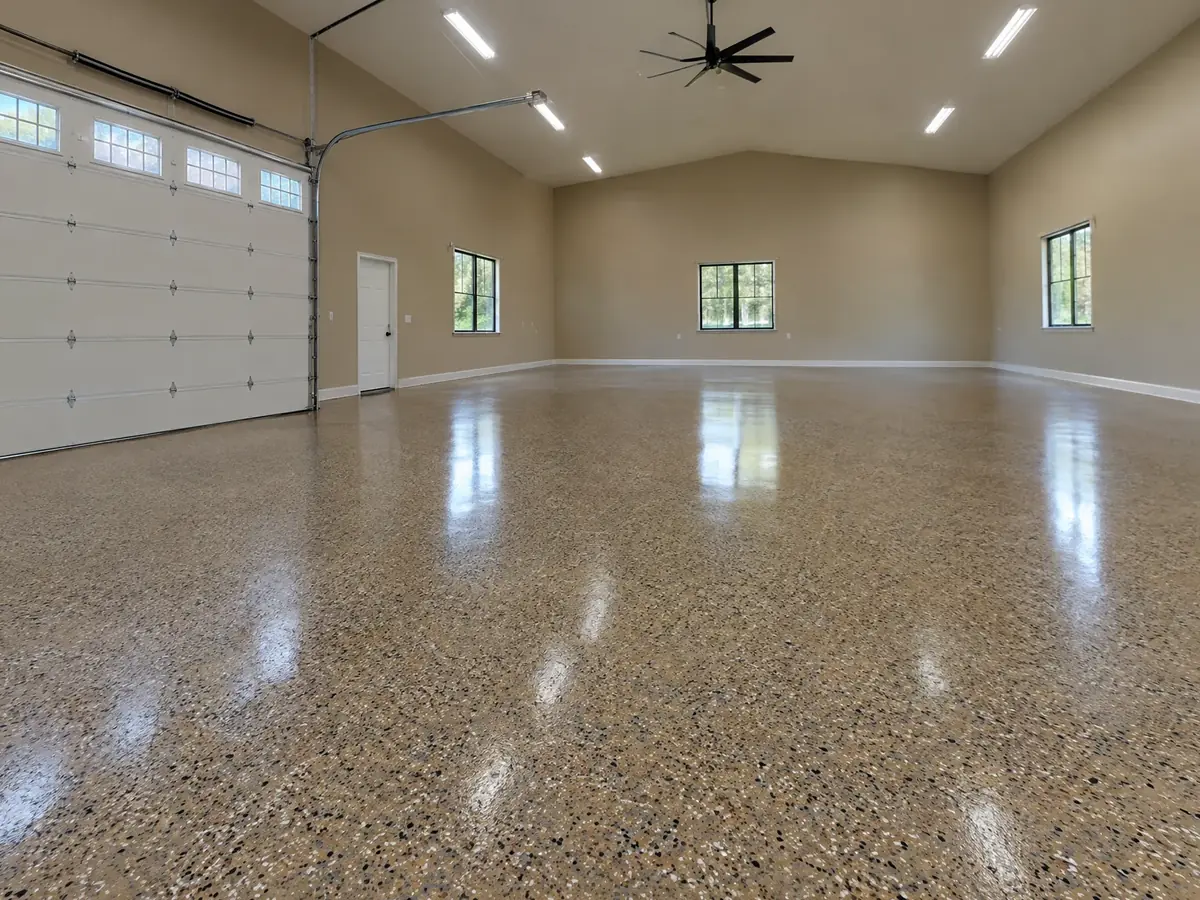
A shop floor needs durability, chemical resistance and a surface you can see and clean. A diamond-ground slab with a solid or flake system and a tough topcoat handles dropped tools, rolling cabinets, oil, coolant, brake fluid and fuel splashes when spills are wiped promptly. A medium or light gray makes it easier to spot a dropped bolt or a fresh leak, and good lighting reflects better off a light floor. Think about texture: a bit of grip helps in wet areas, while a smooth area is kinder to creepers and rolling stools. If you use a vehicle lift, follow the lift maker's slab and anchor requirements, and tell us about it before the install, so we can plan around the footprint. Some shops are better described as industrial. See our commercial floor page for those.
Yes, and large floors are where a clean, sealed surface pays off the most. Big slabs have control joints, and the coating is laid in sections so that edges and joints line up with them. A flake system is one day for a standard two-car garage up to 400 square feet, and bigger floors take more time, which the quote spells out. Price scales with area. Flake runs $6.50 to $10 per square foot, so a bigger floor costs more in total but often less per foot than you might expect. Measure the floor, count the doors and tell us about any steps, benches or built-ins that have to be worked around. A shop with equipment inside needs it moved or phased. The written quote covers the schedule, the system and what you need to clear. If you are comparing options, ask how much does epoxy cost for your size.
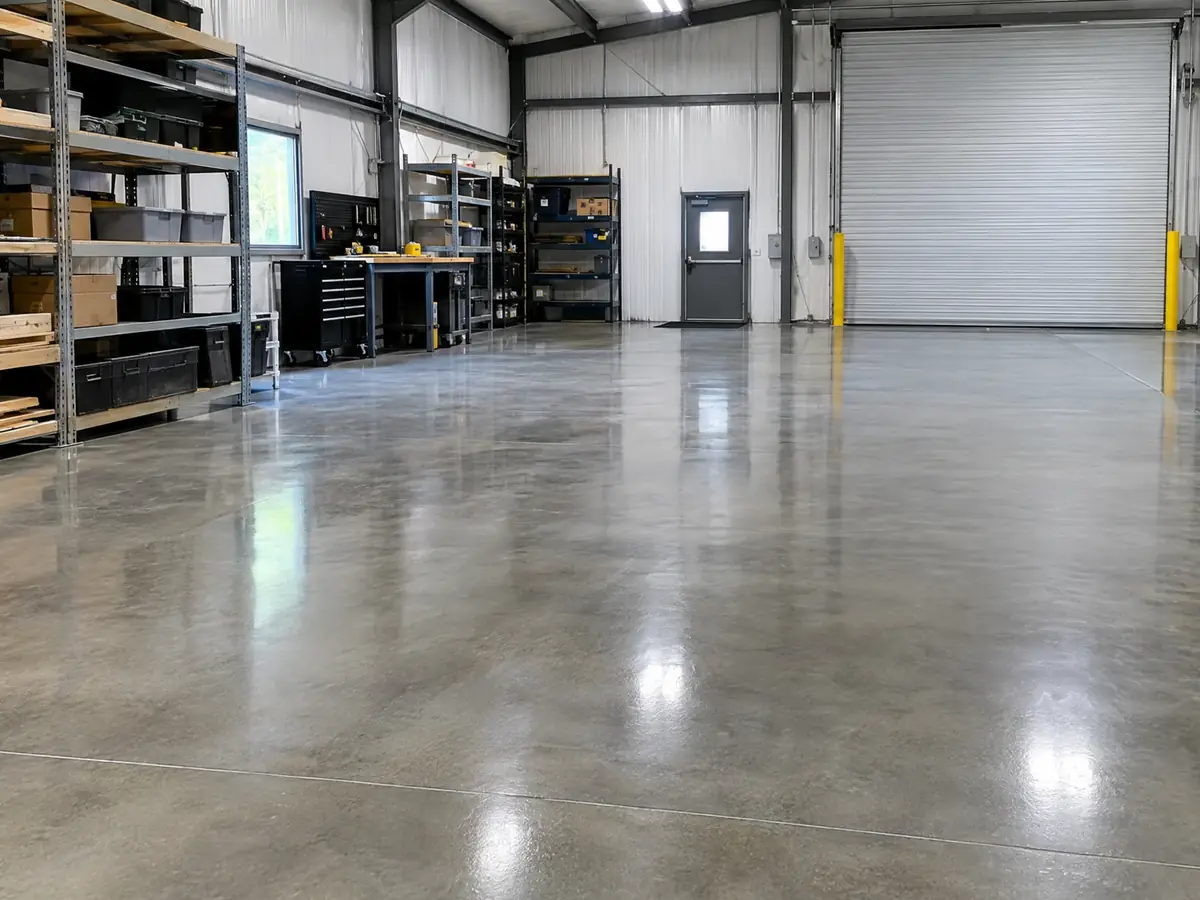
A tall door lets sun reach far into the building, and the beam crosses much more of the floor than it does in a standard garage. That means more ultraviolet exposure, a warmer slab and a greater risk of yellowing on a standard epoxy surface. A UV-stable polyaspartic topcoat is the right answer. The heat matters on install day too. A slab that sits in sun warms through the morning, and a warming slab can release air that forms bubbles in a fresh coating. Heat also shortens the working time of the material. We start early, keep the door and the work area shaded when we can, and avoid mixing more than we can lay down. Cold nights cool the slab again, which is why the timing of the job is part of the plan, not an afterthought.
A floor that holds a boat trailer, a utility trailer, a quad and a pile of storage needs to be tough and easy to sweep. Trailer tongues and jack stands concentrate weight, so wide pads or boards under them are worth using. Tire marks are likely, so a flake blend or a mid-tone gray hides them. Think about how you will clean: a smooth surface sweeps and rinses easily, which matters when you park wet equipment or muddy boots on it. If the garage also serves as a workshop, add the same chemical thinking as above. A garage floor is a place where people park, work and store, so we build to the heaviest use you expect. Tell us what goes on the floor, and we will recommend a system. Do not skip the cure time, since a floor that is rushed into service is the one that fails.
A coating protects the surface, and the slab carries the weight, so a sound slab plus a deep-bonded, UV-stable system is what an RV bay or shop needs. Big floors are measured and quoted, not guessed. For an RV garage, a workshop or a large Antelope Valley garage, call Accent Epoxy Floors at (661) 545-6676 for a free estimate. Call (661) 545-6676 for a free estimate.
Yes, as long as the slab is sound. A diamond-ground, well-bonded system with a UV-stable topcoat handles heavy tires, sun and cleaning well. The coating protects the surface and the concrete carries the weight, so we check the slab first.
Yes, because the slab carries the load, not the coating. A sound slab that already holds your RV will keep doing so once coated. Use wide pads under jacks and stabilizers, and have a damaged or sinking slab repaired before coating.
A diamond-ground slab with a solid or flake epoxy system and a tough topcoat suits most shops. Choose a medium or light gray to see leaks and dropped parts, add traction where it is wet, and tell us about lifts and chemicals before the install.
Yes. Large floors benefit from a seamless, easy-to-sweep surface. They take longer than a standard two-car garage, and the quote gives the schedule. Flake runs $6.50 to $10 per square foot, so we measure the building before pricing.
A flake system or mid-tone solid color with a hard topcoat is a strong choice. It hides tire marks, sweeps easily and handles hot tires. Use pads under jack stands and trailer tongues, and wait for the full cure date before parking.
Not if the floor is built properly. Hot tire pickup comes from a weak bond, a thin coating or an early return to service. Diamond grinding, a full-thickness system and a polyaspartic topcoat reduce the risk. Follow the cure schedule before parking.
Durable, easy-to-clean garage floors that resist hot-tire pickup, oil and salt. Most two-car garages are done in one day.
Learn more →Full-rejection flake over a moisture-barrier epoxy basecoat, sealed with a UV-stable polyaspartic topcoat. Installed in one day.
Learn more →Seamless, hygienic floors for offices, retail, restaurants, warehouses and plants, installed around your hours.
Learn more →A coated pool deck is not slippery or too hot when it is built for the job. Slip resistance comes from texture added to the topcoat, and surface temperature depends mostly on color and sun. Lighter colors run cooler. Accent Epoxy Floors coats pool decks with a UV-stable topcoat and a grip finish.
Read the answer →For a car collector or show garage, a metallic epoxy floor gives the most dramatic showroom look, while a flake floor is the easier one to live with. Metallic shows dust, scratches and tire marks more and costs more. Flake hides wear, installs in one day and costs less.
Read the answer →Epoxy or polyaspartic is a good base for a garage gym, but it is not a replacement for mats. The coating handles racks, benches and foot traffic well. It does not cushion impact, so dropped weights can chip it. Use mats or platforms where you lift heavy and drop plates.
Read the answer →Call (661) 545-6676 or send the form at the top of the page. We reply the same day.