 ACCENTEpoxy Floors
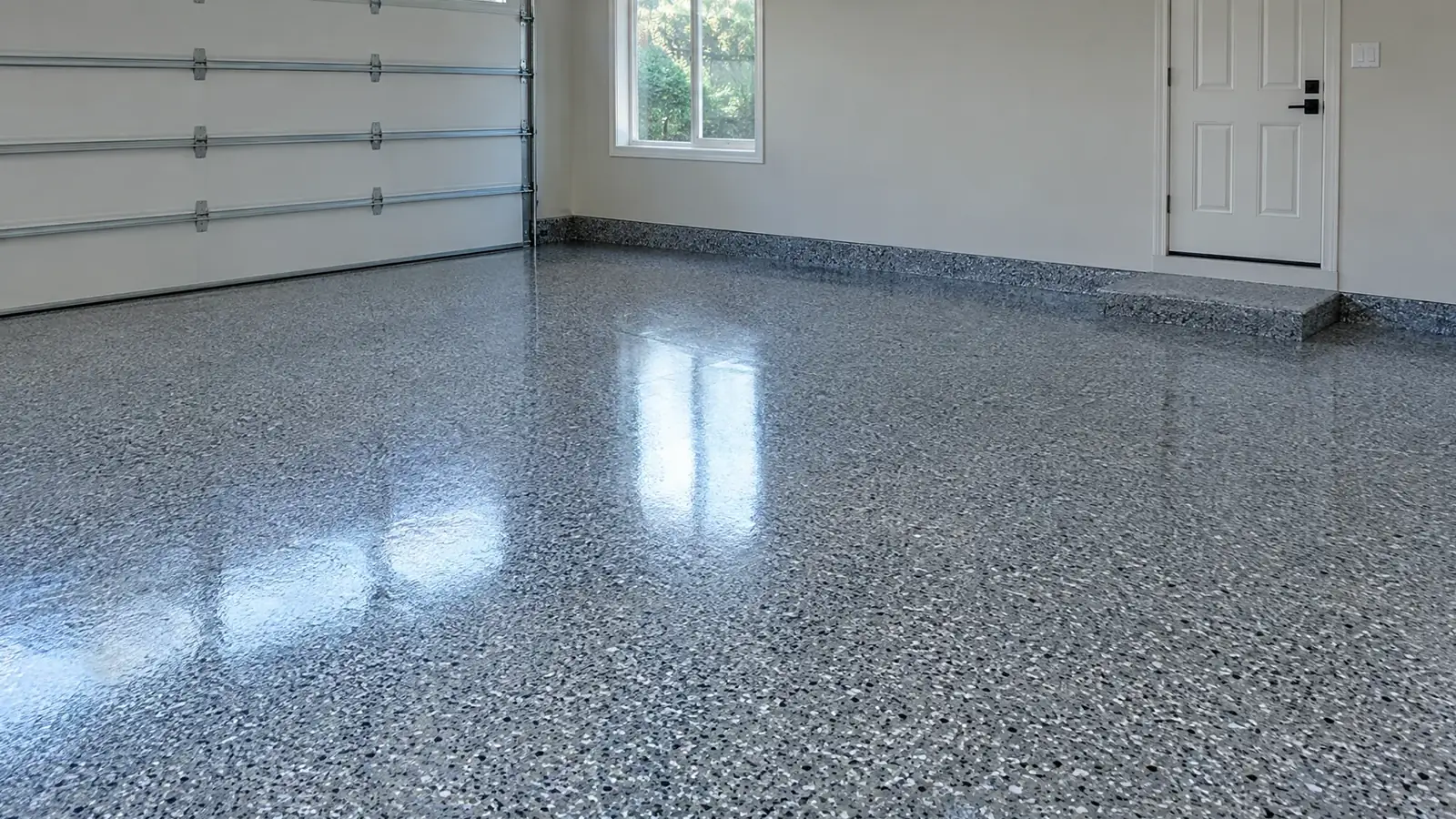
The best way to clean an epoxy garage floor is to dust mop or blow off the grit, then mop with warm water and a mild pH-neutral cleaner using a soft mop or microfiber pad. Rinse, then dry. Skip acids, harsh solvents, wax and abrasive pads that can dull the finish.
The best way to clean an epoxy garage floor is to dust mop or blow off the grit, then mop with warm water and a mild pH-neutral cleaner using a soft mop or microfiber pad. Rinse, then dry. Skip acids, harsh solvents, wax and abrasive pads that can dull the finish.
A coated garage floor is one of the easiest surfaces in a house to keep clean, which is a big part of why people choose one. Spills wipe up instead of soaking in, and there is no bare concrete dust coming off the slab. Still, a coated floor is not maintenance free, and cleaning it the wrong way can dull the shine or scratch the topcoat. In the Antelope Valley, there is one more factor: fine desert dust that blows in under the door. This guide covers a simple routine that works for flake, solid color, metallic and quartz floors, what to use, what to avoid, how to handle tire marks and stains, and how often to clean. None of it needs special equipment.
Start dry. Sweep with a soft push broom or use a dust mop to lift loose grit before any water touches the floor. Grit is the main thing that scratches a coating, because wet grit under a mop acts like fine sandpaper. Then mop with warm water and a small amount of mild, pH-neutral cleaner using a soft mop or microfiber pad. A neutral floor cleaner or a small squirt of dish soap works for light jobs, but use it sparingly because too much soap leaves a film that makes the floor look cloudy and feel slick. Rinse with clean water, or go over it again with a clean, damp mop, then dry with a microfiber towel or let it air dry with the door open. Rinsing matters more than most people think. Residue left on a floor in a hot garage dries into a haze that is harder to remove than the original dirt.
A few common cleaners cause problems. Acidic products, including vinegar-based mixes and some rust or concrete cleaners, can dull the topcoat over time. Strong solvents and paint thinners can soften or mark the surface. Wax, oil soaps and polish products leave a film that traps dirt and can make a floor slippery. Abrasive pads, wire brushes and steel wool scratch the surface, and a stiff brush can wear a glossy finish dull, especially in the places you walk most. Bleach is rarely needed and can discolor some pigments, so keep it off the floor unless the manufacturer says it is fine. Anything that says it contains hydrofluoric acid or heavy degreasers should stay away from your floor, and so should brake cleaner and similar spray solvents. If you are unsure about a product, test it in a corner, where nobody sees it, and check the result when the floor is dry. If you are still unsure, ask us before you use it.
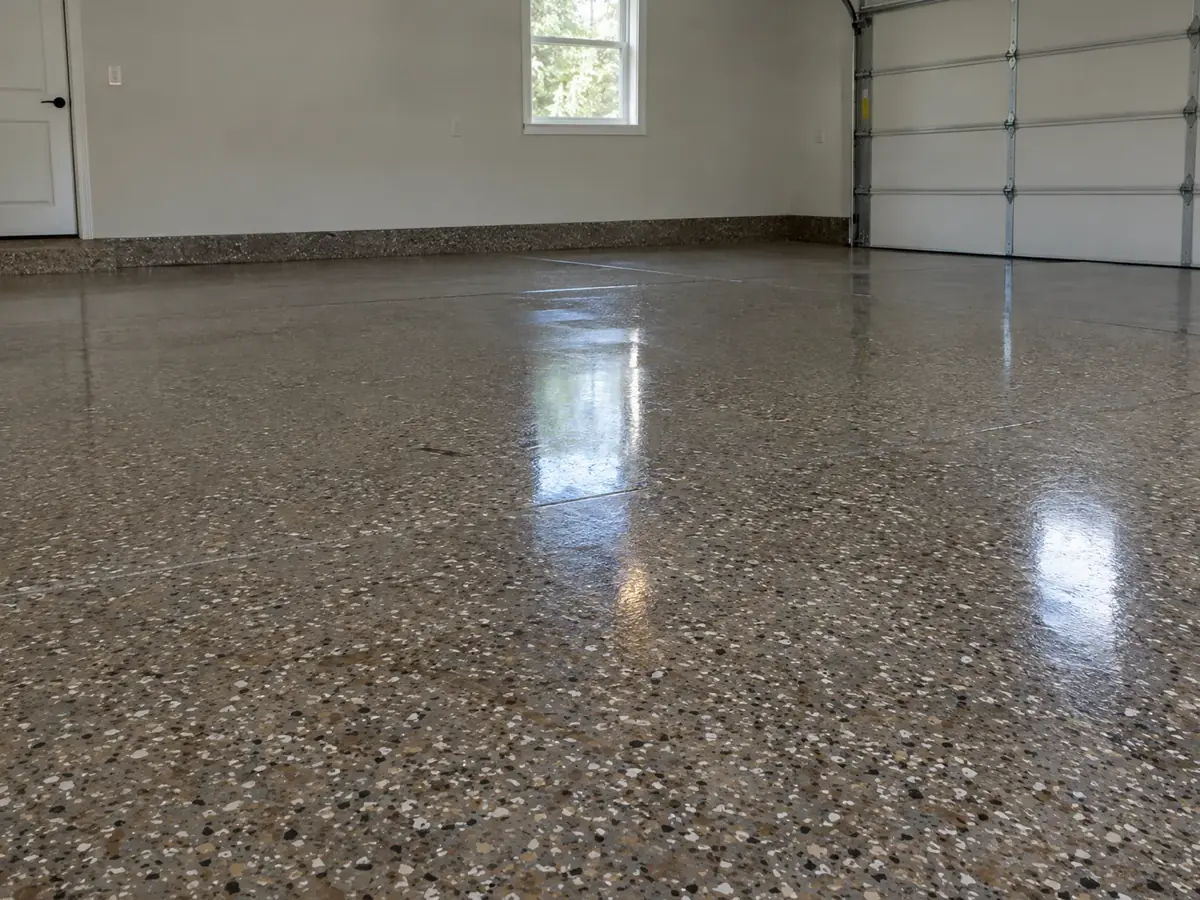
Blowing dust is the main cleaning job in the high desert. Wind advisories for Lancaster and Palmdale regularly cite gusts of 45 to 60 mph, and fine dust finds its way under garage doors and through gaps. The routine is simple. Use a leaf blower, a soft broom or a dust mop first, and work toward the garage door so you are sweeping dust out and not around. Then damp mop. A door seal along the bottom of the garage door keeps a lot of dust out and costs little. A coated floor does not stop dust from landing, but it does stop the slab from creating its own, and it lets dust come off with a single pass. Do not hose the dust off and let it dry in the sun, because it leaves a film. Do not sweep in a hot afternoon with the door wide open and the wind blowing. Early morning or evening is better.
A flake floor has a slight texture, so dust and dirt settle into the surface a little more. A soft-bristle deck brush or a microfiber mop with a bit of cleaner works well, and a wet vacuum helps lift water out of the texture. A metallic floor is usually smoother and shows scratches and swirls more, so use only microfiber and a soft pad, and always sweep first. Solid color floors show footprints and dust more than flake does, especially darker shades, so a quick dust mop does a lot. A quartz finish has the most grip, and it benefits from a brush that gets into the texture. The cleaning solution is the same for all of them. If you have a satin or matte finish, avoid anything with polish, because it can leave shiny patches. For heavy dirt, let the cleaner sit for a few minutes before you scrub, which does most of the work for you.
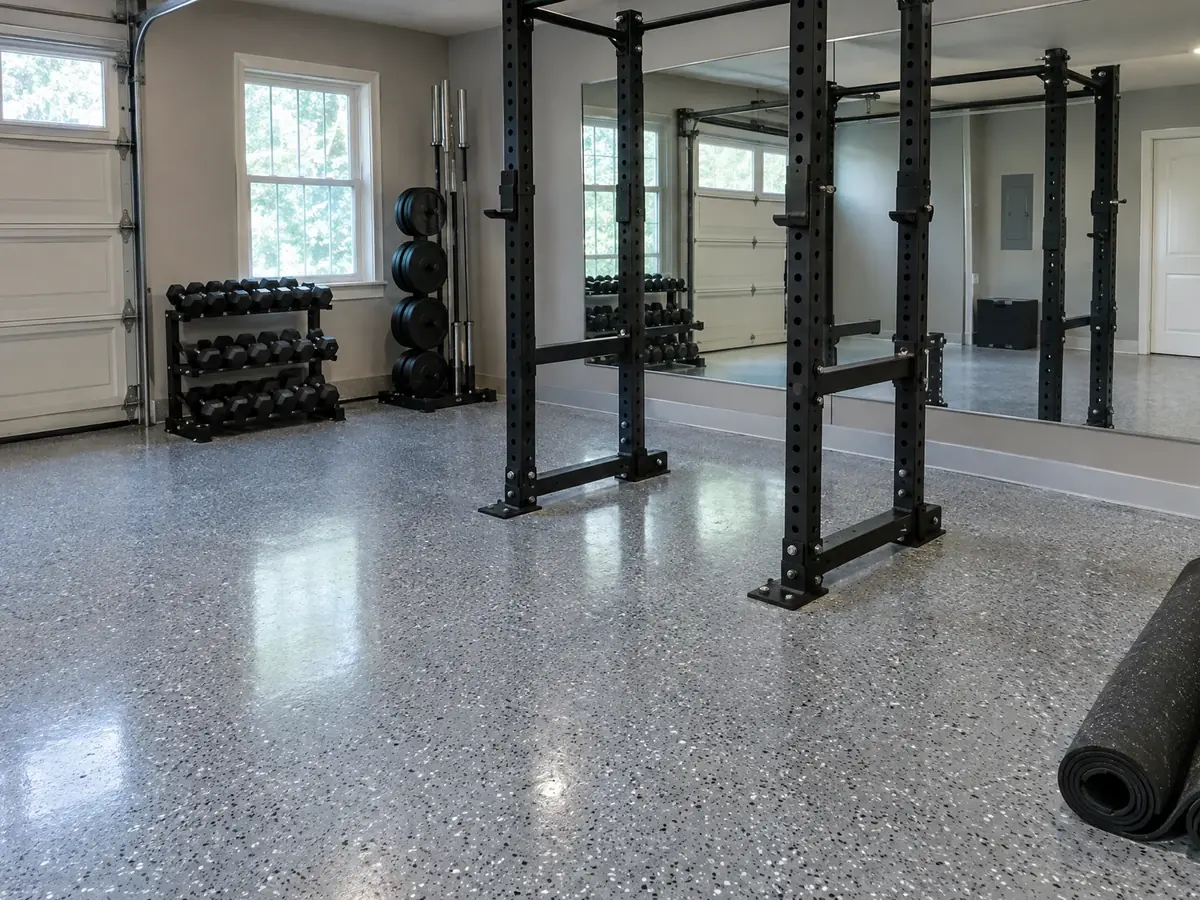
Yes, you can mop one, and it is the normal way to clean it. Pressure washing is a gray area. A well-bonded floor can usually take a gentle rinse, but a pressure washer is strong enough to catch an edge, a chip or a damaged joint and make it worse. If you do use one, keep the pressure low, use a wide fan tip, hold it well away from the surface and stay clear of edges, cracks and the door threshold. A garden hose and a mop are enough for most garages. A hot-water wash can also make a floor feel soft, so avoid scalding hot water. If you aren't sure about your particular system, ask the installer. We also suggest you check your floor in the first few weeks after installation and follow the care instructions you were given, since a new coating may need to settle in before heavy cleaning.
Wipe spills quickly. Oil, coolant, brake fluid and battery acid are easiest to remove while fresh, and a coated surface keeps them from soaking in, which is one of its main advantages. Blot with a rag or paper towel, clean with mild cleaner and rinse. Tire marks come from the rubber and the road, and a soft pad with cleaner usually lifts them. If a mark does not come off with a gentle wash, try a non-abrasive cleaner and a soft pad, and test in a quiet spot first. A faint outline that stays where the car parks can be a sign of tire pickup, which is a bond or cure problem, not a cleaning problem. Rust marks from dropped tools, grease from the garage door track and spilled fertilizer can leave stains if left for long, so give those a quick wash when you spot them. A doormat or a small tray under a leaking engine also saves cleaning.
A quick sweep every week or two and a damp mop once a month is enough for most households, and dusty seasons need more. Clean sooner if something spills, and wash the area just inside the door more often, since that is where the dust and grit collect. Epoxy and polyaspartic floors do not need to be waxed or resealed on a schedule. If the floor looks dull after several years of use, a deep clean and sometimes a new topcoat can bring the shine back, which is cheaper than starting from scratch. We can tell you whether it needs a recoat when we look at it. Ask for the care sheet when the job is done, and feel free to call us with questions about a specific cleaner. A free estimate is also a good way to have us look at a floor that seems to be wearing early.
Sweep first, mop with a mild pH-neutral cleaner and a soft pad, rinse, and skip acids, solvents and wax. That keeps a coated garage floor looking right through dusty desert seasons. Call Accent Epoxy Floors at (661) 545-6676 for a free estimate or care advice. Call (661) 545-6676 for a free estimate.
A mild pH-neutral floor cleaner in warm water is the best choice. Use it with a soft mop or microfiber pad, and rinse afterward so no film is left. For light jobs, a small amount of dish soap also works, but too much leaves a cloudy residue.
Yes, mopping is the normal way to clean a coated floor. Sweep or dust mop first so grit does not scratch the surface, then use warm water, a mild cleaner and a soft mop. Rinse and dry afterward, especially in the heat, so no haze remains.
Avoid acids, vinegar mixes, strong solvents, wax, oil soaps, bleach and abrasive pads. They can dull, soften, cloud or scratch the topcoat. If you are unsure about a product, test it in a hidden corner and check it when dry, or call us first.
Sometimes, but a mop is safer. A well-bonded floor can take a gentle rinse, but a strong jet can catch edges, chips and joints. Keep the pressure low, use a wide tip and stay away from cracks and the threshold. A garden hose and a mop are enough for most floors.
Use a soft-bristle deck brush or microfiber mop with mild cleaner, then rinse. The flake texture holds a little more dust, so sweep first and use a wet vacuum to lift water from the surface. Avoid polish and wax, which leave a film on the texture.
Sweep every week or two and damp mop about once a month. Clean spills quickly, and wash the area by the door more often, since desert dust and grit collect there. Coated floors do not need waxing or sealing on a schedule.
Durable, easy-to-clean garage floors that resist hot-tire pickup, oil and salt. Most two-car garages are done in one day.
Learn more →Full-rejection flake over a moisture-barrier epoxy basecoat, sealed with a UV-stable polyaspartic topcoat. Installed in one day.
Learn more →Hand-guided metallic pigments create marble and lava effects, so no two floors look alike. A statement floor for homes and showrooms.
Learn more →Yes, a garage slab should be checked for moisture before it is coated, even in a dry desert climate. Concrete can hold and pass water vapor, and that vapor can push a coating off the slab. Calcium chloride and in-slab relative humidity tests measure it, and a moisture-barrier basecoat protects against it.
Read the answer →Yes, epoxy can handle an RV garage or workshop, because the concrete slab carries the weight and the coating protects its surface. The slab must be sound. A good system adds a deep bond, traction and a UV-stable topcoat. Large floors are measured and quoted at a free estimate.
Read the answer →A coated pool deck is not slippery or too hot when it is built for the job. Slip resistance comes from texture added to the topcoat, and surface temperature depends mostly on color and sun. Lighter colors run cooler. Accent Epoxy Floors coats pool decks with a UV-stable topcoat and a grip finish.
Read the answer →Call (661) 545-6676 or send the form at the top of the page. We reply the same day.