 ACCENTEpoxy Floors
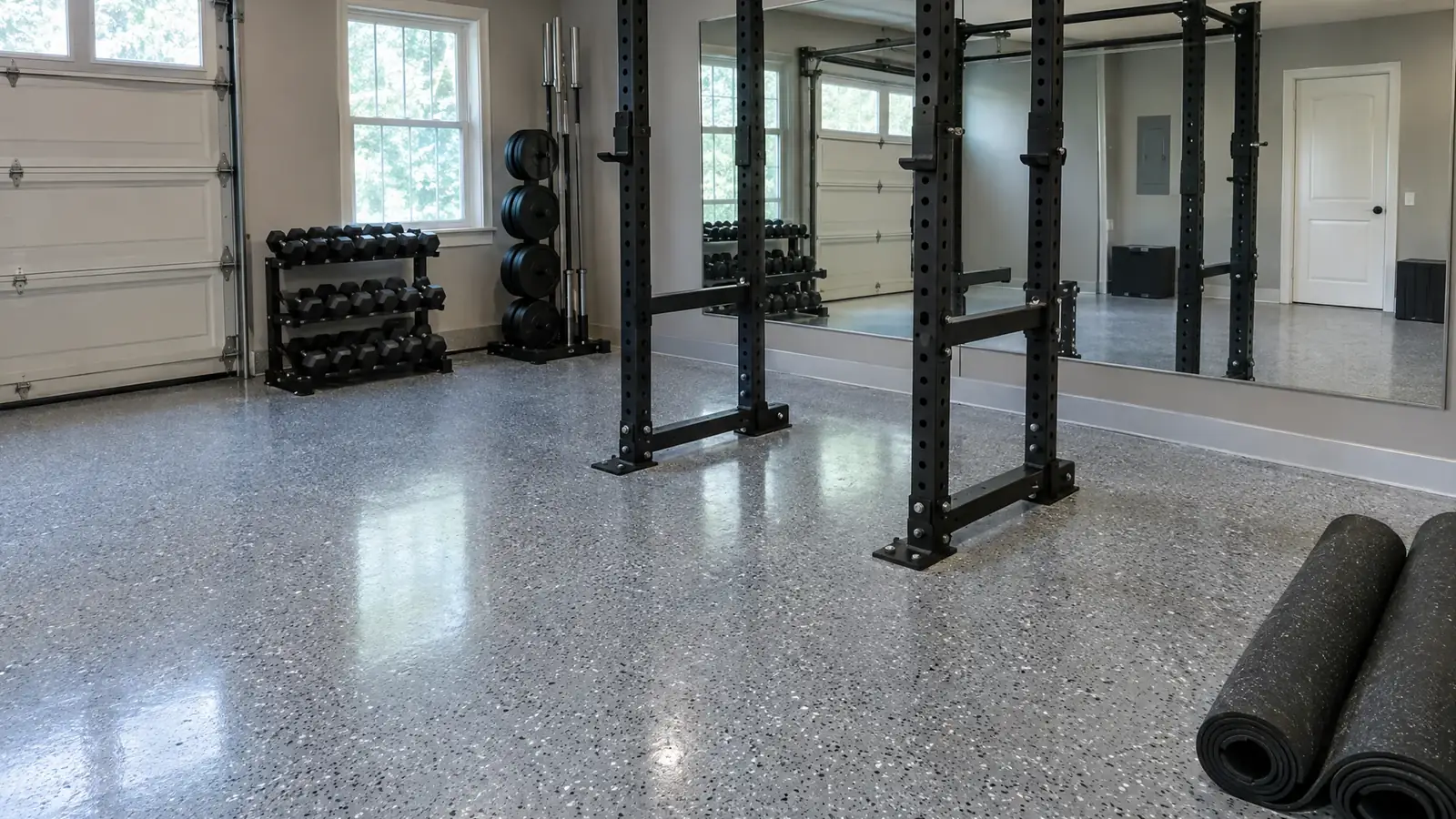
Epoxy or polyaspartic is a good base for a garage gym, but it is not a replacement for mats. The coating handles racks, benches and foot traffic well. It does not cushion impact, so dropped weights can chip it. Use mats or platforms where you lift heavy and drop plates.
Epoxy or polyaspartic is a good base for a garage gym, but it is not a replacement for mats. The coating handles racks, benches and foot traffic well. It does not cushion impact, so dropped weights can chip it. Use mats or platforms where you lift heavy and drop plates.
A garage gym puts a floor through things it was never designed for. Heavy racks stand on small feet, sweat hits the surface, chalk and dust settle, and sooner or later someone drops a dumbbell. Most people end up asking the same two questions: will weights wreck a coated floor, and do I still need rubber mats on top? The honest answer is that you usually want both, each doing its own job. The coating gives you a sealed, clean, good-looking base. The mats give you cushion and impact protection where it counts. Here is how to plan a garage gym floor that works in Lancaster summers and frozen winter mornings, without paying for protection you do not need.
Yes, for most home gyms it is a very good base layer. A properly built garage floor is hard, flat, sealed and easy to sweep, and it will not stain from sweat, spilled protein shakes or the occasional drip from a bike chain. It also takes the weight of a squat rack, a bench and a loaded barbell standing still without a problem, because concrete is the real support and the coating just protects and finishes it. A thin film coating does not make the slab stronger and it does not make it softer. That is the key idea behind everything else in this article. The surface is tough against wear and chemicals, but it is not built to absorb a falling steel plate. Think of it as a great workshop floor that happens to look good, and then add the right protection in the spots where you actually lift. If your gym is a corner of a garage that still holds cars, a coated floor also means you can roll equipment around, wash the space down and move from workout to parked car without a dusty mess.
Slow, controlled loads are fine. Impact is the issue. A dumbbell set down gently does nothing. A heavy dumbbell dropped from waist height, a barbell dropped from the top of a deadlift, or a kettlebell swung into the floor can chip the topcoat at the point of impact, and a hard enough hit can crack the concrete under the coating, which then telegraphs through the finish. Steel on a thin coating is the worst combination. Racks and benches are a different matter. Their steel feet focus a lot of weight on a tiny area, so rubber pads or a plywood base under each foot spread the load and protect the surface. Rolling carts with small hard wheels and anything dragged across the floor will also scuff it over time. None of this means a coating is a bad idea for a gym. It means the lifting zone needs a second layer.
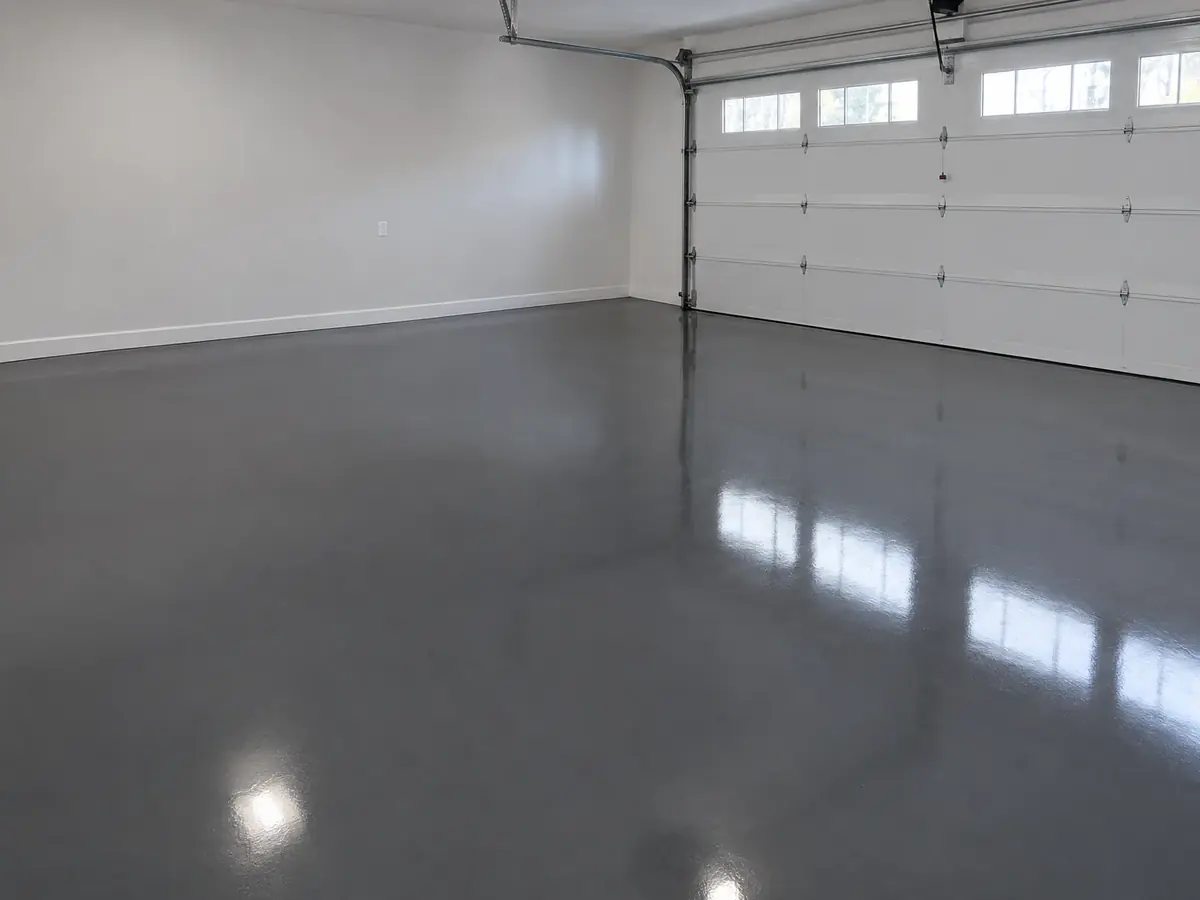
In the lifting zone, yes. Mats do three things a coating cannot: they absorb impact, they protect the slab from cracks, and they give you grip and comfort under bare feet or lifting shoes. Heavy stall mats are the budget standard, and many garage gym owners cut a pair to size and drop them under the rack. Dedicated lifting platforms, made of plywood and rubber, are better still for Olympic lifts and deadlifts. Outside that zone, you can often leave the coated floor exposed, which keeps the room clean and open and shows off the color you chose. There are two honest cautions. First, give the new floor time to cure before putting heavy mats down, and ask your installer for that timing. Second, some cheap rubber mats can leave marks or a rubbery film on a coating, particularly when they sit for years in a hot garage, so shake out the dirt under them now and then and choose quality mats. A mat is cheap and easy to replace. A damaged slab under a coating is much more annoying.
A smooth glossy floor can get slick with sweat, a splash of water or loose chalk, and nobody wants that under a heavy lift. Traction should be part of the plan from the start. A flake epoxy floor already has a textured surface, because the broadcast flakes sit slightly proud of the base and give the topcoat some tooth. If you want more grip still, a fine aluminum-oxide additive can be mixed into the final coat, and your installer can tell you how fine or coarse to go. Coarser grip is safer for shoes and bare feet, but it holds more dust and is a little harder to mop. If you do mostly cardio, bodyweight and light lifts, a medium texture is usually plenty. If you do barefoot yoga, go lighter, because rough texture is unpleasant on skin. Also consider dust. Antelope Valley wind pushes fine grit under garage doors, and loose sand turns any floor slick. A quick sweep before each session is the cheapest traction upgrade there is.
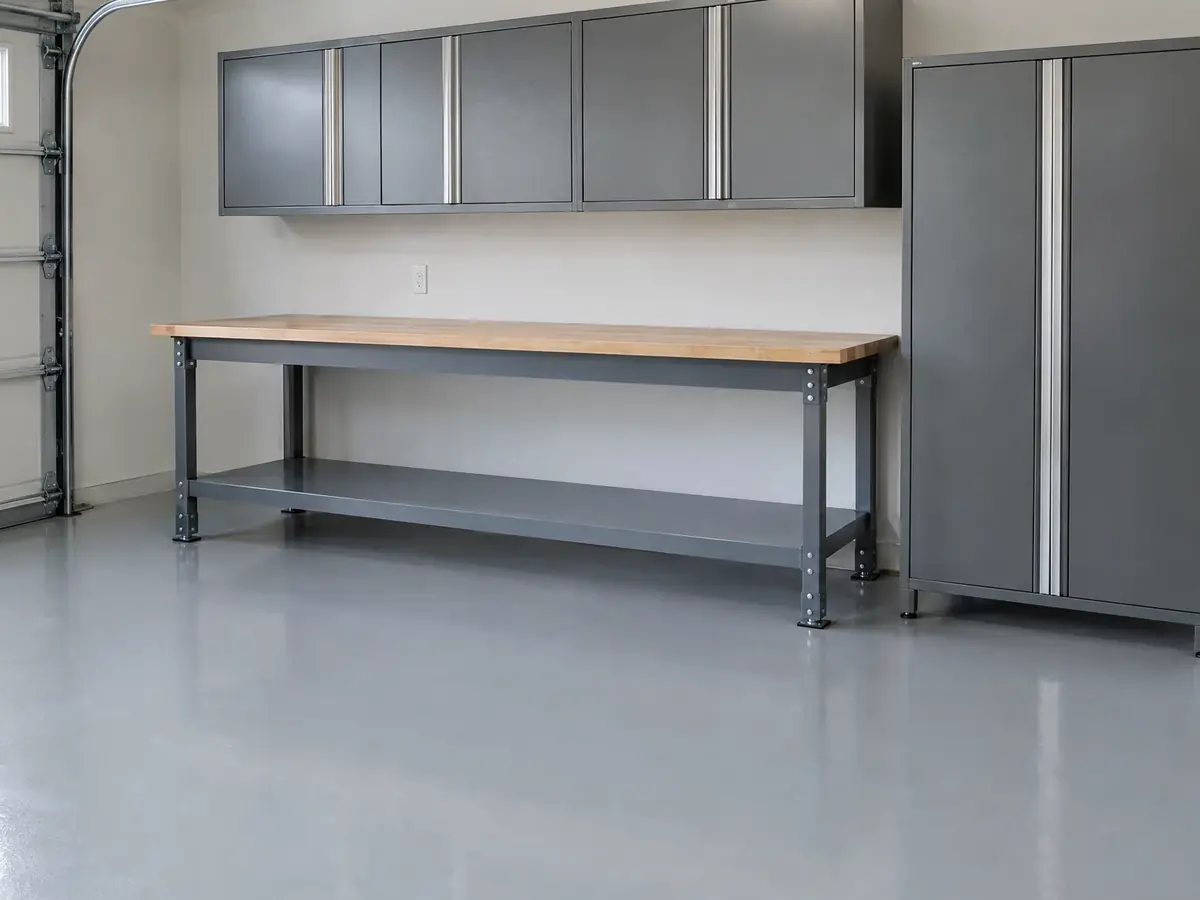
The climate matters more than most people expect. July highs in the Antelope Valley are typically in the high 90s F, and a closed garage can run hotter than the air outside, so many people work out early or with the door open. A coated floor handles that heat fine, but your equipment, rubber mats and body feel it first. In winter, lows are typically in the 30s F, and a cold slab is hard on knees and bare feet, so mats do double duty as insulation. Cold also matters at install time, because a slab that is too cold cures slowly, and a slab that is too hot makes the material set quickly and leaves less time to work. That is why we schedule around the weather and why we do not rush a garage floor. For gym owners, the practical advice is to coat the floor first, wait for the full return-to-service period, and only then bring in racks and mats. Moving heavy equipment on a floor that is still hardening is the fastest way to leave marks that never leave.
For most garage gyms, a flake system is the best fit. It is typically installed in one day, hides chalk and dust, gives natural traction, and sits at the friendliest price point. Our flake range runs $6.50 to $10 per square foot, and a standard two-car garage up to 400 square feet falls between $2,600 and $4,000. Our how much does epoxy cost page explains what moves a quote up or down. A solid color floor suits owners who want a clean, bright look and are comfortable with a higher cost, since it starts at $3,800 and takes about three days to install. Metallic is the showpiece option and takes three to four days, but a sleek gloss in a gym needs extra care about traction. Quartz and sand finishes are the heaviest-duty texture, with a typical install of two to three days. Whatever system you choose, plan a mat budget alongside it, because that is where a coated gym floor earns its long life. A free estimate lets you walk the space with us and decide where racks, platforms and mats will go.
Treat the coating and the mats as a team: epoxy for a clean, sealed, good-looking base, and mats or platforms where weights hit the floor. If you are planning a garage gym in Lancaster or the Antelope Valley, call Accent Epoxy Floors at (661) 545-6676 for a free estimate and a floor plan that fits your lifting. Call (661) 545-6676 for a free estimate.
Yes, it is a strong base for a garage gym. The coating is sealed, easy to clean and handles racks, benches and foot traffic. It does not cushion impact, so pair it with mats or a platform wherever you drop or heavily load weights.
Gentle loads will not, but impact can. A heavy dumbbell or barbell dropped onto the coating can chip the topcoat and even crack the concrete beneath it. Rack feet can also dent a coating, so use pads or plywood under them to spread the load.
It is not a good idea. A coating is only a thin layer over concrete and gives no cushion. An occasional light drop may leave no trace, but repeated hard drops will chip it. Put a rubber mat or lifting platform under any area where weights might fall.
In the lifting zone, yes. Mats absorb impact, protect the slab and add grip and comfort. Outside that zone you can leave the floor exposed. Wait for the full cure before laying heavy mats, and choose quality rubber so it does not mark the coating.
A smooth gloss can be slippery when wet or dusty, but it does not have to be. Flake broadcast adds natural texture, and a fine aluminum-oxide additive in the topcoat adds more grip. Pick the texture level based on your workouts and whether you train barefoot.
A flake system is the best match for most home gyms. It is installed in about one day, hides dust and chalk, and has natural traction. Solid color and metallic look sleeker but take longer to install and need extra attention to grip.
Durable, easy-to-clean garage floors that resist hot-tire pickup, oil and salt. Most two-car garages are done in one day.
Learn more →Full-rejection flake over a moisture-barrier epoxy basecoat, sealed with a UV-stable polyaspartic topcoat. Installed in one day.
Learn more →Double-broadcast colored quartz or a sand finish for extra grip and durability on stairs, patios, mudrooms and commercial floors.
Learn more →Yes, a fully cured epoxy or polyaspartic floor is a safe, easy-to-clean surface for dogs, kennels and grooming rooms. The sealed surface does not soak up urine or fur. The real tradeoffs are paw traction when wet, which cleaners you use, and keeping animals off the floor until it has cured.
Read the answer →The right aircraft hangar floor is one specified for the hangar, not borrowed from a garage. It must resist fuel, Skydrol and hydraulic fluid, carry tugs, jacks and aircraft loads, stay slip resistant, and fit your downtime. Accent Epoxy Floors specifies the system after a site visit.
Read the answer →Plan on about one day of coating work for a flake system, two to three days for quartz, three days for solid color and three to four days for metallic. Your total closure also depends on moving stock, repairs and cure time before heavy traffic, so we confirm a schedule during the site visit.
Read the answer →Call (661) 545-6676 or send the form at the top of the page. We reply the same day.