 ACCENTEpoxy Floors
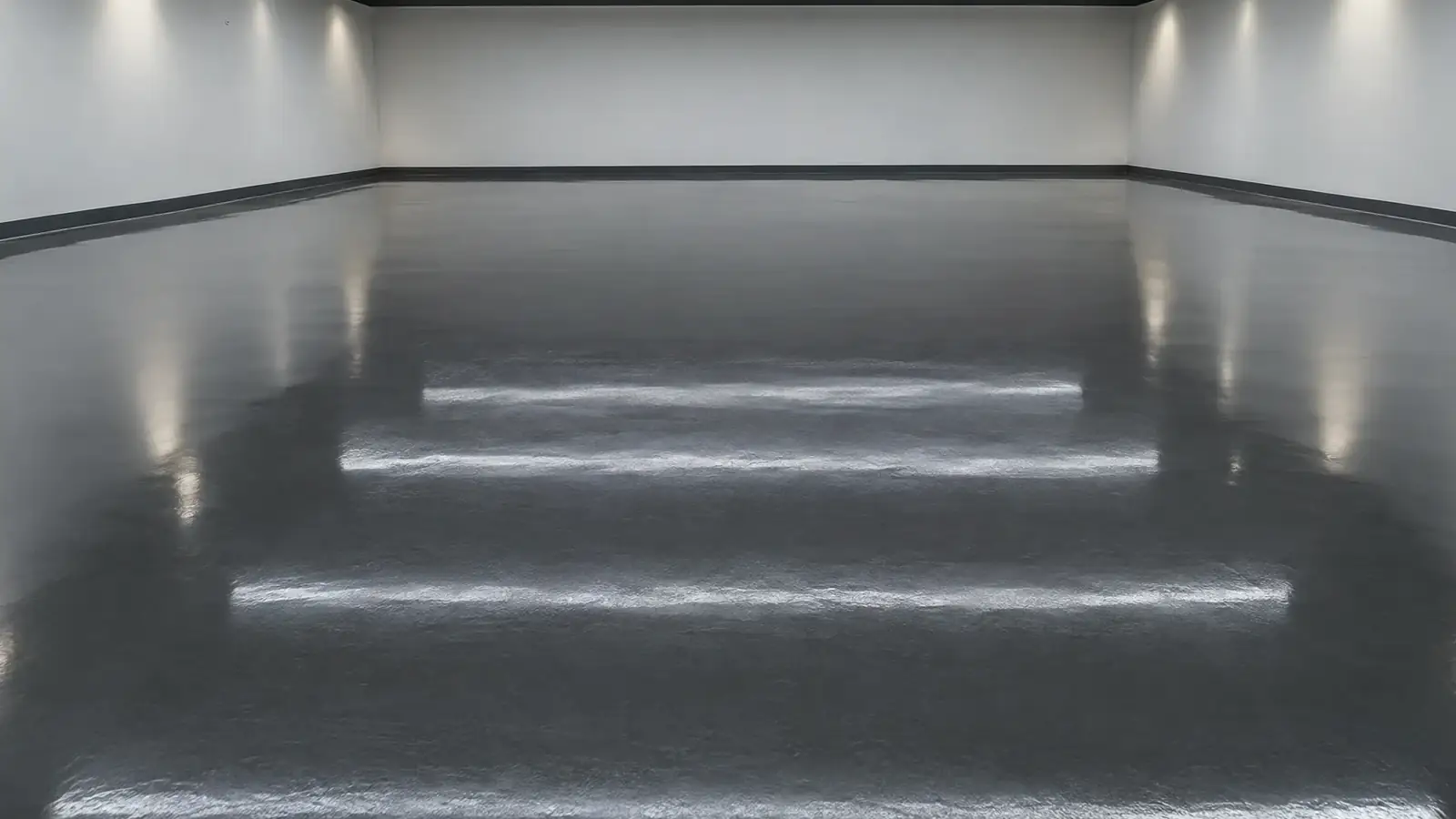
For a car collector or show garage, a metallic epoxy floor gives the most dramatic showroom look, while a flake floor is the easier one to live with. Metallic shows dust, scratches and tire marks more and costs more. Flake hides wear, installs in one day and costs less.
For a car collector or show garage, a metallic epoxy floor gives the most dramatic showroom look, while a flake floor is the easier one to live with. Metallic shows dust, scratches and tire marks more and costs more. Flake hides wear, installs in one day and costs less.
If your garage holds a car you wash by hand, you already know the floor is part of the display. A cracked, oil-stained slab undercuts even a perfect paint job, and a clean reflective floor makes a car look like it belongs in a showroom. The catch is that the most dramatic floors are not always the easiest to live with, especially in a valley where fine dust blows under every door. This guide compares metallic and flake honestly, covers solid colors and quartz, and walks through the details collectors tend to forget: lighting, lifts, hot tires, spills and the color that suits a Lancaster garage in particular.
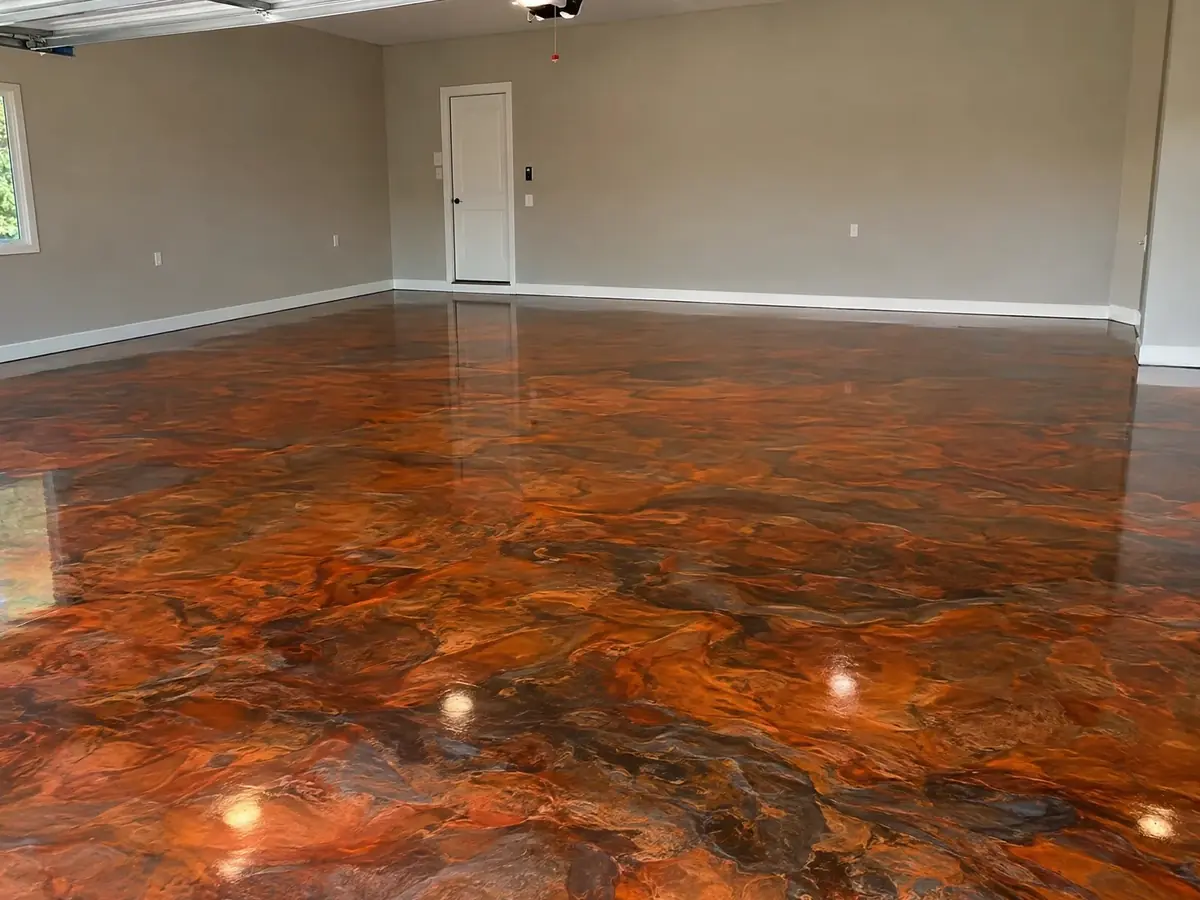
There is no single best, because the choice depends on what you want the garage to do. If the space is a gallery where cars are cleaned, rolled in and admired, a metallic epoxy floor is the standout. Metallic pigments are worked into the resin so the surface looks like swirling marble, liquid metal or a deep-sea pattern, and no two floors are alike. If the space is a working garage where cars come and go every day, a flake epoxy floor is the more practical pick. It hides dust, tire marks and minor scuffs far better than a smooth pattern does. A solid color epoxy floor sits in between, with a clean, uniform look that photographs well and tolerates wear. Quartz finishes are the toughest texture option and suit a mixed shop and display space. Many collectors split the garage, using metallic in the display half and flake under the workbench and lift. Whichever you pick, the coating is only as good as the grinding under it, so insist on diamond grinding and a proper bonding profile.
Metallic floors are beautiful and a bit demanding. The glossy, deep finish reflects light and shows what is on it, including dust, water spots, drips and the marks left by hot tires. They need regular dust mopping and a damp mop to stay at their best. They also take longer to install, usually three to four days, and they cost more, with a range of $12.50 to $18.50 per square foot and a typical two-car garage between $5,000 and $7,400. Flake floors are the easy-living option. The speckled surface scatters the eye, so grit and small scuffs vanish into the pattern. A flake system usually installs in one day, costs $6.50 to $10 per square foot, and a two-car garage up to 400 square feet falls between $2,600 and $4,000. The honest tradeoff is simple. Metallic wins on the wow factor, and flake wins on daily convenience and budget. If you will not wipe the floor often, flake will look better, longer.
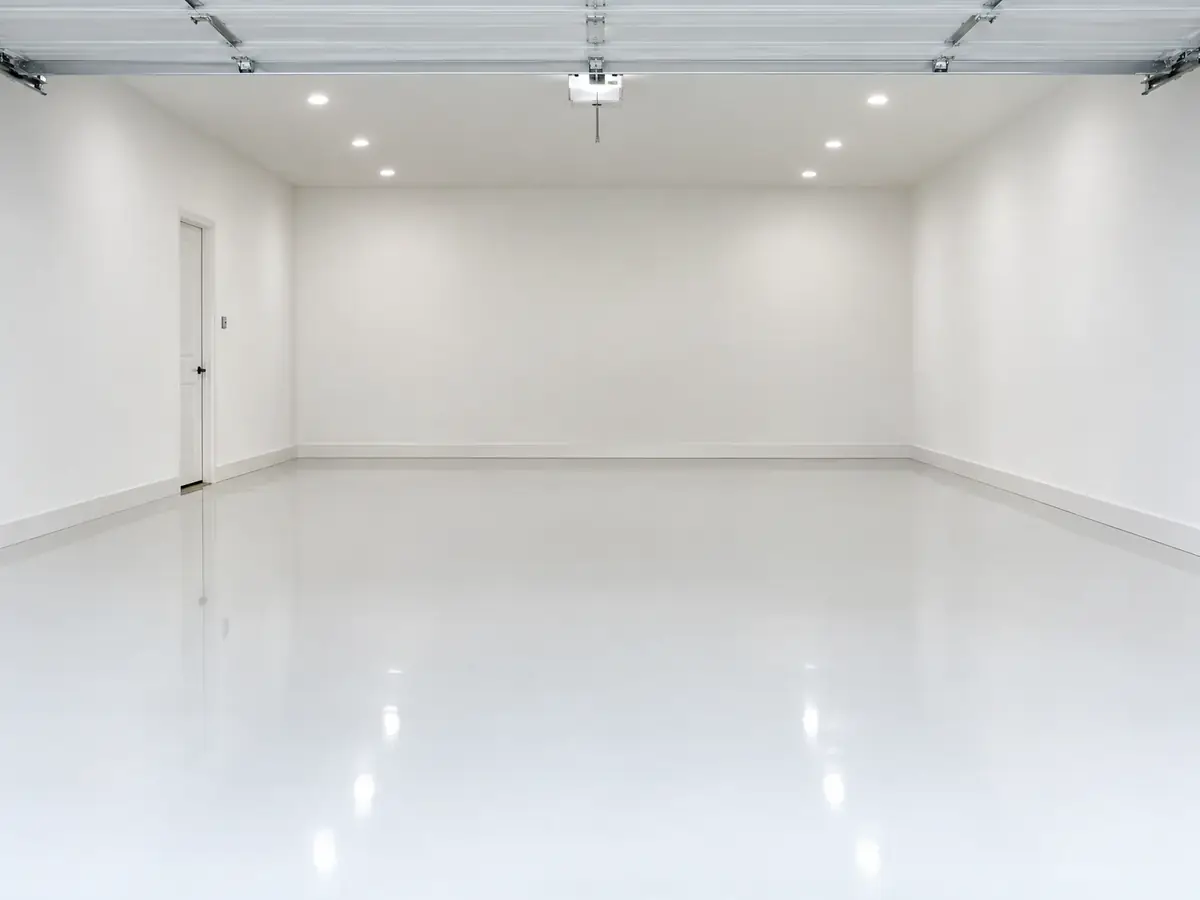
Yes, more than most people expect, and the Antelope Valley adds to it. Wind advisories here regularly mention gusts of 45 to 60 mph and blowing dust, and that dust finds its way under garage doors. On a dark, glossy metallic floor a thin layer of light dust looks like frost. On a light or medium color it is far less noticeable. Tire marks come from two places: rubber that transfers from a hot tire, and dirt carried in on the tread. A UV-stable polyaspartic topcoat resists hot tire pickup far better than bare epoxy, but it does not make a floor immune to dirt. A quick pass with a dust mop before and after the car comes in keeps the surface bright. If you want the metallic look without the constant upkeep, pick mid-tone colors with plenty of pattern, and consider a satin topcoat instead of full gloss. The glow is a little softer, but the floor forgives far more.
Lighting changes everything about a coated floor. A glossy floor acts like a mirror for your ceiling lights, so bright LED panels or strips double the apparent brightness of the room, and cars pick up clean reflections along the fenders. The tradeoff is glare. Spot fixtures aimed at a gloss floor can bounce into your eyes and create hot spots, so wide, even light works better than a few bright points. For color, the rule of thumb is that light and medium grays, whites and tans make a garage look larger and show less dust, while black and deep blue make the most dramatic stage but need the most cleaning. Match the color to the cars. Red, white and silver paint pops against a dark floor, while dark paint tends to disappear into one. Use our color chart to compare actual flake and metallic blends, and ask for samples viewed under your own lights, since daylight from an open door looks very different from garage lighting in the evening.
Car people use their garages hard, so plan for point loads and chemicals. A two-post or four-post lift concentrates the entire weight of a car on a few small feet. Tell your installer about any lift before the quote, because the lift plates and anchors need a sound slab, and anchoring through a finished coating is not something to improvise. Jack stands and floor jacks can scratch or dent a coating, so rubber pads or small plywood plates under the contact points protect the surface. Spills are the other issue. Brake fluid, battery acid and some strong cleaners can dull or mark a coating if they sit for hours, while ordinary motor oil and coolant wipe up easily from a sealed floor. The habit that helps most is simple: wipe spills promptly, and never leave a rag soaked in chemicals on the floor. Hot tires are covered by the topcoat and the cure. A floor driven on before it has cured is the most common source of pickup, so follow the return-to-service guidance exactly.
Install conditions matter more for a showpiece floor than for a basic one. Antelope Valley summer days are hot and the slab can warm during the day, which can cause tiny bubbles when air escapes the concrete as the temperature climbs. Heat also shortens working time for the material, which is a bigger problem on metallic work where the pattern must be worked while the resin is wet. That is why we start early, watch the slab and avoid rushing. Winter nights in the 30s F slow curing, so schedule and heating matter too. A metallic floor typically takes three to four days from start to finish, and you will want the garage empty. Consider adding wall base or a cove base for a finished look, and plan where cabinets, tool chests and display shelves will sit before color choices are final. A free estimate lets you see the space with us and look at real samples, and you get a fixed written quote before any work starts.
A collector's garage can be a showpiece or a daily driver's home, and the right floor depends on how much cleaning you are willing to do. If you are choosing between metallic and flake in Lancaster or anywhere in the Antelope Valley, call Accent Epoxy Floors at (661) 545-6676 for a free estimate and real samples. Call (661) 545-6676 for a free estimate.
Metallic epoxy gives the most dramatic showroom look, while a flake system is the better everyday choice. Metallic shows dust and marks more and costs more. Flake hides wear and costs less. A polyaspartic topcoat over either helps with UV and hot tires.
It depends on your cars and how much cleaning you want to do. Light and medium grays hide dust and make the room feel bigger. Dark floors look dramatic but show every speck. Pick a color that contrasts with your paint and view samples under your own lights.
Yes, particularly in dark, high-gloss colors. Dust, water spots and rubber transfer show clearly on a glossy metallic surface. A satin sheen, mid-tone colors and quick dust mopping help. A polyaspartic topcoat resists hot tire pickup but does not make a floor dirt-proof.
Both can work, because the lift load rests on the concrete, not the coating. Flake is the more forgiving choice under a lift, since it hides scuffs and grease. Tell your installer about the lift before the quote so anchors and plates are planned around it.
Metallic typically takes three to four days, compared with one day for a flake system. The extra time covers grinding, the base coat, the metallic layer and the topcoat, plus curing between steps. Heat and slab condition can affect scheduling, so we confirm timing in the estimate.
They can if left to sit. Brake fluid, battery acid and some strong cleaners can dull or mark a coating over hours. Ordinary oil and coolant wipe up easily from a sealed floor. Clean spills promptly, and check cleaner labels against your coating's data sheet.
Hand-guided metallic pigments create marble and lava effects, so no two floors look alike. A statement floor for homes and showrooms.
Learn more →Full-rejection flake over a moisture-barrier epoxy basecoat, sealed with a UV-stable polyaspartic topcoat. Installed in one day.
Learn more →Durable, easy-to-clean garage floors that resist hot-tire pickup, oil and salt. Most two-car garages are done in one day.
Learn more →Epoxy or polyaspartic is a good base for a garage gym, but it is not a replacement for mats. The coating handles racks, benches and foot traffic well. It does not cushion impact, so dropped weights can chip it. Use mats or platforms where you lift heavy and drop plates.
Read the answer →Yes, a fully cured epoxy or polyaspartic floor is a safe, easy-to-clean surface for dogs, kennels and grooming rooms. The sealed surface does not soak up urine or fur. The real tradeoffs are paw traction when wet, which cleaners you use, and keeping animals off the floor until it has cured.
Read the answer →The right aircraft hangar floor is one specified for the hangar, not borrowed from a garage. It must resist fuel, Skydrol and hydraulic fluid, carry tugs, jacks and aircraft loads, stay slip resistant, and fit your downtime. Accent Epoxy Floors specifies the system after a site visit.
Read the answer →Call (661) 545-6676 or send the form at the top of the page. We reply the same day.