 ACCENTEpoxy Floors
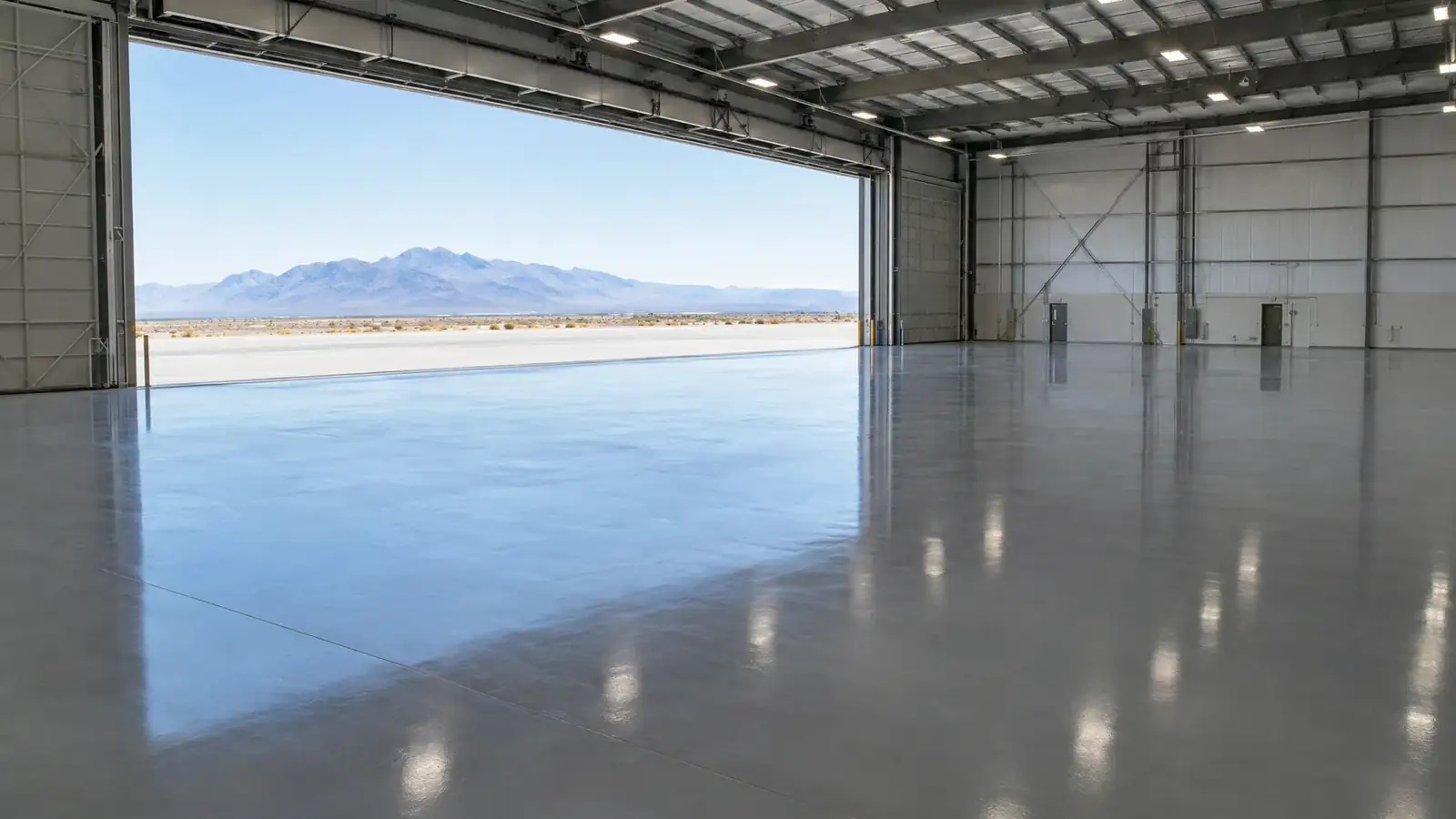
The right aircraft hangar floor is one specified for the hangar, not borrowed from a garage. It must resist fuel, Skydrol and hydraulic fluid, carry tugs, jacks and aircraft loads, stay slip resistant, and fit your downtime. Accent Epoxy Floors specifies the system after a site visit.
The right aircraft hangar floor is one specified for the hangar, not borrowed from a garage. It must resist fuel, Skydrol and hydraulic fluid, carry tugs, jacks and aircraft loads, stay slip resistant, and fit your downtime. Accent Epoxy Floors specifies the system after a site visit.
Aerospace is the main employer across the Antelope Valley. Flight test happens at Mojave, manufacturing and maintenance happen around Palmdale and Lancaster, and private aircraft sit in hangars all over the high desert. All of those buildings have a concrete slab, and almost every slab gets abused in ways a garage floor never sees. A hangar floor is closer to a working tool than a finish. This article explains what a hangar floor has to survive, why a coating that works in a two-car garage cannot simply be copied into a hangar, and how a sensible project is scoped. We do not pick a product from a web page, and you should be wary of anyone who does.
A garage floor sees car tires, the odd oil drip and a dropped wrench. A hangar floor sees aircraft, tow equipment, jacks, tool carts and chemicals that are designed to be aggressive. The slab is usually larger, it is expected to look clean under bright lighting, and it often has to stay in service while the business keeps running. The coating also has to be judged by different standards. In a garage, the main questions are bond, looks and hot-tire pickup. In a hangar, the first questions are what spills on the floor, how heavy the loads are, how people and equipment move across it, and how many days the building can be out of use. Supplier guides that cover hangars point out the same thing: a system that suits a home garage is not automatically right for a shop or a hangar. That is why we treat hangar floors as a commercial floor project with its own scope, not as a bigger garage.
It can, and the chemistry matters more than the color. Skydrol is a phosphate-ester hydraulic fluid used in many commercial aircraft, and it is known for attacking ordinary coatings, softening them and lifting them off the slab. Fuel, lubricants, de-icing fluids and cleaning solvents add to the exposure. Supplier literature for hangars generally points toward chemically resistant topcoats rather than a standard garage-grade finish, and the exact choice depends on which fluids are on site and how long they sit before anyone wipes them up. A spill that is cleaned in minutes is a different problem from a slow leak under a parked aircraft all weekend. Before any system is chosen, we want to know which fluids you actually use, what the manufacturer data sheet says about resistance to each one, and whether that resistance is rated for short contact or for continuous exposure. Anyone who promises a floor is immune to everything without asking those questions is guessing.
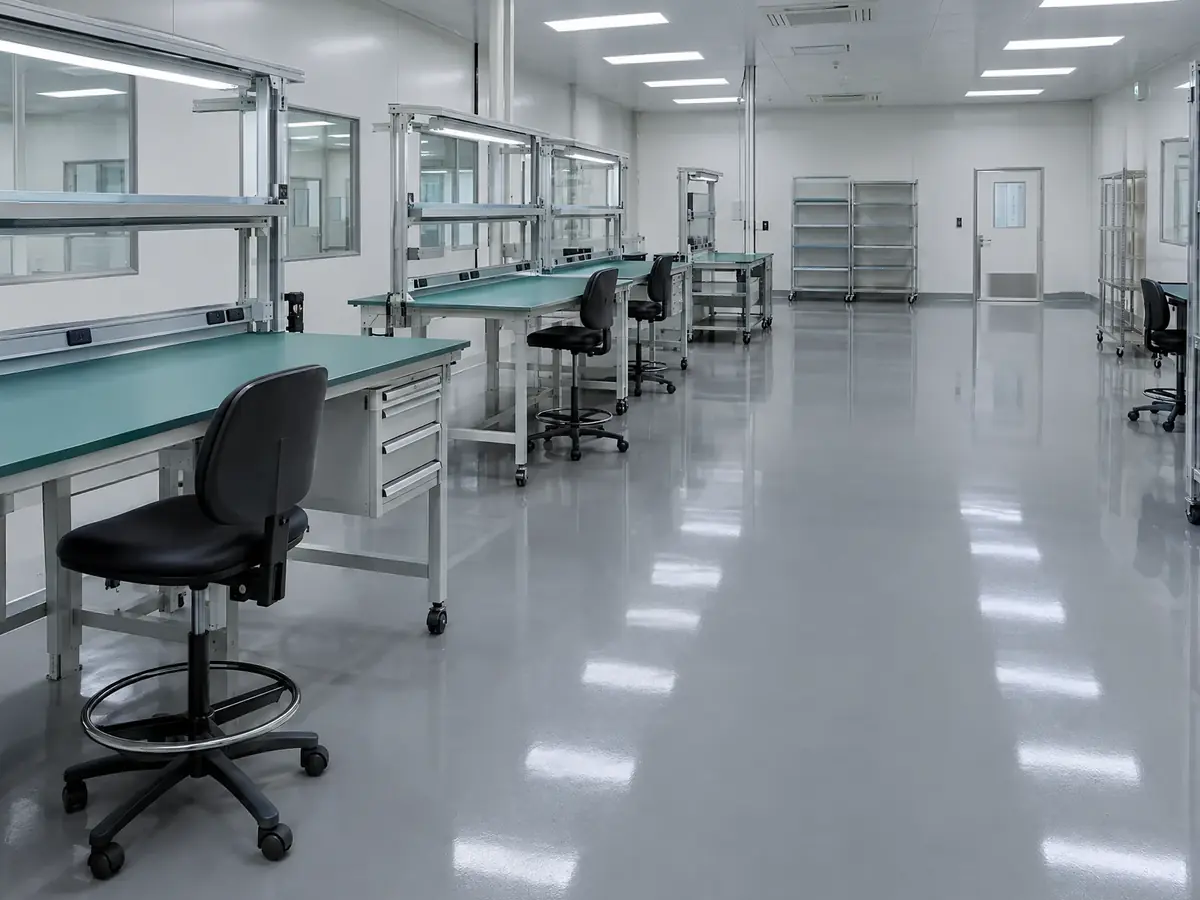
The coating does not carry the aircraft. The concrete does, and the coating has to survive what the concrete is asked to carry. Wheel loads from aircraft and tugs, tow bars dragged across the floor, and the small contact points of jack feet and stands all put concentrated stress on one spot. A thin coating on a weak or cracked slab will fail where those loads land, and a coating that is too hard and brittle can chip at edges and joints. The slab is therefore part of the inspection. We look at slab condition, cracking, joint spalling, previous coatings and any sign of settlement before talking about a coating at all. If the slab needs repair or the existing paint will not bond, the specification changes. We do not quote a thickness or a load rating from a web page because those depend on the product data sheet and the slab we find. The honest answer to this question is that it depends, and a site visit is how it gets answered.
Light gray or white is the usual recommendation, and the reason is practical. A pale floor makes a fluid leak, a dropped fastener or a metal shaving easy to spot, and it bounces light back up under the wings. Reflected light also helps technicians working at low angles. The finish matters just as much. A glossy floor looks sharp but gets slick when wet or contaminated, so many hangar floors are built with a texture or a slip-resistant additive that has to be balanced against how easily the floor can be cleaned. Too much texture traps grime and makes tire marks harder to remove, and too little makes a spill dangerous for anyone walking across it. We show samples on site, and the color chart on our site gives you an idea of the range for general work. For aviation spaces, the final color and texture are confirmed against the system being specified, not picked first and fitted afterward.
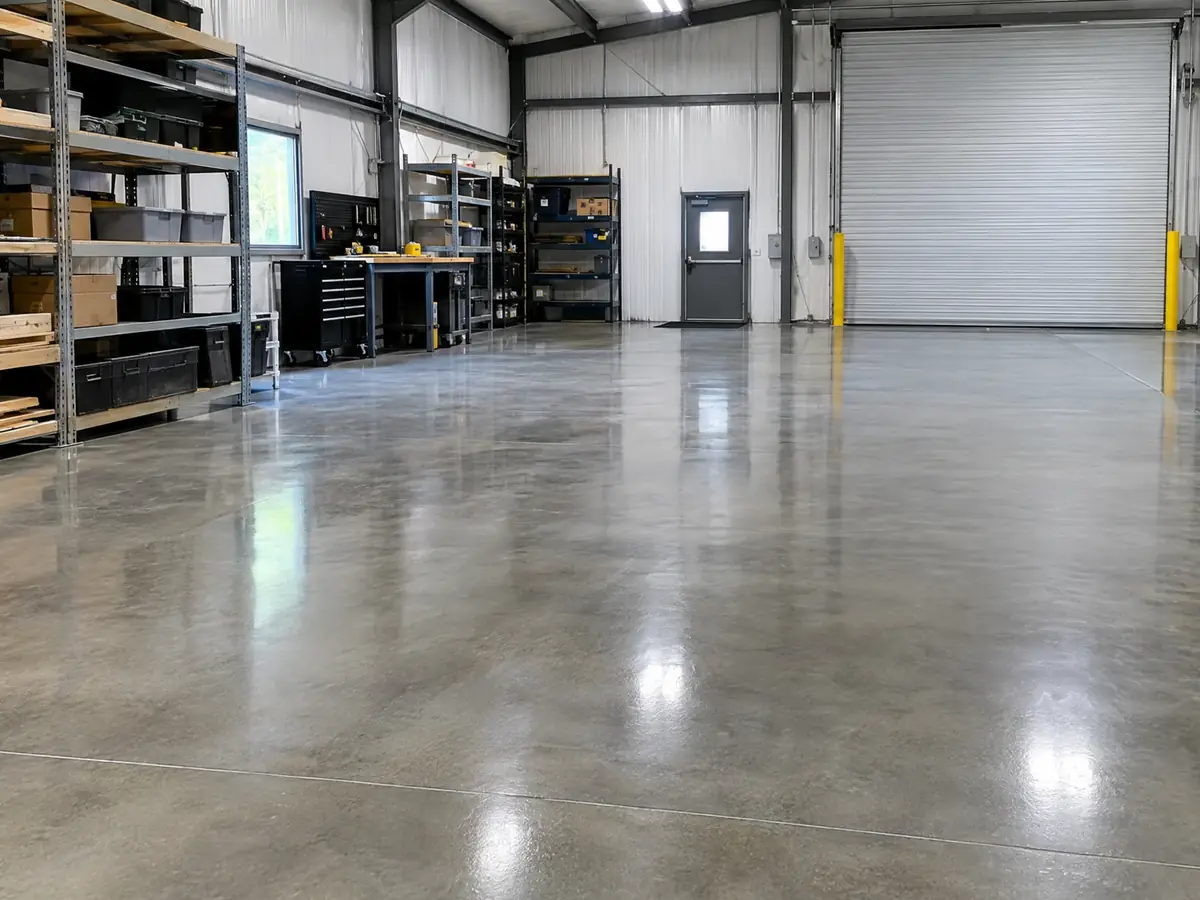
The honest answer is that it depends on size, condition and the system, and we scope it before we quote. Diamond grinding, crack and joint repair, priming, the coating itself and cure time all take time, and heat shortens the working window in the high desert, which affects how a large slab is split into sections. In summer, a hot slab, open hangar doors and direct sun can change how a product behaves, so early starts and careful sequencing matter. Many hangars cannot close completely, so the work is often planned in phases: one bay at a time while aircraft are moved to another part of the building or outside. Aircraft access, tow paths, fire-code clearances and fuel handling all have to be planned around the crew. We give you a written schedule after the site visit so you know which areas are closed, when each opens back up and what the building needs to do in between.
A sealed floor helps, but it does not stop the wind. Bare concrete sheds fine dust as it wears, and that dust settles on aircraft, tools and anything open to the air. A sealed or coated surface stops the slab from dusting and is far easier to sweep and scrub. The Antelope Valley sees windy days with advisories citing gusts of 45 to 60 mph and blowing dust, and a hangar with large doors lets that fine dust in whenever they open. A smooth coated floor will not keep the dust out of the building, but it does let you clean it up quickly and without grinding it into the surface. Cleaning routines matter as well: dust mop first, then wet clean, because grit acts like sandpaper under wheels and boots. If a particular area needs more texture for traction, the plan should say where, so the rest of the floor stays easy to clean.
We start with a site visit. We look at the slab, the fluids, the traffic, the schedule and the building, take notes and, where it helps, ask for the product data sheet from the system under consideration. Then we write up a specification that names the surface preparation, the coating layers, the texture and the expected downtime. Pricing for commercial and industrial floors is quoted after that visit, because the numbers depend on square footage and condition. We do not claim one chemistry suits every hangar, and we do not assume a polyaspartic garage floor will carry over to an aircraft hangar. If the building owner or the aircraft operator has requirements from an insurer, a manufacturer or a lease, send them early so the specification can be checked against them. You can reach us through the contact page for a free estimate, and we will say plainly if a different contractor is better placed for your particular building.
A hangar floor is a working surface, so the system should be chosen for the fluids, loads, slip risk and schedule of your building. We specify it after a site visit. Call Accent Epoxy Floors at (661) 545-6676 for a free estimate. Call (661) 545-6676 for a free estimate.
A hangar needs a system chosen for its fluids, loads and traffic, not a standard garage coating. Chemical resistance, bond to the slab, slip resistance and cure time all matter. At Accent Epoxy Floors the system is specified after a site visit and a check of the manufacturer data sheet.
Yes, Skydrol is known for attacking and softening many ordinary coatings. Hangar systems are normally chosen for resistance to phosphate-ester hydraulic fluid, and the data sheet should say how it performs. We confirm fluid resistance before a system is specified, because it varies between products.
Not automatically. Polyaspartic works well on many garage floors, but a hangar has different chemical and load demands, and some owners report problems with it in hangars. We do not assume one chemistry fits every building, so the choice is confirmed against the product data sheet after a site visit.
Light gray or white is the common choice. A pale floor makes leaks, dropped fasteners and shavings easy to see and reflects light up under the aircraft. The final color is confirmed with the system, and the texture has to be balanced against how easy the floor is to clean.
It depends on the size, the slab condition and the system, so we give a written schedule after the site visit. Grinding, repairs, coating and cure time all count. Many hangars are done in phases, a bay at a time, so aircraft can stay in the building.
Commercial and industrial floors, hangars included, are quoted after a site visit. Price depends on square footage, slab repairs, the system, texture and how the work is phased. We do not publish a per-square-foot figure for hangars because it would be a guess without seeing the building.
Seamless, hygienic floors for offices, retail, restaurants, warehouses and plants, installed around your hours.
Learn more →Diamond-ground concrete finished with a clear sealer for a natural, low-maintenance floor at the lowest installed price.
Learn more →UV-stable, slip-resistant coatings for patios, walkways, driveways and pool decks that stay cooler underfoot.
Learn more →Plan on about one day of coating work for a flake system, two to three days for quartz, three days for solid color and three to four days for metallic. Your total closure also depends on moving stock, repairs and cure time before heavy traffic, so we confirm a schedule during the site visit.
Read the answer →To prepare a garage for epoxy, empty it completely, move vehicles out, clear the walls, unplug appliances and make sure the crew has access to power and the space around the floor. The crew handles grinding, crack repair and cleaning, so do not etch, paint or seal the floor yourself.
Read the answer →Epoxy turns yellow because ultraviolet light and heat slowly break down the resin, a change called ambering. It shows first where sun hits the floor, usually near the garage door. A UV-stable polyaspartic topcoat, a color that hides slight change and less direct sun on the slab are what prevent it.
Read the answer →Call (661) 545-6676 or send the form at the top of the page. We reply the same day.