 ACCENTEpoxy Floors
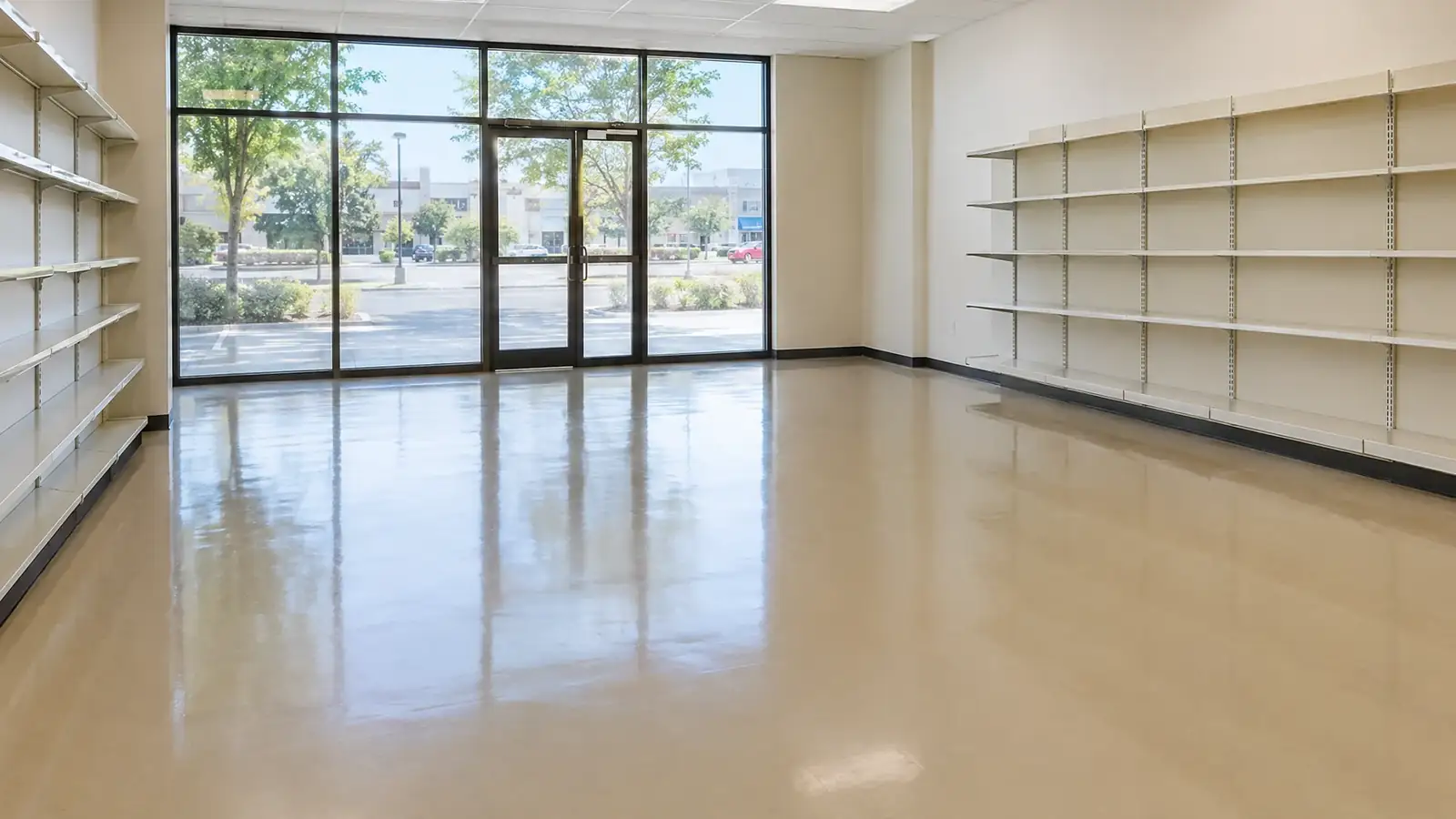
Plan on about one day of coating work for a flake system, two to three days for quartz, three days for solid color and three to four days for metallic. Your total closure also depends on moving stock, repairs and cure time before heavy traffic, so we confirm a schedule during the site visit.
Plan on about one day of coating work for a flake system, two to three days for quartz, three days for solid color and three to four days for metallic. Your total closure also depends on moving stock, repairs and cure time before heavy traffic, so we confirm a schedule during the site visit.
For most business owners, the question is not whether an epoxy floor is worth it. It is how many days of lost sales, cancelled appointments or idle staff the work will cost. The answer varies more than competitors admit, because downtime is a mix of the install time for the system you choose, the shape of your space, what has to be moved, and how soon you need vehicles, carts or equipment back on the floor. This guide gives you realistic numbers for each system, shows how phasing can keep part of the business open, explains what slows a job down, and gives you a checklist for planning the closure so nothing surprises you on the day.
The coating system you choose sets the clock. A flake epoxy floor is typically installed in one day. A quartz finish takes about two to three days. A solid color epoxy floor takes about three days, and a metallic epoxy floor takes about three to four days. These are the install times for the coating work itself, from grinding through the finish coat. They are a good planning baseline, but they are not a promise for every space. A small salon or office suite can follow them closely. A large warehouse or a restaurant with a complicated kitchen may need more days or a phased plan. Commercial and industrial floors are quoted after a site visit, because the real variables are the square footage, the condition of the slab, the amount of repair work, the number of drains and obstacles, and the load the floor must carry. You get a written schedule with the quote, so you can compare the closure to the cost of the job and decide with real numbers, not guesses.
The coating days are only part of the story. Before anyone grinds, the space has to be empty or at least cleared of things that cannot be coated around, and that is your downtime too. Shelving, display cases, salon chairs, kitchen equipment and stock all move out, and they move back in after the floor has hardened. Cracks, joints and damaged areas are repaired during prep, which adds time if the slab is in rough shape. Then comes cure time. A floor can be ready for foot traffic before it is ready for forklifts, pallet jacks or rolling racks, and a heavy load too early is a classic way to mark a new floor. Ask for two dates in writing: when people can walk on it, and when full-weight equipment can return. For a retail store, that may mean staff restock before the doors open. For a shop, it may mean heavy machinery waits an extra day. Planning this ahead can turn a rough closure into a tidy one.
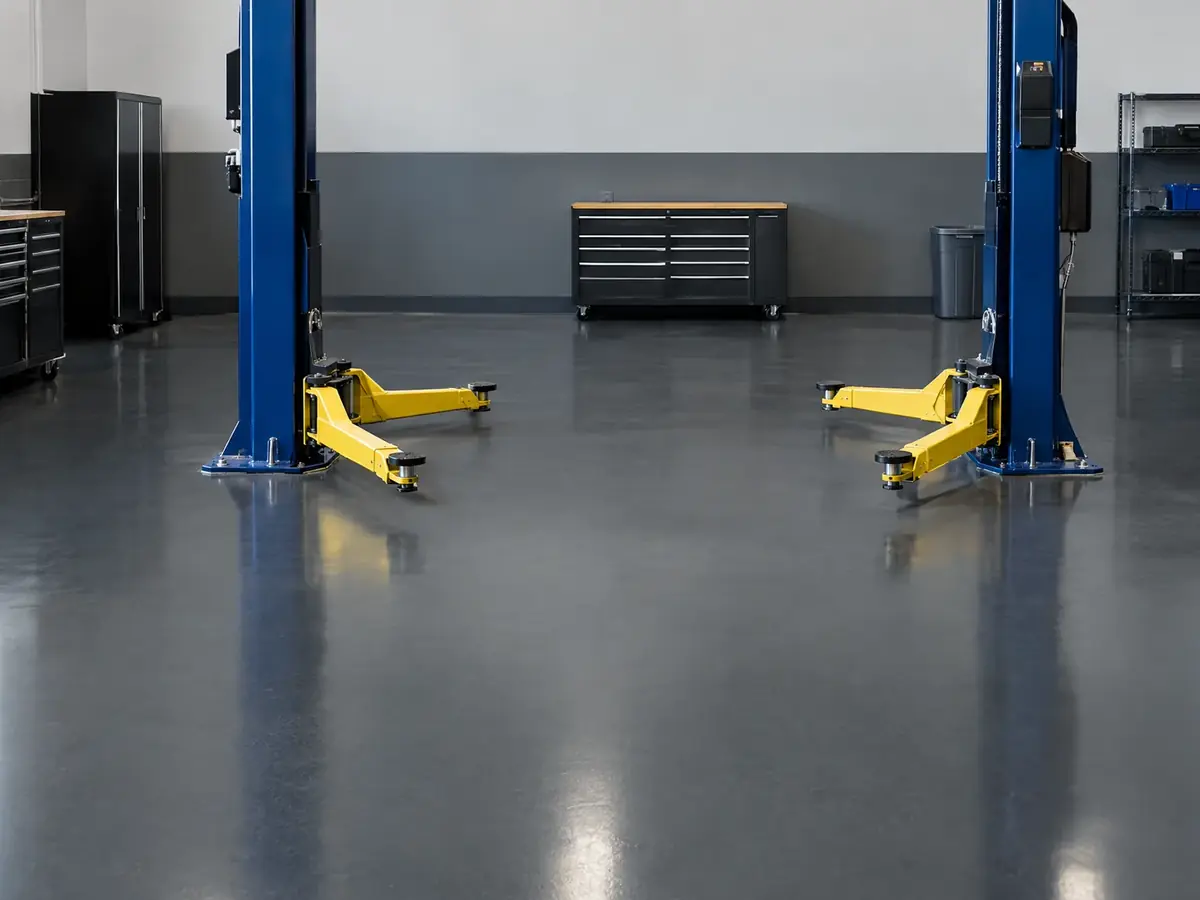
Often, yes. Many jobs are done in sections, with a part of the space coated while the rest keeps working. A restaurant might close the dining room one week and the back of house the next. A shop might coat one bay at a time while the other stays active. A retail store might do the sales floor on one schedule and the stockroom on another. Phasing costs something. The crew sets up and breaks down for each section, joints between sections need careful handling, and the overall job takes longer on the calendar even if each area is closed for less time. Dust and fumes also move, so the open area needs clear separation from the work area, and sensitive operations such as food prep or clean work may not be able to share a roof with grinding. We will tell you honestly if a plan is not realistic. If phasing works for your layout, it protects your cash flow. If it does not, a short, complete closure may be cheaper and less stressful.
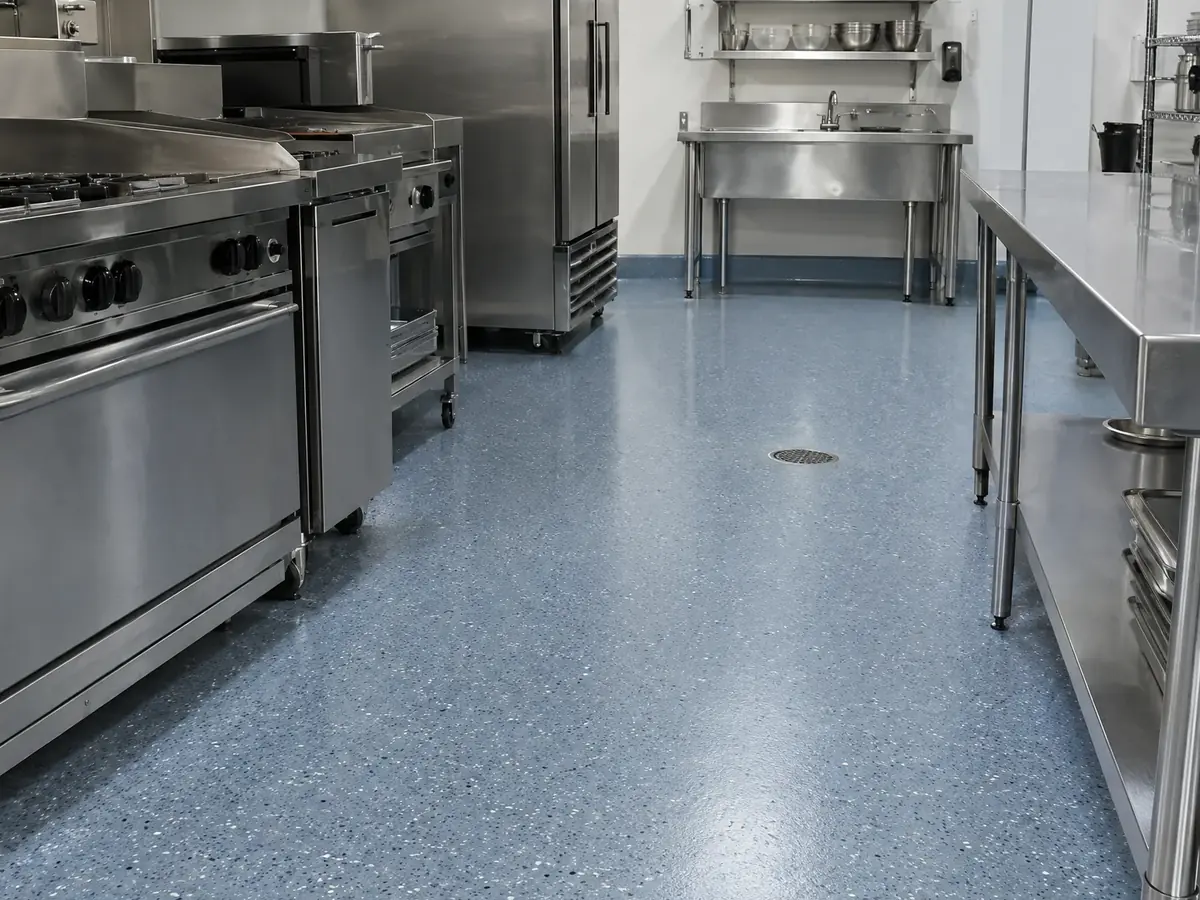
Different spaces carry different risks. A hair or nail salon usually has a small floor, few drains and light equipment, so a flake or solid color floor can often be done in a few days, with chairs and stations moved ahead of time. Offices and showrooms look similar, with the main challenge being moving furniture and wiring. Restaurants are harder. Kitchens have floor drains, equipment, grease and heat, and a cove base, which curves the coating up the wall for a sealed edge, is a common detail that takes time to do properly. Retail shops need to plan around deliveries and restock. Warehouses and shops with forklift traffic need the heaviest-duty system and a careful cure schedule before pallet loads return. Aircraft hangars and industrial plants involve fuel, hydraulic fluid and heavy loads, so the system is specified after a site visit and a product check, and the schedule follows from that choice.
A few things can stretch the schedule, and it helps to know them before you sign. Moisture is the big one. A slab that tests wet may need a moisture-barrier basecoat or more drying time. Old coatings, adhesives or paint must be ground off, which takes longer than grinding bare concrete. Bad cracks, spalls and uneven areas need repair and sometimes leveling. Weather also matters in the high desert. Summer slabs warm during the day, which shortens working time and can cause small bubbles as air escapes the concrete, so we start early and avoid the hottest hours. Winter nights drop to freezing on average about 68 mornings a year in Lancaster, and a cold slab cures slowly, so a cold snap can add time. Wind and blowing dust are also real, so open doors must be managed during coating. We would rather add a day than rush a cure, because a floor that fails after a rushed install costs far more downtime than the day you saved.
A few steps make a big difference. First, book a site visit so we can measure the space, test the slab and see what is in the way. Second, decide which system fits your traffic and how much closure you can afford, using the install times above. Third, pick a start date that avoids your busiest week, your inventory peak and any scheduled deliveries. Fourth, plan where equipment and stock will live while the floor is being coated, because loose items piled in a corner can delay the crew. Fifth, tell your staff and customers early, with a clear reopening date and a buffer day. Sixth, ask what the cure schedule is for foot traffic, carts and forklifts, and write the dates down. Finally, ask what happens if the weather or the slab changes the plan. A clear written schedule, a fixed written quote and a free estimate are the basics. Commercial pricing depends on the site, so the how much does epoxy cost question gets a real answer only after we see your space.
The shortest closure comes from choosing the right system, planning the move-out and cure dates in writing, and starting on a quiet week. If you need a schedule for a shop, salon, office or restaurant in Lancaster or the Antelope Valley, call Accent Epoxy Floors at (661) 545-6676 for a free estimate. Call (661) 545-6676 for a free estimate.
It depends on the system and the space. Coating work is about one day for flake, two to three days for quartz, three days for solid color and three to four days for metallic. Add time for moving stock, repairs and cure, and we confirm the full schedule at the site visit.
Sometimes, for a small space with a one-day system such as flake, if the slab is in good shape. Longer systems like solid color or metallic need more days. We discuss scheduling options, including closed days, at the free estimate rather than promising a pattern in advance.
Often yes, by coating one section at a time while another stays in use. Phasing keeps some revenue coming in but stretches the calendar and adds setup time. Dust, fumes and access need to be separated, and we will say honestly if your layout makes phasing unrealistic.
Foot traffic usually comes first, and heavy equipment waits longer. The exact timing depends on the system and the temperature, so we give you written dates for walking, carts and forklifts. Loading a floor too early is a common cause of marks and damage.
A cove base is the coating curved a few inches up the wall to form a sealed edge with no hard seam. It keeps moisture, grease and dirt from getting under the floor, which is important in restaurants, salons and clinics. It adds some time to the job.
It can be, with the right system and prep. The slab must be sound, the coating thick and well bonded, and the cure complete before loads return. Because loads and traffic vary, warehouse and industrial floors are specified and quoted after a site visit.
Seamless, hygienic floors for offices, retail, restaurants, warehouses and plants, installed around your hours.
Learn more →Full-rejection flake over a moisture-barrier epoxy basecoat, sealed with a UV-stable polyaspartic topcoat. Installed in one day.
Learn more →A clean, seamless pigmented floor in gloss, satin or matte for garages, workshops, interiors and commercial spaces.
Learn more →To prepare a garage for epoxy, empty it completely, move vehicles out, clear the walls, unplug appliances and make sure the crew has access to power and the space around the floor. The crew handles grinding, crack repair and cleaning, so do not etch, paint or seal the floor yourself.
Read the answer →Epoxy turns yellow because ultraviolet light and heat slowly break down the resin, a change called ambering. It shows first where sun hits the floor, usually near the garage door. A UV-stable polyaspartic topcoat, a color that hides slight change and less direct sun on the slab are what prevent it.
Read the answer →A sealed epoxy or polyaspartic floor stops bare concrete from shedding powder, but it cannot keep wind-blown desert dust out of the garage. What it does is make that dust easy to see and easy to remove. Seal the slab, seal the door edges, and dust mop before you wet mop.
Read the answer →Call (661) 545-6676 or send the form at the top of the page. We reply the same day.